
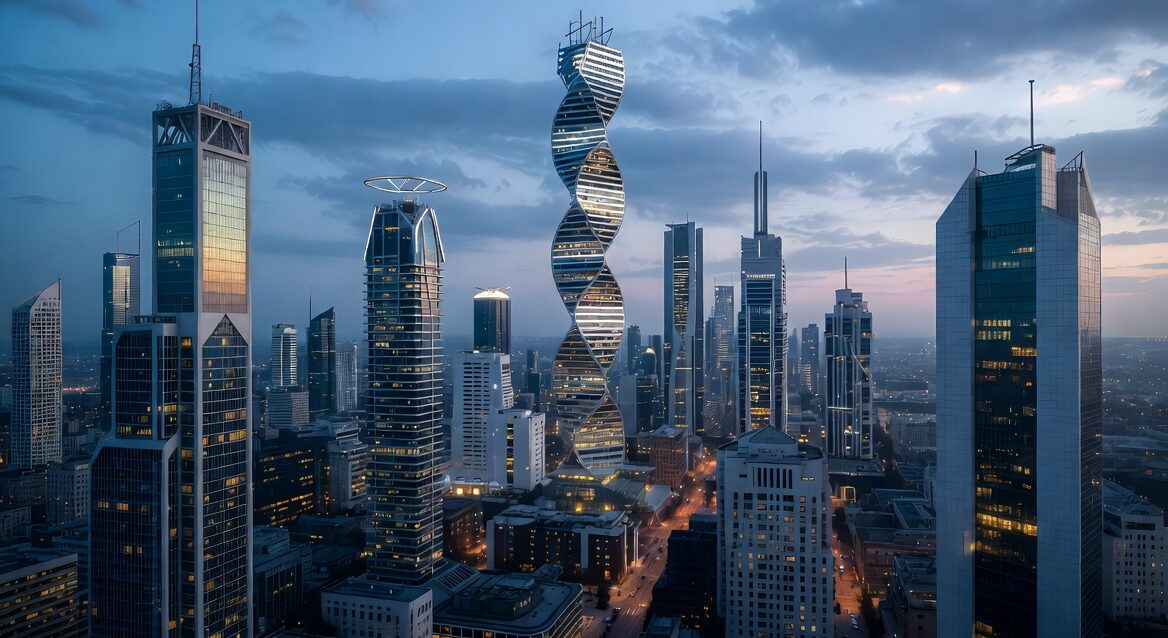
From Sprawl to Smart, Resilient, Human-Centric Urbanism
As of February 2026, over 55–60% of the world’s population lives in urban areas, with UN projections indicating this will rise to 68% by 2050 — adding roughly 2 billion people to cities, mostly in Asia, Africa, and Latin America. Cities already account for 70%+ of global CO₂ emissions, face intensifying climate risks (flooding, heatwaves, resource strain), and grapple with inequality, aging infrastructure, and post-pandemic shifts in work and mobility.
This case study synthesizes credible forecasts from UN-Habitat, World Economic Forum, Deloitte, McKinsey-aligned insights, and urban research to map trajectories over the next 15 years.
1. Near-Term (2026–2030): The Rise of the 15-Minute City and Electrified Mobility
- Proximity & Hyper-Local Living
The 15-minute city concept — where daily needs (work, shops, schools, healthcare, parks) are reachable by foot, bike, or short transit — becomes mainstream. Pioneered in Paris and expanding to cities like Cleveland, Bogotá, and Seoul, it reduces car dependency, cuts emissions, and boosts well-being. Re-zoning for mixed-use neighborhoods accelerates, supported by digital tools for real-time planning. - Electrification & Autonomous Shared Mobility
EVs reach ~30–40% of new sales globally by 2030. Shared autonomous vehicles could handle up to 50%+ of urban passenger miles by late decade in leading cities. Drone deliveries and passenger eVTOLs (e.g., EHang-style) emerge in dense areas. Cities prioritize electrification of buses, fleets, and charging networks to slash transport emissions. - Smart + Resilient Infrastructure
Digital twins, sensors, and AI enable predictive maintenance, flood/heat early warnings, and energy optimization. Buildings target net-zero via retrofits; green infrastructure (urban forests, permeable surfaces) gains traction for climate adaptation.
2. Medium-Term (2030–2035): Biodigital & Adaptive Urban Systems
- AI-Augmented & Data-Driven Cities
Cities become “predictive” — AI optimizes traffic, energy grids, waste, and public services in real time. Digital twins evolve into living models for scenario testing (e.g., climate shocks). Environmental sensors and citizen data improve resilience. - Vertical & Compact Growth
Vertical cities and high-density mixed-use towers rise in land-constrained megacities (Asia, Africa). Hybrid buildings blend residential, office, retail, and vertical farms. Arcology-like mega-structures appear in prototypes for self-sufficiency. - Climate-Resilient Design
Cities harden against extremes: floating districts in flood-prone areas, elevated infrastructure, and nature-based solutions (mangroves, wetlands). Emissions from buildings drop 80–90% via proven tech; urban metabolism becomes circular.
3. Long-Term (2035–2040): Post-Climate & Interconnected Urban Ecosystems
- Living, Adaptive Cities
Biodigital convergence blurs lines between biology, digital, and physical — bio-engineered materials, adaptive facades, and AI-managed ecosystems. Cities function as responsive organisms. - Megacity Shifts & New Hubs
Some Asian/African megacities peak then stabilize or decline due to population trends; new hubs emerge in resilient, resource-rich regions. Orbital/planetary prototypes influence Earth designs. - Equity & Governance Challenges
Universal access to services via proximity models reduces inequality, but digital divides and surveillance risks persist.
Risks & Societal Shifts
- Climate & Inequality — Unmanaged growth exacerbates flooding, heat islands, and displacement in vulnerable cities.
- Privacy & Tech Dependence — Hyper-connected systems risk surveillance and cyber vulnerabilities.
- Economic Polarization — Leading cities gain advantages; lagging ones face decline.
- Regulation — Global standards for resilient design and data ethics become essential.
Bottom Line
By 2040, “cities” evolve from static infrastructure to dynamic, resilient, human-centered ecosystems. The dominant paradigm shifts to proximity-driven, AI-enabled, climate-adaptive urbanism — prioritizing 15-minute accessibility, electrification, vertical density, and nature integration. The future isn’t just taller buildings or smarter grids — it’s cities designed for people and planet, where urban life becomes healthier, equitable, and sustainable amid accelerating global change.