
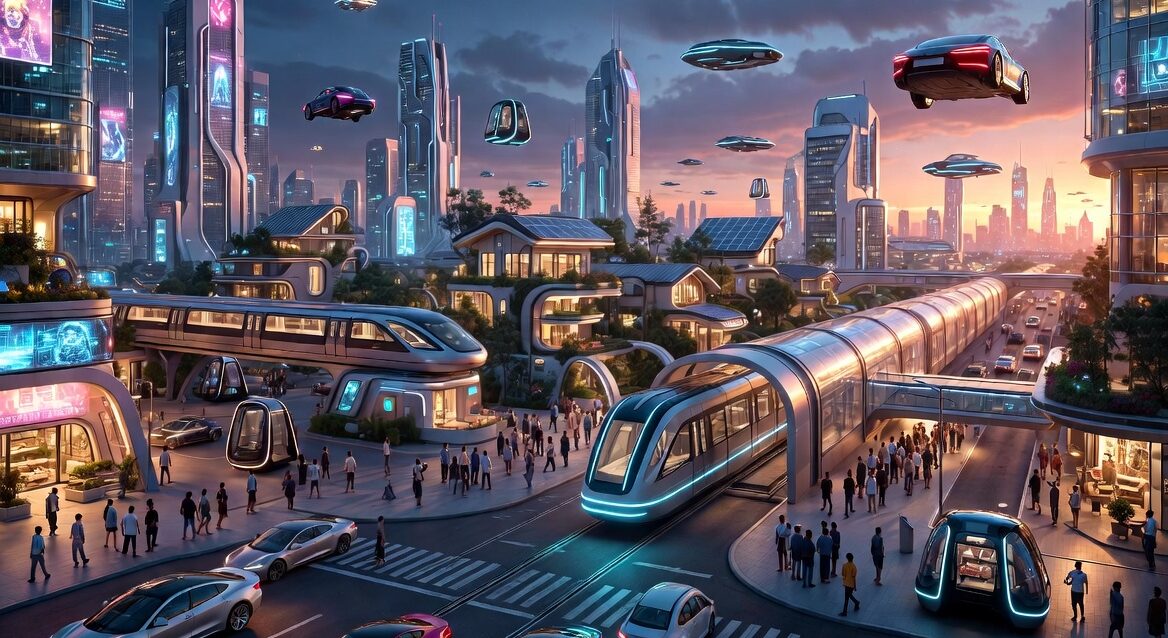
The Future of Where We Live: 15-Minute Cities, Vertical Villages, and Beyond
Evolving Homes in an Urbanizing, Climate-Conscious World
As of February 2026, over 55–60% of the global population lives in cities, with UN projections showing this rising to 68% by 2050 — adding billions to urban areas, primarily in Asia and Africa. Housing demand surges amid affordability crises, climate risks, demographic shifts (aging populations, multigenerational homes), and remote/hybrid work. By 2040, urban living situations will blend proximity, sustainability, technology, and flexibility to address density, equity, and resilience.
This case study draws from UN, Deloitte, McKinsey-aligned forecasts, and urban trends to outline plausible residential evolutions.
1. Near-Term (2026–2030): Proximity-Driven & Affordable Density
- 15-Minute Neighborhoods Dominate
Daily essentials (groceries, schools, healthcare, parks, coworking) become reachable in 15 minutes by foot or bike. Cities like Paris, Bogotá, Melbourne, and emerging adopters in North America rezone for mixed-use areas, reducing car reliance and transport emissions. Residential buildings integrate retail, offices, and services at ground level, fostering walkable, community-oriented living. - Rise of Multifamily & “Missing Middle” Housing
Mid-rise apartments, duplexes, triplexes, and accessory dwelling units (ADUs) fill gaps between single-family homes and high-rises. Policies eliminate single-family zoning in many cities, boosting density without sprawl. Co-living spaces (shared kitchens, lounges) appeal to young professionals and remote workers, with smart tech (IoT controls, energy monitoring) standard in new builds. - Modular & Prefab Acceleration
Factory-built modular homes cut construction time/costs by 30–50%, enabling faster affordable housing delivery. Mass timber and sustainable materials gain traction for lower-carbon footprints. Hybrid remote work drives demand for flexible units with home offices.
2. Medium-Term (2030–2035): Smart, Adaptive & Shared Living
- Hybrid & Mixed-Use Buildings
“Vertical villages” combine residences, coworking, gyms, vertical farms, and retail in single towers or complexes. Buildings adapt via modular interiors (movable walls, convertible spaces) for changing needs — e.g., multigenerational families or aging-in-place seniors. Smart homes with AI energy management, automated storage, and health sensors become commonplace. - Co-Living & Community-Focused Models
Larger-scale co-living expands beyond niche markets into branded communities with shared amenities (rooftop gardens, maker spaces). Affordability improves through inclusionary zoning mandating affordable units in market-rate developments. Digital platforms match roommates or manage shared spaces. - Climate-Resilient & Regenerative Designs
Homes incorporate passive cooling, flood-resistant foundations, green roofs, and rainwater systems. In vulnerable areas, elevated or floating residences emerge. Circular materials and net-zero standards reduce urban heat islands and emissions.
3. Long-Term (2035–2040): Vertical & Biodigital Living
- Vertical Urbanism & Mega-Structures
High-density towers or proto-arcologies (self-contained mega-buildings) provide integrated living in land-scarce megacities. Vertical mobility (elevators, sky bridges) and internal ecosystems (farms, parks) minimize ground footprint. These offer self-sufficiency in energy, food, and services. - AI-Integrated & Personalized Homes
Adaptive facades, bio-engineered materials, and full smart ecosystems personalize environments (mood-based lighting, health monitoring). Remote work normalizes “live-work-learn-play” pods within buildings. - Equity-Focused Shifts
Policies ensure mixed-income vertical communities to avoid segregation. Universal design supports aging populations and diverse needs.
Key Living Situations by 2040 (Illustrative Examples)
- 15-Minute Apartment in Mixed-Use Tower — Walkable daily life, smart controls, shared rooftop amenities.
- Modular Co-Living Pod — Affordable, flexible shared unit with communal spaces and prefab efficiency.
- Adaptive Family High-Rise — Multigenerational home with convertible rooms and vertical farm access.
- Resilient Waterfront Residence — Elevated modular unit in climate-adapted districts.
Risks & Societal Shifts
- Affordability & Displacement — Proximity premiums raise costs; without regulation, gentrification worsens inequality.
- Privacy & Tech Over-Reliance — Smart homes collect vast data; cyber risks grow.
- Climate & Migration — Flooding/heat displaces millions; resilient housing lags in developing regions.
- Inequality Gaps — Premium adaptive homes favor the wealthy; public policy must bridge divides.
Bottom Line
By 2040, urban living situations evolve from isolated homes to integrated, proximity-based, tech-enabled ecosystems. The dominant model is compact, adaptive, sustainable residential environments — prioritizing 15-minute accessibility, modular efficiency, mixed-use density, and climate resilience. Future homes won’t just shelter people; they’ll actively support health, community, and planetary limits in an urban world where cities house nearly 7 in 10 people. The shift isn’t just architectural — it’s a reimagining of daily life for equity and endurance.