
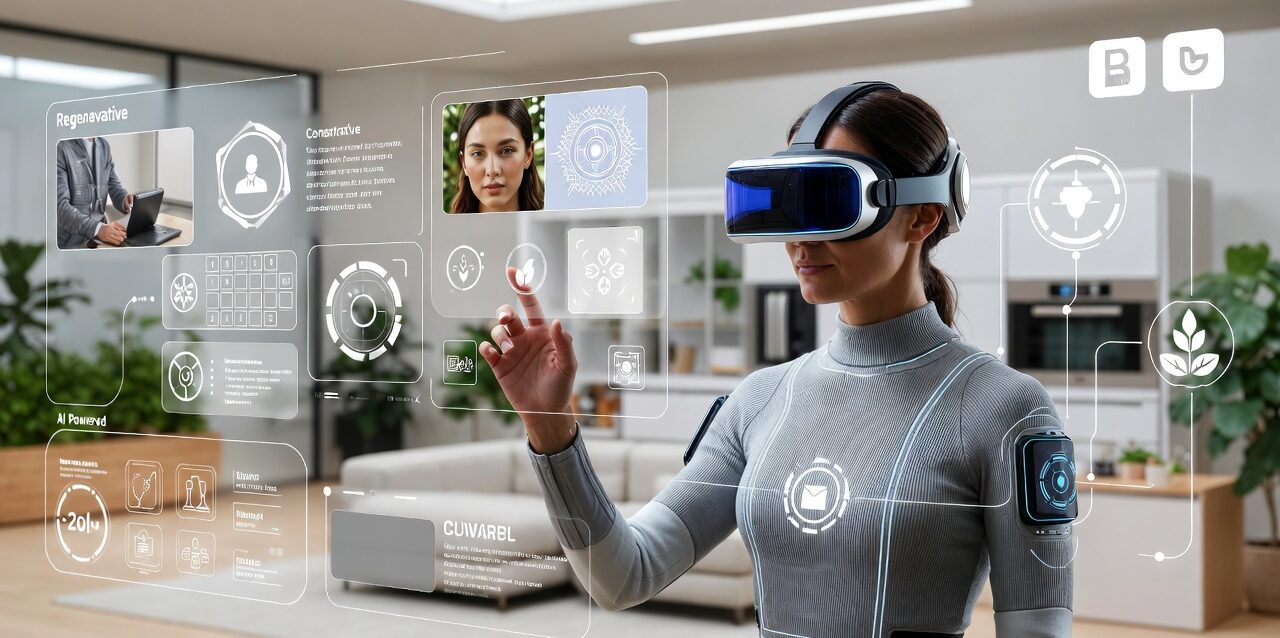
Love Augmented: AI Wingmen, Virtual Worlds, and the Future of Falling in Love
From Swipes to Sensory Immersion: AI, VR, and the Redefinition of Romance
As of February 2026, online dating dominates: a majority of couples in many regions meet digitally, with apps like Tinder, Bumble, and Hinge facilitating billions of connections. AI companions (e.g., Replika, Kindroid) are surging, offering emotional intimacy to millions. IRL events (flirting parties, curated dinners) rebound as users seek authenticity amid algorithm fatigue. Projections suggest 70%+ of couples could meet online by 2040, with tech expanding from profiles to full-sensory, hyper-personalized experiences.
This case study draws from expert forecasts (eHarmony/Imperial College 2040 report, futurist analyses, recent trends in AI companions/VR/metaverse), industry data, and emerging patterns to outline plausible evolutions in how people meet, connect, and build relationships.
1. Near-Term (2026–2030): AI Agents, Hyper-Personalization, and Hybrid Realities
- AI as Wingman & Concierge
Dating apps integrate proactive AI agents that curate matches using deeper data (biometrics, mood via wearables, behavioral patterns). They draft messages, suggest conversation starters, or even simulate early chats to filter incompatibility. Virtual first dates via AR/VR become common for low-pressure chemistry checks — e.g., shared virtual walks or dinners without leaving home. - Hybrid & Authenticity Push
Fatigue with endless swiping drives demand for intentional experiences: apps facilitate IRL meet-cutes (curated events, mutual-friend matches) or “virtual third places” in metaverse spaces. Safety features (real-time verification, background checks) standardize. Niche apps grow, creating distinct “dating cultures” around values, hobbies, or demographics. - Early AI Companionship
AI partners gain acceptance among singles (especially younger demographics), providing companionship, practice for real interactions, or alternative intimacy. Surveys show ~25% of young adults see potential for AI to replace aspects of romance.
2. Medium-Term (2030–2035): Immersive VR Dates & Biotech-Enhanced Matching
- Full-Sensory Virtual Dating
VR/AR evolves to simulate multiple senses (sight, sound, touch via haptics, even scent/smell prototypes). First dates occur in hyper-realistic shared environments — Paris cafés, beach sunsets — from anywhere. Data transfer speeds enable seamless, lag-free immersion, making distance irrelevant and reducing ghosting risks. - Advanced Matching (DNA, Pheromones, Behavior)
Apps incorporate genetic compatibility, pheromone analysis, and real-time sentiment tracking (wearables reading heart rate, micro-expressions). Matches prioritize long-term harmony, health outcomes, and emotional alignment over superficial traits. AI predicts chemistry more accurately, lowering mismatched dates. - Blended Human-AI Dynamics
Relationships mix human and AI elements: some use AI “butlers” for ongoing advice or conflict mediation; others explore poly dynamics with digital partners. Metaverse communities foster global, culture-bridging connections.
3. Long-Term (2035–2040): Symbiotic & Post-Human Romance
- Indistinguishable Digital-Human Bonds
Ultra-realistic AI companions (with lifelike avatars, emotional depth, and adaptive personalities) become viable long-term partners for many. Full-sensory VR/BCI integration allows “presence” — holding hands, shared dreams — blurring physical/digital lines. Some relationships are fully virtual; others hybridize human partners with AI enhancements. - Regenerative & Purpose-Driven Love
Dating shifts toward meaning: apps emphasize shared values, growth, and planetary impact. Biotech (gene therapies for attraction/compatibility) and AI ethics evolve, with regulation addressing privacy, addiction, and equity. - IRL Resurgence as Premium
Amid digital saturation, authentic in-person connection becomes the ultimate luxury — curated events, spontaneous meet-cutes, or “unplugged” retreats gain prestige.
Illustrative Dating Scenarios by 2040
- Virtual Sensory Date — AR glasses overlay compatibility stats; haptic suits simulate touch during a shared virtual adventure.
- AI-Augmented Human Romance — Your AI twin pre-screens matches, coaches conversations, and helps navigate early stages.
- Hybrid AI-Human Relationship — A primary human partner + AI companion for emotional support or shared fantasies.
- Fully Digital Partnership — Lifelike AI spouse offering constant presence, tailored intimacy, and zero conflict (for some).
Risks & Societal Shifts
- Inequality & Isolation — Premium immersive tech favors the wealthy; over-reliance on AI risks shallower human bonds or loneliness epidemics.
- Privacy & Ethics — Deep data (DNA, biometrics, emotions) creates surveillance vulnerabilities; consent and manipulation concerns rise.
- Authenticity vs. Convenience — Perfect matches could reduce serendipity; some predict backlash toward unfiltered, messy IRL dating.
- Regulation — Governments address AI companions’ psychological impact, age restrictions, and “digital divorce” frameworks.
Bottom Line
By 2040, dating evolves from swipe-based discovery to immersive, AI-orchestrated, multi-sensory connection. The dominant paradigm becomes hybrid human-digital romance — where AI enhances discovery and intimacy, VR collapses distance, and biotech refines compatibility, while authenticity and real-world sparks retain premium value. Love won’t disappear; it will expand — deeper for some, more accessible for others, and fundamentally reshaped by technology that makes the heart’s search both easier and more complex. The future of dating is not replacement, but augmentation: technology as matchmaker, companion, and mirror for what we truly seek in another.