The Workplace of Tomorrow: Where People Meet, AI Works, and Well-Being Wins
From Fixed Offices to Fluid, AI-Augmented, and Human-Centric Ecosystems
As of February 2026, the global workplace is still adjusting to post-pandemic realities: hybrid models dominate, remote work is normalized in knowledge sectors, and AI tools (e.g., copilots, automation) are entering daily workflows. Surveys show ~50–60% of workers in advanced economies are hybrid, with flexibility valued highly, but challenges include isolation, productivity debates, and uneven access to tech. The World Economic Forum’s Future of Jobs Report 2025 projects significant shifts by 2030: 92 million jobs displaced, but 170 million new ones created, driven by AI, green transition, and digital access.
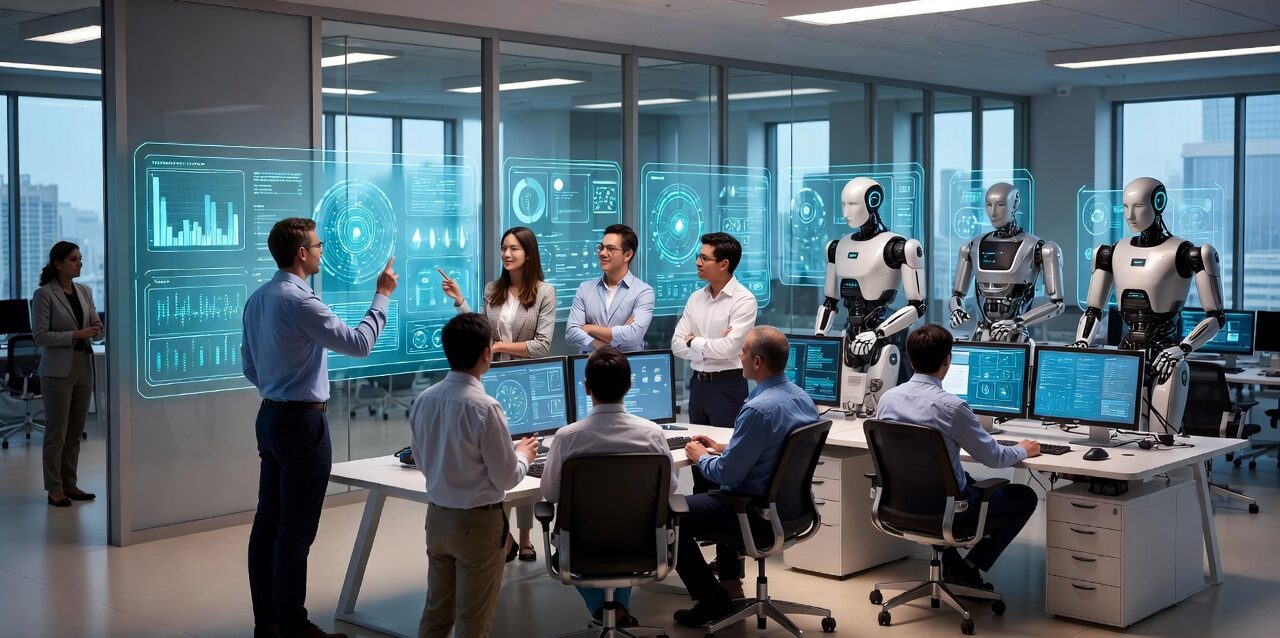
By 2040, workplaces evolve into dynamic, decentralized, and purpose-driven environments — blending physical and virtual spaces, AI-human collaboration, and well-being focus — as automation handles routine tasks and human skills (creativity, empathy, adaptability) become premium.
1. Near-Term (2026–2030): Hybrid Maturity & AI Integration
- Hybrid as Default
Hybrid work solidifies: 3–4 days in-office for collaboration, remote for focus. Offices shrink or repurpose as “hubs” for meetings, culture, and innovation — emphasizing experience (community, wellness zones, flexible desks). Remote tools (VR meetings, digital twins) improve presence. - AI as Co-Worker
Generative AI automates routine tasks (data entry, reporting, basic coding); humans shift to oversight, creativity, and relationships. AI agents handle scheduling, research, and initial drafts. Early job displacement hits repetitive roles, but new positions emerge in AI management, ethics, and prompt engineering. - Well-Being & Flexibility
Mental health support, flexible hours, and outcome-based metrics rise. Gig and project-based work grows; employers compete on culture and purpose.
2. Medium-Term (2030–2035): Decentralized & Immersive Workspaces
- Metaverse & AR/VR Workplaces
AR glasses and VR headsets create immersive offices — avatars collaborate in shared digital spaces, reducing travel. Physical offices become experiential “campuses” for ideation, networking, and social bonds. - Automation & Human-AI Partnership
AI/automation displaces more routine/mid-level tasks; humans focus on complex problem-solving, innovation, and empathy-driven roles. Reskilling becomes continuous — micro-credentials, lifelong learning platforms. - Green & Inclusive Shifts
Sustainability drives “green offices” (net-zero buildings, remote-first to cut emissions). Diversity, equity, and inclusion deepen; global talent pools expand via digital access.
3. Long-Term (2035–2040): Fluid, Purpose-Driven, & Augmented Ecosystems
- Work Without Walls
Work becomes location-independent and time-flexible — “work where you thrive.” Physical spaces are rare, high-value hubs; most activity happens in persistent digital environments or personal setups. - AI-Dominant Routine Work
AI handles most repetitive and analytical tasks; human roles center on creativity, ethics, strategy, and human connection. Universal basic income or similar policies may emerge in some regions to address displacement. - Well-Being & Longevity Focus
Workplaces prioritize healthspan: AI monitors burnout, ergonomic exoskeletons support aging workers, and flexible structures support multi-generational teams.
Illustrative Workplace Scenarios by 2040
- Hybrid Hub — In-office days focus on collaboration in smart, sustainable spaces with AR overlays.
- Digital-First Team — Global team meets in immersive VR environments; AI agents handle logistics.
- Autonomous Project — AI manages routine tasks; humans oversee creativity and decisions.
- Wellness-Integrated — Daily AI nudges for breaks, movement, and mental health check-ins.
Risks & Societal Shifts
- Inequality — Tech access gaps widen; remote/hybrid favors privileged groups.
- Isolation & Burnout — Digital fatigue rises; human connection becomes premium.
- Job Displacement — Mass reskilling needed; transition challenges for older workers.
- Surveillance — AI monitoring risks privacy and autonomy.
Bottom Line
By 2040, workplaces evolve from fixed locations to fluid, AI-augmented, and human-centric ecosystems. The dominant paradigm becomes hybrid-digital collaboration, purpose-driven flexibility, and AI-human partnership — offices become hubs for connection, technology handles routine work, and well-being drives productivity. Work won’t disappear; it will transform — becoming more global, adaptive, and meaningful, provided societies invest in reskilling, equity, and ethical tech. The future workplace isn’t about where you work — it’s about how work empowers people in a rapidly changing world.