The Next Era of Living: Subterranean Homes, Hybrid Cities, and Climate Refuge
From Surface Cities to Subterranean Habitats, Vertical Expansion, and Climate-Resilient Living
As of February 2026, the world’s urban population exceeds 4.5 billion (over 55%), projected to reach 68% by 2050 (UN estimates), adding ~2.5 billion people to cities. Surface land scarcity, climate extremes (heatwaves, flooding, storms), rising sea levels, extreme weather, and urban heat islands push exploration of underground space. Underground development already exists (subways, malls, parking, data centers), but full-scale subterranean living remains rare — mostly conceptual or limited (e.g., Coober Pedy, Australia; Montreal’s Underground City; Helsinki’s underground master plan).
By 2040, underground living evolves from niche (bunkers, basements) to practical, sustainable, and integrated solutions — driven by land constraints, climate adaptation, energy efficiency, and visionary projects. Subterranean habitats, expanded underground infrastructure, and hybrid above/below-ground cities become viable in dense, vulnerable, or innovative regions.
1. Near-Term (2026–2030): Infrastructure Expansion & Early Concepts
- Underground Infrastructure Growth
Cities deepen existing underground networks — subways, utility tunnels, parking, shopping, and data centers. Examples include Singapore’s underground master plan, Helsinki’s Underground City (expanding for data, sports, storage), and Dubai’s plans for subterranean expansion. Underground roads and parking free surface land for green/public space. - Climate-Driven Motivation
Rising temperatures, flooding, and extreme weather push adaptation — underground spaces offer stable temperatures (natural insulation, less heating/cooling), flood protection, and storm resilience. Early adopters: high-density cities (Hong Kong, Tokyo) expand underground retail/transport; vulnerable coastal cities (Miami, Jakarta) explore subterranean options. - Conceptual & Pilot Projects
Visionary ideas gain attention — Earthscraper (inverted pyramid in Mexico City), Lowline (underground park in New York), and BNKR Arquitectura’s subterranean concepts. Elon Musk’s Boring Company tunnels focus on transport, not living, but inspire subsurface infrastructure.
2. Medium-Term (2030–2035): Hybrid & Resilient Underground Spaces
- Subterranean Expansion
Cities build deeper, larger underground complexes — multi-level retail, offices, housing, farms, and recreation. Benefits: stable climate (constant ~15–20°C), reduced energy use (less cooling/heating), protection from heatwaves/floods/storms, and preserved surface land for parks/green space. - Sustainable & Livable Design
Advances in ventilation, artificial lighting (full-spectrum LEDs simulating daylight), biophilic elements (indoor plants, water features), and psychological design combat claustrophobia and lack of sunlight. Geothermal energy and waste heat recycling power underground facilities. - Climate Adaptation Role
Underground habitats gain traction in flood-prone, hot, or high-density areas. Examples: expanded underground cities in Helsinki, Montreal, and Singapore; new subterranean districts in desert or coastal cities.
3. Long-Term (2035–2040): Mature Underground Living & Vertical Cities
- Subterranean Communities
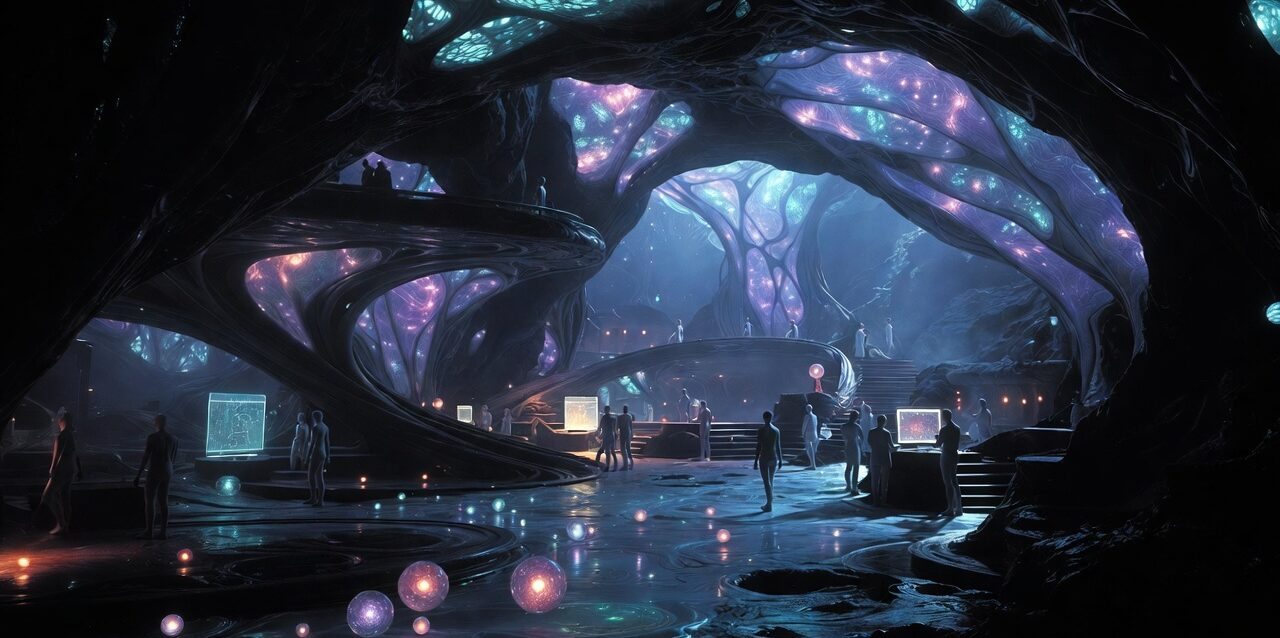
Full underground neighborhoods or “vertical cities” emerge — multi-level habitats with residences, schools, offices, farms, and recreation. Lava tubes (Moon/Mars analogs) inspire Earth concepts; large-scale underground complexes in dense regions house thousands. - Hybrid & Integrated Living
Surface + subsurface synergy — skyscrapers with deep underground bases; cities with surface parks and underground transport/housing. Underground spaces become desirable for stable climate, security, and energy efficiency. - Global & Regional Variation
High-density Asia (China, India, Singapore) leads expansion; climate-vulnerable areas (coastal, desert) adopt for resilience; visionary projects (e.g., Neom-inspired underground districts) push boundaries.
Illustrative Underground Living Scenarios by 2040
- Urban Underground Hub — Multi-level complex with homes, offices, vertical farms, and transit; stable temperature, low energy use.
- Climate-Resilient Habitat — Flood-proof underground neighborhood with artificial daylight, green spaces, and air purification.
- Hybrid Vertical City — Skyscraper with deep underground levels for parking, utilities, and living; surface for recreation.
- Sustainable Subterranean Community — Self-sufficient underground village with geothermal power, hydroponics, and recycled systems.
Risks & Societal Shifts
- Psychological & Health — Claustrophobia, vitamin D deficiency, mental health — need biophilic design, light therapy, and access to surface.
- Infrastructure & Safety — Flooding, ventilation, seismic risks, emergency evacuation.
- Inequality — Underground may become premium (stable climate) or lower-tier (cheaper land).
- Sustainability — Construction emissions, energy for lighting/ventilation must be offset.
Bottom Line
By 2040, living underground evolves from sci-fi to practical, resilient, and integrated urban solution. The dominant paradigm becomes hybrid subterranean habitats — stable temperatures, energy efficiency, climate protection, and land preservation make underground spaces attractive for housing, work, and infrastructure in dense or vulnerable cities. Underground living won’t replace surface cities — but it will complement them, becoming essential for adaptation to climate change, population growth, and sustainability. The future is not darkness — it’s smarter, greener, and more resilient use of the third dimension below our feet. Underground may not be for everyone — but for growing urban populations facing extremes above, it becomes a viable, even desirable, frontier.