
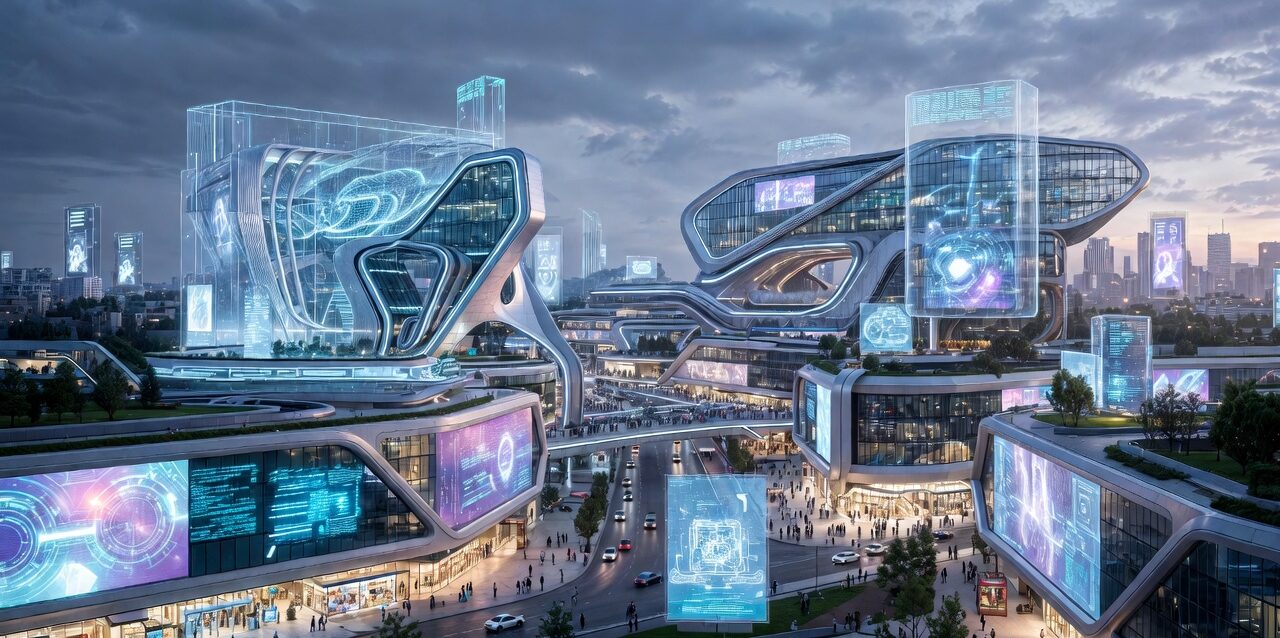
From Transactional Spaces to Multi-Sensory, Community-Driven, and Hybrid Experience Hubs
Case Study: Cafes & Malls in the Future (2026–2040)
As of 2026, cafes and shopping malls remain core social and commercial spaces, though both face disruption.
Cafes generate ~$200–300 billion globally (including coffee chains and independents), while shopping malls (retail + food courts) are valued at ~$1.5–2 trillion in total retail sales. Post-pandemic shifts, e-commerce growth, declining foot traffic in many traditional malls, and rising demand for experiences over pure consumption are reshaping both.
By 2040, cafes and malls evolve from single-purpose venues into hybrid, multi-sensory, community-first, and wellness-integrated hubs — blending physical gathering with digital immersion, local production, and social/emotional value far beyond buying or drinking coffee.
1. Near-Term (2026–2030): Hybrid & Experience-First Transformation
- Cafes as Third Places Reborn
Independent and chain cafes double down on atmosphere and community — becoming co-working cafés, micro-event venues, and local cultural anchors.
Non-alcoholic “coffee” alternatives (mushroom blends, adaptogen lattes, functional elixirs) grow to 20–30% of sales.
AR/VR elements emerge: AR menus with interactive stories, virtual “window seats” showing scenic views. - Malls Pivot to Experiential & Mixed-Use
Traditional enclosed malls decline in many markets; successful ones become “destination lifestyle centers” — open-air, green-filled, mixed-use developments.
Retail shrinks to 30–50% of floor space; the rest becomes food halls, entertainment zones, co-working, wellness studios, micro-residences, and public parks. - Tech & Personalization
AI concierges greet visitors, remember preferences, and suggest personalized routes/experiences.
Contactless ordering, robotic baristas, and drone delivery inside malls become common.
2. Medium-Term (2030–2035): Immersive & Wellness-Driven Spaces
- Immersive Cafes & Social VR Hubs
Cafes offer AR/VR-enhanced experiences — virtual travel while sipping coffee, shared VR games with friends across cities, or holographic storytelling sessions.
“Silent cafes” and “focus pods” with noise-cancelling zones cater to remote workers and deep-focus needs. - Malls as Urban Living Rooms
Malls become full-day destinations: co-working by day, entertainment & dining by evening, and micro-events (live music, art pop-ups, community classes) around the clock.
Vertical farming and on-site food production supply fresh ingredients; many malls operate 20–24 hours with flexible zoning. - Health & Sensory Design
Air purification, circadian lighting, biophilic elements, and soundscapes become standard.
Wellness zones (meditation pods, cryotherapy, sleep lounges) integrate into both cafes and malls.
3. Long-Term (2035–2040): Symbiotic, Regenerative & Community-Centric Hubs
- Regenerative & Net-Positive Design
Cafes and malls generate surplus energy (solar façades, kinetic floors), recycle water/waste, and grow food on-site (vertical farms, aquaponics).
Many become carbon-negative and contribute to local ecosystems (pollinator gardens, rainwater gardens). - Persistent Digital-Physical Spaces
Every cafe/mall has a persistent virtual twin — you can “visit” your favorite café remotely via AR/VR, meet friends there digitally, or order physical items delivered to your location.
Hybrid events (in-person + metaverse) become the norm. - Community & Purpose-Driven Models
Many venues operate as cooperative or community-owned spaces — profits reinvested locally.
Cafes double as learning hubs, maker spaces, and mental health venues.
Malls evolve into urban villages — housing, work, leisure, and social services under one roof.
Illustrative Scenarios by 2040
- Morning at the Cafe — AI greets you, remembers your order, adjusts lighting/mood music, offers adaptogen latte based on your sleep data.
- Mall as Daily Hub — Work in co-working zone, lunch from vertical farm, attend VR concert, relax in biophilic garden — all in one building.
- Community Evening — Local cafe hosts storytelling night; physical attendees + virtual participants share stories in mixed-reality space.
- Regenerative Mall — Rooftop solar + vertical farm powers the building; waste becomes compost for on-site gardens.
Key Numbers & Trends by 2040 (illustrative)
- Share of cafes offering functional/no-alc drinks: 40–70%
- Mall retail space converted to experience/community: 50–80%
- Net-positive buildings in new commercial developments: 40–70%
- Time spent in hybrid physical-virtual venues: 30–60% of social outings
- Community/cooperative ownership models in urban cafes/malls: 20–40%
Risks & Societal Shifts
- Inequality — Premium experiential venues favor higher-income groups.
- Privacy — Constant personalization and monitoring raise concerns.
- Over-Reliance on Tech — Risk of shallower in-person connection.
- Cultural Loss — Traditional “third places” may become homogenized.
Bottom Line
By 2040 cafes and malls transform from transactional spaces into multi-sensory, wellness-integrated, and community-first social ecosystems.
The dominant paradigm becomes hybrid physical-digital, regenerative, and purpose-driven venues — cafes serve as daily anchors for connection and renewal, while malls become urban villages that support work, leisure, learning, and belonging.
They won’t just sell coffee or products — they will nourish people physically, emotionally, and socially in an increasingly digital world.
The future cafe isn’t about caffeine — it’s about human connection.
The future mall isn’t about shopping — it’s about living.
Both become places where people don’t just pass through — they belong.