
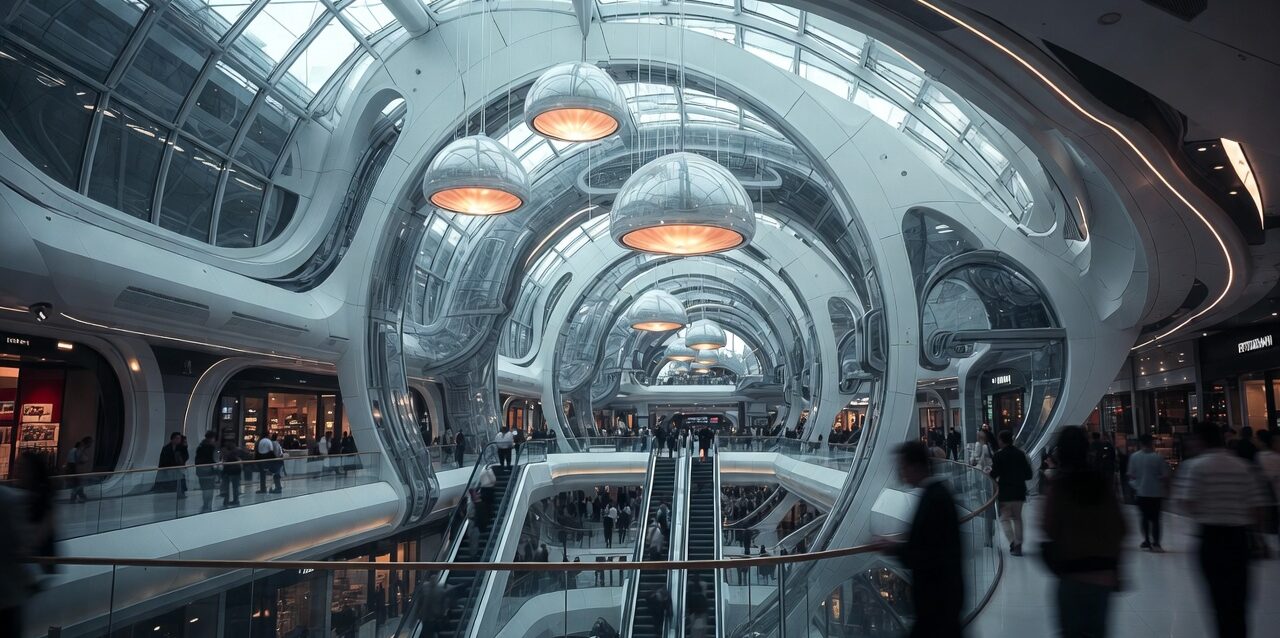
From Shopping-Centric Retail to Multi-Purpose, Experience-Driven, Community & Wellness Hubs
As of 2026, traditional shopping malls are under pressure.
Global retail foot traffic has declined in many regions due to e-commerce, post-pandemic habits, and changing consumer values.
Successful malls are pivoting: retail space is shrinking (often to 30–50% of floor area), while food & beverage, entertainment, and experiential zones expand.
The total mall/retail real estate market remains massive (~$1.5–2 trillion in retail sales), but the format is fragmenting — enclosed malls decline in some markets while open-air lifestyle centers and mixed-use developments thrive.
By 2040, the interior of malls has fundamentally changed.
They are no longer primarily about shopping — they become dense, multi-functional urban ecosystems that serve as daily living rooms, wellness centers, co-working hubs, cultural venues, micro-residential zones, and community anchors.
1. Near-Term (2026–2030): Experience & Mixed-Use Pivot
- Retail Footprint Shrinks Dramatically
Traditional stores drop to 25–40% of mall space.
Fast-fashion and mid-tier brands exit or shrink; only flagship/experiential retail survives (luxury, concept stores, interactive showrooms). - Food & Beverage Explodes
Food halls, artisanal markets, ghost kitchens, and international street-food zones become the main draw.
30–50% of mall revenue often comes from F&B.
Functional & no/low-alcohol bars/cafés grow rapidly. - Entertainment & Social Zones
Immersive VR/AR arcades, esports arenas, mini-cinemas, live music stages, interactive art installations, and gaming lounges take over large areas.
“Instagrammable” and shareable experiences (holographic art, projection mapping, sensory rooms) drive foot traffic.
2. Medium-Term (2030–2035): Wellness, Co-Working & Micro-Living Integration
- Wellness & Health Hubs
Malls become full wellness destinations: - on-site gyms, yoga studios, meditation pods
- cryotherapy, red-light therapy, massage studios
- mental health lounges, sleep pods, biohacking stations
- air purification, circadian lighting, and biophilic design throughout
- Co-Working & Learning Zones
Flexible co-working spaces, private pods, and meeting rooms occupy 15–30% of mall space.
Micro-learning centers, maker spaces, and digital classrooms integrate with retail/entertainment. - Micro-Residences & Co-Living
Upper floors or converted wings become micro-apartments, co-living units, or short-stay residences for digital nomads, young professionals, and students.
“Live-work-play” malls emerge — residents work in co-working zones, socialize in food halls, and shop/entertain in the same building.
3. Long-Term (2035–2040): Regenerative, 24-Hour, and Symbiotic Urban Ecosystems
- Regenerative & Net-Positive Design
Malls generate surplus energy (solar façades, kinetic floors), recycle water/waste, and grow food on-site (vertical farms, rooftop gardens).
Many become carbon-negative and contribute to local biodiversity (pollinator gardens, urban wetlands). - 24-Hour & Always-On Operation
Malls operate continuously — quiet zones for night-shift workers, 24-hour gyms, food halls, co-working, and entertainment.
AI manages dynamic zoning: day = work & family, night = nightlife & recovery. - Persistent Digital-Physical Fusion
Every mall has a full virtual twin — you can “visit” the mall remotely via AR/VR, shop, meet friends, attend events, or order physical goods for pickup/delivery.
Hybrid events (in-person + metaverse) are the norm.
What Is Inside Malls in 2040 (Typical Composition)
- Retail & Concept Stores — 20–35% of space (luxury flagships, interactive showrooms, pop-ups)
- Food & Beverage — 25–40% (food halls, functional cafés, micro-breweries, no/low-alc bars)
- Wellness & Health — 15–25% (gyms, spas, mental health lounges, sleep pods, biohacking)
- Co-Working & Learning — 10–20% (flexible offices, maker spaces, micro-classrooms)
- Entertainment & Culture — 10–20% (VR/AR zones, live stages, esports, art galleries)
- Micro-Residences & Services — 5–15% (apartments, daycare, clinics, postal/locker hubs)
- Green & Community Space — 10–30% (indoor parks, vertical gardens, communal areas)
Key Numbers & Trends by 2040 (illustrative)
- Share of mall space dedicated to non-retail: 60–80%
- Time spent in malls per visit: up 50–100% (from shopping to full-day experiences)
- Net-positive mall buildings (new developments): 40–70%
- Community/cooperative ownership models in urban malls: 20–40%
- Hybrid physical-virtual mall usage: 40–60% of visits
Risks & Societal Shifts
- Inequality — Premium experience malls favor higher-income groups; older malls struggle.
- Privacy — Constant personalization and monitoring raise concerns.
- Cultural Loss — Risk of homogenized “mall culture” if local identity is not preserved.
- Over-Reliance on Tech — Some seek “unplugged” or traditional venues as counter-trend.
Bottom Line
By 2040, what’s inside malls is no longer mainly shops — it’s a complete urban ecosystem that supports work, wellness, dining, learning, culture, community, and even living.
The dominant paradigm becomes hybrid physical-digital, regenerative, and purpose-driven social hubs — malls become the living rooms, offices, gyms, and town squares of the future.
They won’t just sell things — they will nourish bodies, minds, relationships, and local economies.
The future mall isn’t about buying — it’s about belonging, healing, creating, and living.
Malls don’t die — they evolve into the beating heart of 21st-century cities.