
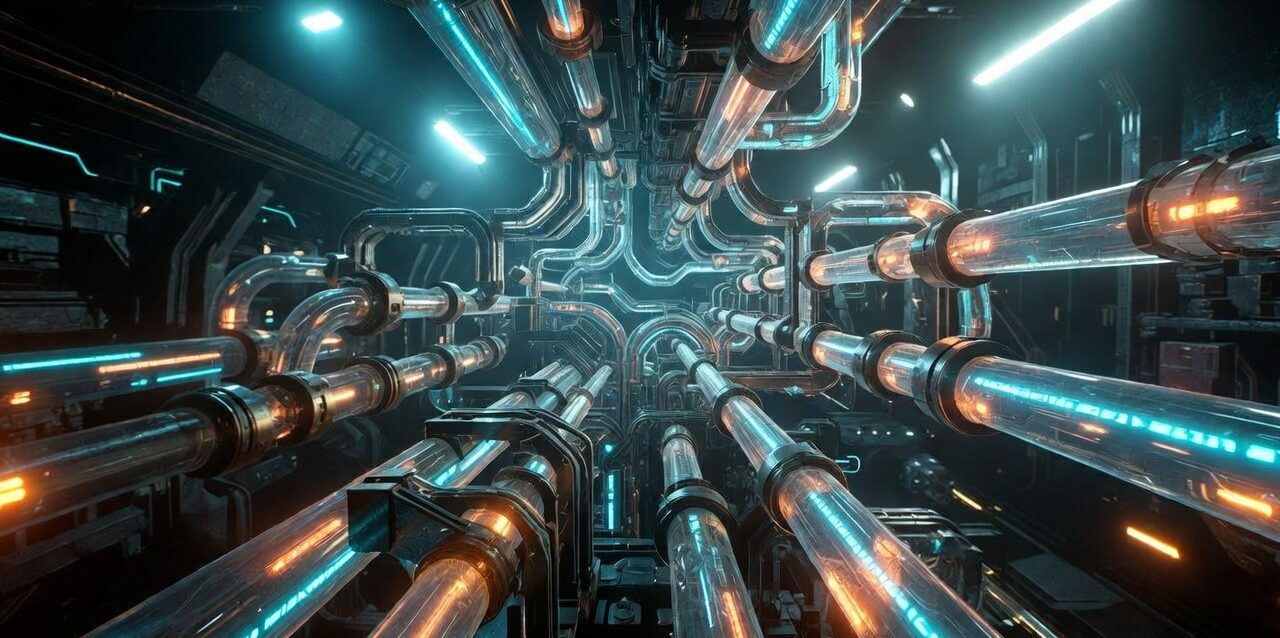
From Fossil-Fuel Arteries to Multi-Purpose, Smart, Hydrogen-Ready, and Regenerative Conduits
As of 2026, the global pipeline network is dominated by oil & natural gas transport — roughly 2.5–3 million km of transmission pipelines worldwide, plus millions more km of gathering and distribution lines.
Pipelines carry ~60–70% of global oil and ~30–40% of natural gas, making them the backbone of the fossil-fuel economy.
The sector faces increasing scrutiny: methane leaks, oil spills, aging infrastructure (many lines >50 years old), geopolitical vulnerabilities, and pressure to phase down fossil fuels.
By 2040 the pipeline landscape is radically different:
- Many oil & gas lines are repurposed, mothballed, or decommissioned
- New and converted pipelines become multi-purpose conduits for hydrogen, CO₂, renewable gases, water, critical minerals slurry, and even data/fiber optics
- Pipelines evolve into smart, monitored, and resilient infrastructure that actively supports the energy transition and climate goals
1. Near-Term (2026–2030): Repurposing, Hydrogen Pilots, and Digital Upgrades
- Oil & Gas Pipeline Repurposing
Operators begin large-scale conversion of natural gas pipelines to carry blends of methane + hydrogen (up to 20–30% H₂ initially).
Retired crude oil lines are repurposed for CO₂ transport (carbon capture & storage — CCS) or hydrogen in regions with strong decarbonization policies (Europe, California, Gulf Coast). - Dedicated Hydrogen Pipelines
First purpose-built hydrogen pipelines appear (Europe’s Hydrogen Backbone, U.S. Gulf Coast hydrogen corridors).
Existing gas networks are certified for higher hydrogen blends (up to 50–100% in sections). - Smart Pipeline Systems
Fiber-optic sensors, acoustic monitoring, AI-driven leak detection, and predictive maintenance become standard.
Digital twins of major pipeline networks enable real-time simulation, risk assessment, and optimization.
2. Medium-Term (2030–2035): Hydrogen Backbone & CO₂ Infrastructure
- Continental Hydrogen Networks
Europe’s Hydrogen Backbone and similar projects in the U.S., China, Japan, and Australia create regional hydrogen supergrids.
Repurposed natural gas lines carry 70–100% hydrogen; new dedicated lines are built for high-volume corridors. - CO₂ Transport & Storage Networks
Large-scale CO₂ pipeline systems connect industrial clusters (cement, steel, power plants) to geological storage sites.
Pipelines become bidirectional — CO₂ to storage today, potentially CO₂ retrieval for utilization tomorrow. - Multi-Product & Smart Pipelines
Pipelines carry multiple fluids sequentially or in batches (hydrogen, CO₂, biogas, ammonia, synthetic fuels).
Real-time monitoring with AI detects composition changes, leaks, and corrosion; autonomous valves adjust flows instantly.
3. Long-Term (2035–2040): Regenerative & Multi-Utility Corridors
- Hydrogen & Renewable Gas Dominance
In many regions, pipelines transport mostly green hydrogen, biomethane, synthetic methane, and ammonia.
Oil pipelines are largely decommissioned or converted; gas pipelines are fully hydrogen-compatible. - Regenerative & Multi-Purpose Corridors
Pipeline rights-of-way become multi-utility corridors: - hydrogen/CO₂ transport
- high-voltage DC power lines
- fiber-optic data cables
- water distribution
- even drone/ground-robot pathways
- Adaptive & Self-Healing Infrastructure
Pipelines use smart materials (self-healing polymers, corrosion-resistant composites) and embedded robotics for inspection/repair.
AI continuously optimizes flow, pressure, and energy use across the entire network.
Illustrative Pipeline Scenarios by 2040
- Hydrogen Supergrid — Repurposed natural gas line carries 100% green hydrogen across Europe — powers cities, industry, and heavy transport.
- CO₂ Backbone — Cluster of industrial plants sends captured CO₂ through dedicated pipeline to offshore storage — net-negative emissions for the region.
- Multi-Utility Corridor — Single right-of-way carries hydrogen, high-voltage power, fiber optics, and water — maximizing land efficiency.
- Smart Leak-Proof Pipeline — AI detects micro-leaks instantly; robotic pigs repair them autonomously without shutdown.
Key Numbers & Trends by 2040 (illustrative)
- Hydrogen pipeline length (dedicated + repurposed): 50,000–150,000 km globally
- CO₂ pipeline capacity: 100–500 Mt CO₂/year transported
- Share of legacy oil/gas pipelines repurposed or decommissioned: 40–70% in advanced economies
- Smart monitoring coverage on major pipelines: 90–100%
- Methane leakage reduction: 80–95% vs 2025 levels (hydrogen + smart monitoring)
Risks & Societal Shifts
- Stranded Assets — Trillions in legacy oil/gas pipeline value at risk of stranding.
- Hydrogen Safety & Infrastructure — Hydrogen embrittlement and explosion risks require new standards.
- Geopolitical — Control of hydrogen corridors becomes a new strategic asset.
- Inequality — Developing regions lag in clean pipeline infrastructure.
Bottom Line
By 2040 pipelines shift from fossil-fuel arteries to multi-purpose, hydrogen-ready, smart, and regenerative conduits.
The dominant paradigm becomes repurposed, intelligent, and low-carbon transport infrastructure — carrying hydrogen, CO₂, renewable gases, power, data, and water in integrated corridors.
Pipelines don’t disappear — they reinvent themselves as the hidden backbone of a clean energy economy.
The future pipeline isn’t about moving oil or gas — it’s about moving the building blocks of a sustainable world: hydrogen, carbon, energy, and information.
The pipes under our feet stop fueling climate change — they start healing it.