From Car-Centric Sprawl to Climate-Resilient, Human-Centered, and Adaptive Urban Ecosystems
As of 2026, cities worldwide are still largely shaped by 20th-century models dominated by car dependency, sprawling suburbs, and reactive planning, with over 55% of global population urbanized and facing escalating climate risks, inequality, and congestion:
- Traditional zoning separates residential, commercial, and industrial areas, leading to long commutes
- Infrastructure prioritizes highways and parking; public transport and active mobility lag in many regions
- Urban heat islands, flooding, and air pollution affect billions; response to disasters often 24–72 hours
- Concepts like the 15-minute city are piloted in places like Paris, but implementation remains uneven
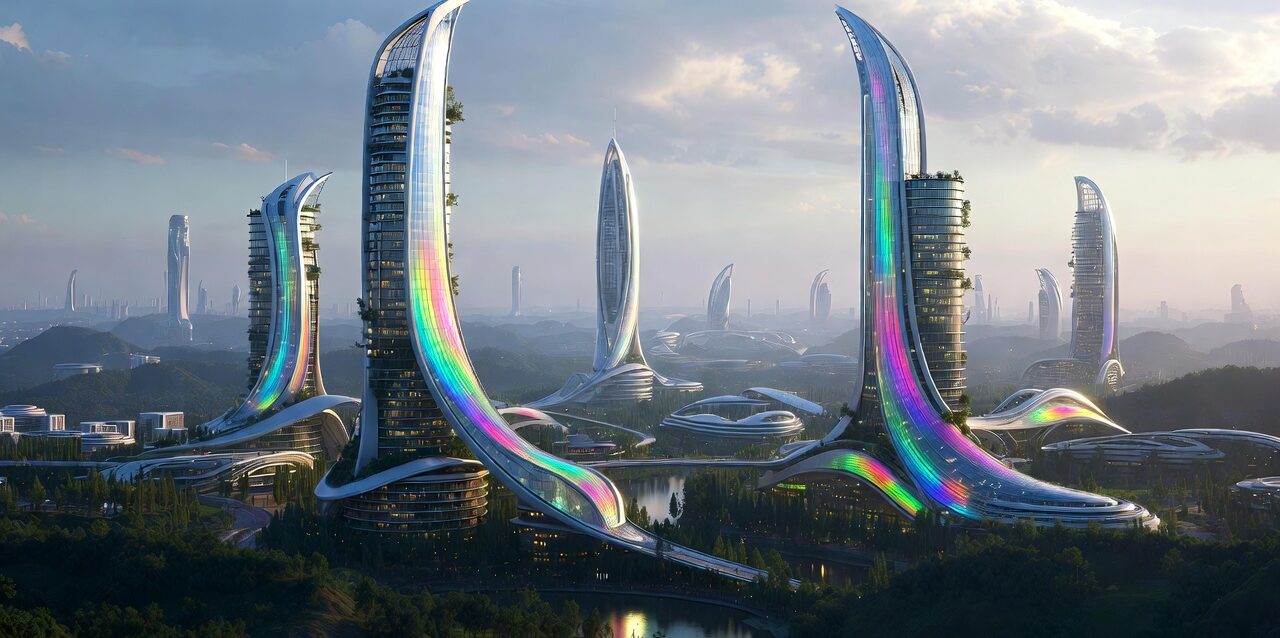
By 2040 city re-design has transformed into predictive, regenerative, and polycentric urban systems — where AI-driven planning anticipates climate impacts, compact mixed-use neighborhoods dominate, green-blue infrastructure absorbs shocks, and cities become self-regulating ecosystems prioritizing equity, health, and low-carbon living.
1. Near-Term (2026–2030): Pilots & Hybrid Models + Climate Adaptation Foundations
- Expansion of 15-Minute & 20-Minute Neighborhoods
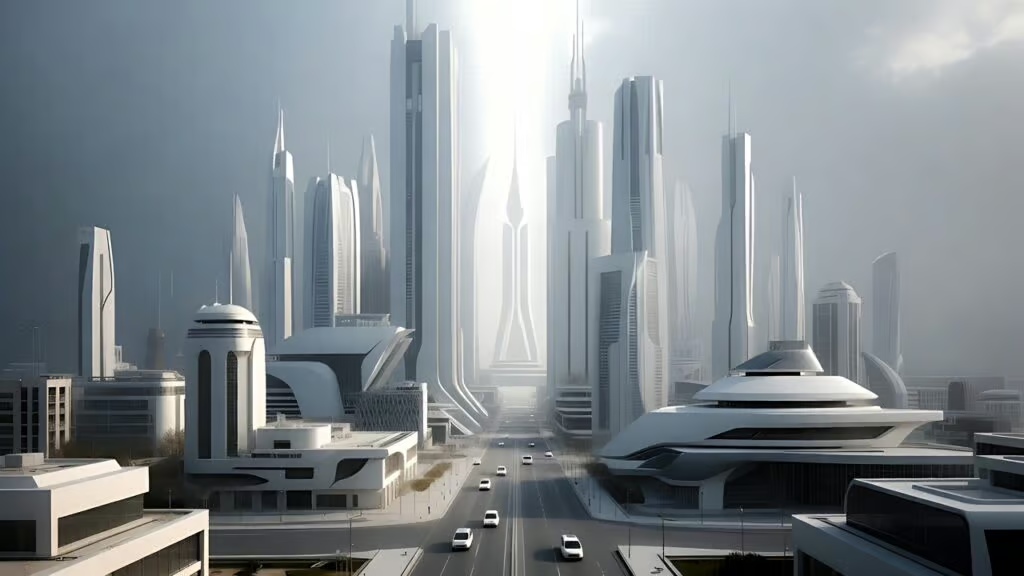
Cities like Paris, Melbourne, and Cleveland scale the 15-minute city concept, retrofitting neighborhoods with mixed-use zoning, pedestrianized streets, and local amenities within walking/cycling distance, reducing car trips by 20–40%. - Sponge Cities & Green Infrastructure Rollout
Permeable surfaces, urban wetlands, and green roofs (e.g., in Chinese sponge city expansions and European retrofits) manage flooding; heat-resilient designs include tree canopies and cool pavements to combat urban heat islands. - Smart & Electrified Mobility Integration
Early autonomous shuttles, EV charging networks, and MaaS (Mobility-as-a-Service) platforms reduce private car ownership; high-speed rail and bike lanes connect polycentric hubs.
2. Medium-Term (2030–2035): Regenerative & Polycentric Re-Design + AI Planning Tools
- Polycentric & Compact Urban Forms
Cities shift to multiple dense hubs linked by high-speed rail and autonomous transit, eliminating urban sprawl; removal of highways reclaims land for parks and housing, boosting local economies. - AI-Driven Adaptive Planning
Digital twins and predictive AI model climate scenarios, optimizing zoning, energy grids, and resource flows; participatory platforms enable mass input for inclusive redesign. - Circular & Biophilic Integration
Buildings as material banks, community gardens, and vertical farms become standard; blue-green corridors restore ecosystems while providing recreation and cooling.
3. Long-Term (2035–2040): Fully Resilient & Autonomous Urban Ecosystems
- Predictive Resilience Networks
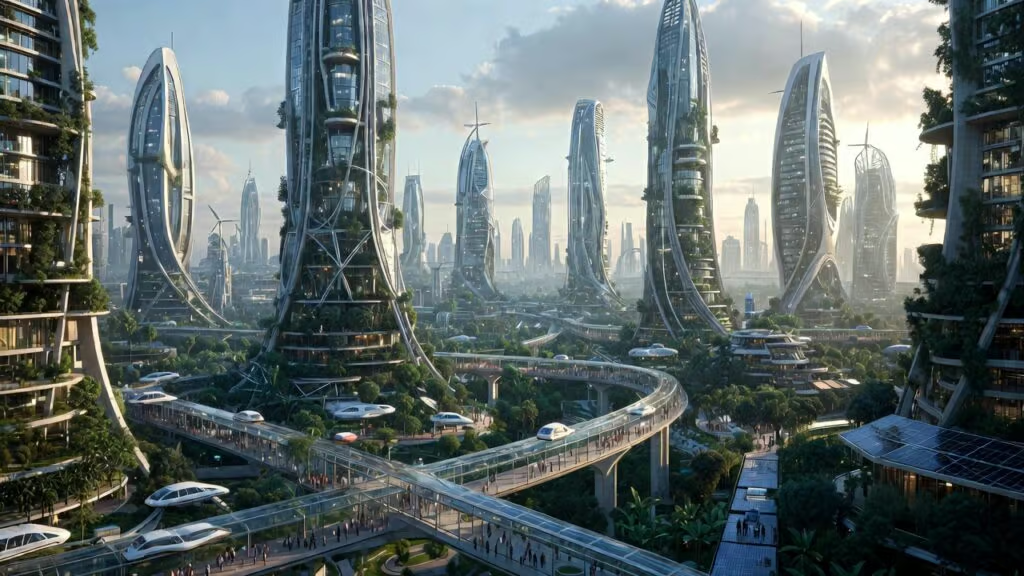
AI forecasts floods, heatwaves, and migrations days ahead; pre-positioned modular infrastructure deploys automatically to vulnerable zones. - Near-Zero Carbon & Equitable Design
Cities achieve carbon neutrality through regenerative systems; universal access to amenities reduces inequality, with adaptive housing for climate migrants. - Global & Cross-Domain Connectivity
Inter-city high-speed networks and shared digital platforms enable seamless resource sharing; international standards promote equitable tech transfer.
Illustrative City Re-Design Scenarios by 2040
- Coastal Megacity Flood Response — AI predicts storm surge → deploys floating barriers and sponge infrastructure → residents access local hubs safely → minimal disruption as green corridors absorb water.
- Heatwave in Dense Urban Core — Predictive cooling networks activate misting systems and shaded paths → community gardens provide relief → AI reroutes transit to avoid hot zones.
- Polycentric Transit Hub Revival — Highway removal reclaims land → new mixed-use districts emerge → autonomous pods connect neighborhoods → daily needs met within 10–15 minutes.
- Climate Migration Integration — Incoming populations directed to adaptive zones → modular housing and green jobs created → AI optimizes resource allocation for inclusive growth.
Key Numbers & Trends by 2040 (illustrative)
- Share of urban trips by active/sustainable modes: 60–85% (up from 20–40%)
- Reduction in urban sprawl expansion: 40–70% via compact redesign
- Climate resilience impact (e.g., flood/heat damage reduction): 50–80%
- Green space per capita in major cities: 20–40 m² (up from 10–15 m²)
- Average daily commute time: 10–20 minutes (down from 30–60)
Risks & Societal Shifts
- Gentrification & Displacement — Rapid redesign may price out vulnerable residents without strong equity measures.
- Tech Over-Reliance & Digital Divide — AI planning could exclude non-connected populations; cyber vulnerabilities threaten smart infrastructure.
- Implementation Inequality — Wealthier cities advance faster, widening global urban divides.
- Cultural & Behavioral Resistance — Shifting from car culture may face pushback; over-planning risks stifling organic community growth.
Bottom Line
By 2040 city re-design shifts from reactive infrastructure fixes to the strategic orchestration of resilient, human-centered urban ecosystems.
The dominant paradigm becomes predictive, regenerative, and inclusive urban living — AI anticipates threats, green systems absorb shocks, and compact designs prioritize people over vehicles.
Re-design stops being about expansion — it becomes about regeneration, turning cities into adaptive networks that enhance well-being and sustainability.
The future urban dweller isn’t commuting across sprawl — it’s thriving locally before challenges escalate.
Lives are sustained not by concrete alone, but by intelligent, nature-integrated systems that make resilience routine.
The next generation won’t remember gridlocked highways and flooded streets — they’ll remember vibrant, walkable neighborhoods where nature, technology, and community converge to create truly livable cities.