Where the City Breathes Again: The Rise of Living Town Squares
From Traditional Gathering Spots to Adaptive, Climate-Resilient, Smart, and Multifunctional Civic Hubs
As of 2026, town squares remain primarily historical or traditional public spaces in many cities—often paved plazas, market squares, or civic gathering areas—with limited adaptations to modern challenges:
- Predominantly hardscaped surfaces contributing to urban heat islands and poor stormwater management
- Functions centered on events, markets, or passive seating; many underused outside peak hours or seasons
- Basic smart elements (e.g., Wi-Fi hotspots, lighting) in progressive cities; climate resilience limited to shade trees or benches
- Global urban population >55%; public spaces face pressures from traffic, pollution, inequality in access, and emerging post-pandemic emphasis on outdoor social life
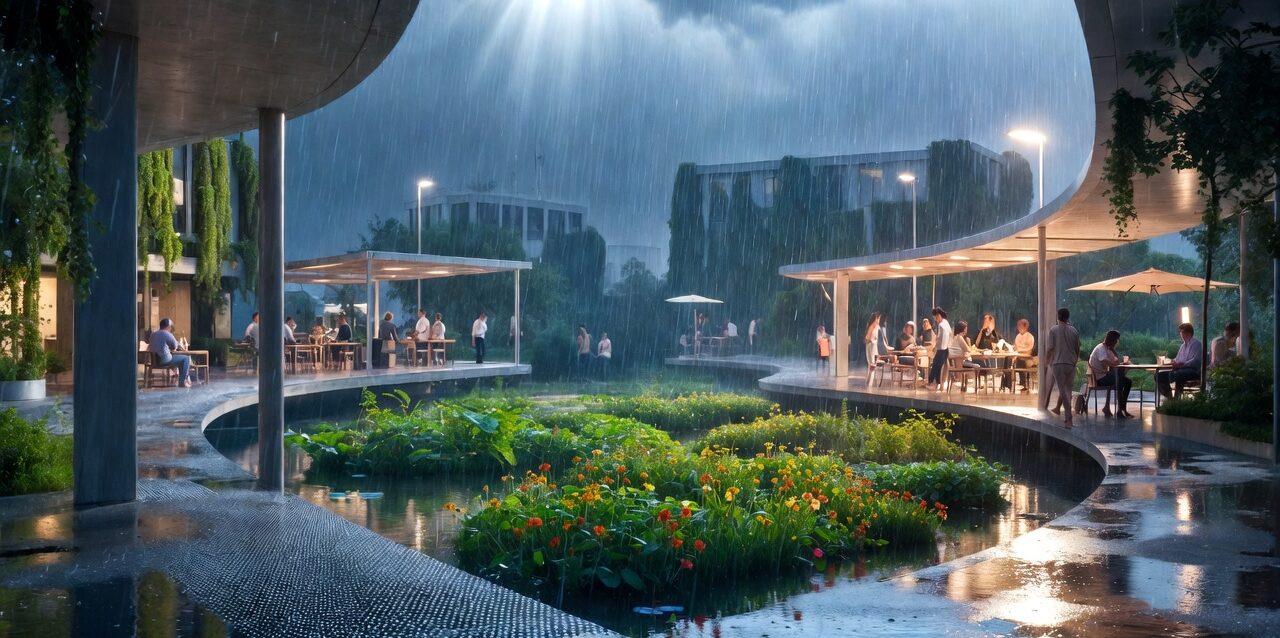
By 2040 town squares have evolved into predictive, regenerative, and inclusive civic ecosystems — where AI-managed adaptive features, integrated green-blue infrastructure, mixed-use programming, and smart technologies transform them into 24/7 multifunctional hubs that build community, mitigate climate impacts, foster equity, and serve as the living heart of neighborhoods and cities.
1. Near-Term (2026–2030): Green Retrofitting + Smart Placemaking + Multifunctional Pilots
- Climate-Resilient Green Upgrades
Permeable paving, urban wetlands, shade canopies, and modular green infrastructure (e.g., bioswales, rain gardens, vertical forests) reduce heat islands and manage flooding; pilots in cities like Lisbon (Martim Moniz transformations) and European sponge-city retrofits increase green coverage by 30–50%. - Smart & Interactive Elements
IoT sensors for real-time crowd management, adaptive lighting, and app-based event programming; kinetic features (e.g., movable seating, pop-up stages) enable flexible use from markets to outdoor offices. - Community-Centric Programming
Mixed-use activation with food trucks, cultural pop-ups, and co-working pods; emphasis on inclusivity through universal design and third-space programming to combat isolation.
2. Medium-Term (2030–2035): AI-Orchestrated Adaptation + Polycentric Integration
- Predictive & Responsive Systems
AI analyzes usage patterns, weather forecasts, and social data to dynamically reconfigure spaces—deploying shade sails during heatwaves, misting systems, or temporary flood barriers; digital twins optimize layouts for events or daily flow. - Multifunctional & Mixed-Use Layers
Squares integrate retail kiosks, micro-mobility hubs, vertical farms, and health pods; 15-minute city principles embed amenities within walking distance, turning squares into neighborhood anchors with day-to-night programming. - Biophilic & Ecological Restoration
Expanded green corridors connect squares to parks; native planting and biodiversity features create cooling microclimates and wildlife habitats, boosting thermal comfort and mental health.
3. Long-Term (2035–2040): Fully Adaptive Civic Ecosystems + Global Equity Standards
- Predictive Resilience Networks
AI anticipates climate events (heat, storms) days ahead; autonomous modular infrastructure (e.g., deployable green roofs, floating platforms in flood-prone areas) activates preemptively. - Inclusive & Democratic Hubs
Augmented reality overlays enable interactive civic engagement (virtual town halls, art installations); universal access ensures equity across ages, abilities, and socio-economic groups. - Interconnected Urban Fabric
Squares link via pedestrian networks, high-speed micro-mobility, and shared digital platforms; international standards promote knowledge-sharing for resilient public space design worldwide.
Illustrative Town Square Scenarios by 2040
- Heatwave Community Refuge — AI predicts extreme temperatures → activates misting, shaded zones, and cooling pavilions → residents gather safely, with real-time health monitoring via wearables → prevents heat-related incidents.
- Multifunctional Market & Civic Hub — Morning farmers’ market transitions to afternoon co-working and evening cultural performances → kinetic furniture and smart lighting reconfigure the space autonomously → supports local economy and social bonds.
- Flood-Resilient Adaptive Plaza — Predictive model flags incoming storm → deploys permeable barriers and green infrastructure → square absorbs water while hosting pop-up events → minimal disruption to community life.
- Inclusive Neighborhood Anchor — AR-enhanced programming connects diverse users → virtual participation for remote residents → fosters dialogue and belonging across demographics.
Key Numbers & Trends by 2040 (illustrative)
- Green coverage in major city squares: 40–70% (up from 10–20%)
- Multifunctional usage hours per day: 18–24 (up from 6–12)
- Reduction in urban heat island effect in squares: 3–6°C
- Community engagement events per square annually: 500–2,000
- Climate resilience impact (flood/heat damage reduction): 50–80%
Risks & Societal Shifts
- Over-Technification & Exclusion — AI systems may prioritize certain users or fail inclusively without equity safeguards.
- Privatization Pressures — Commercial programming could overshadow civic functions if not regulated.
- Maintenance & Inequality — Advanced features require ongoing investment; uneven rollout widens divides between wealthy and underserved areas.
- Behavioral & Cultural Resistance — Shift from static plazas to dynamic hubs may face pushback from traditional users.
Bottom Line
By 2040 town squares shift from static historical relics to the strategic hearts of adaptive, inclusive urban life.
The dominant paradigm becomes predictive, regenerative, and community-orchestrated civic space — AI anticipates needs, green systems absorb shocks, and multifunctional design prioritizes people and planet.
Town squares stop being about monuments — they become living networks that foster connection, resilience, and joy before challenges escalate.
The future citizen isn’t passing through a plaza — it’s thriving in a hub that evolves with them.
Lives are enriched not by stone alone, but by intelligent, nature-integrated spaces that make community routine.
The next generation won’t remember empty paved squares — they’ll remember vibrant, responsive civic hearts where neighbors meet, nature breathes, and cities truly live.