
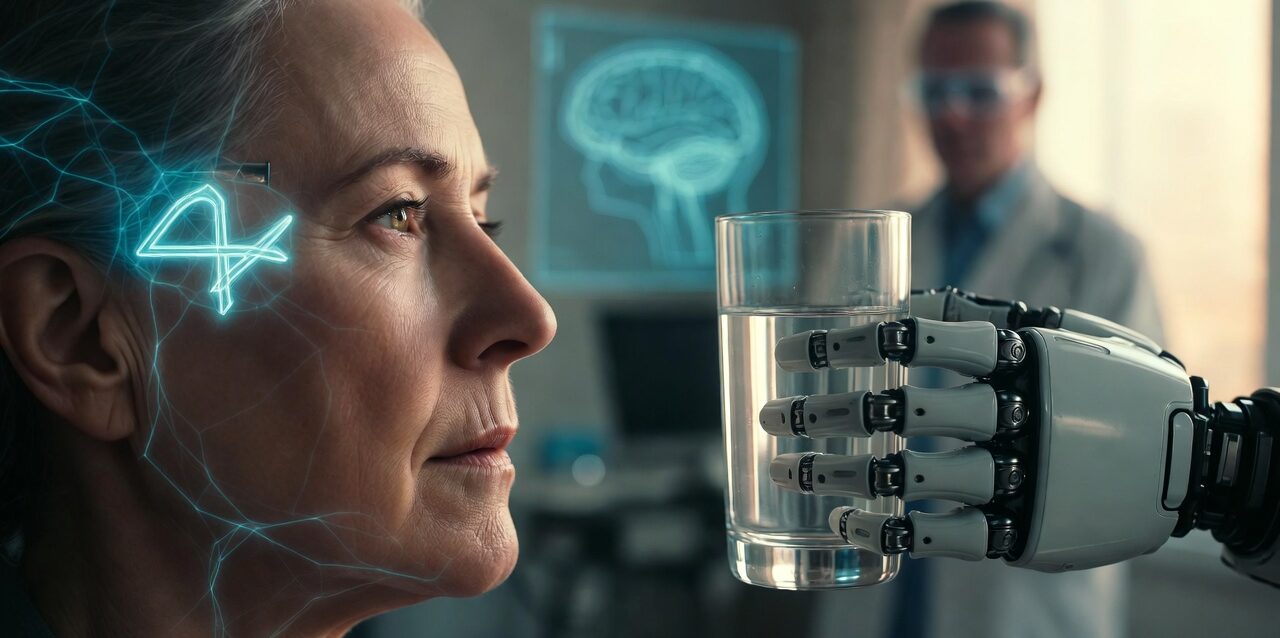
From Implant to Extension: The Convergence of Brains and Machines in the 2040s
From Experimental Neural Implants to Ubiquitous Mind-Machine Symbiosis
As of 2026, brain-computer interfaces (BCIs) are primarily experimental and medical-focused, with invasive implants leading for neurological conditions and emerging non-invasive options for consumer applications:
- Companies like Neuralink gearing up for high-volume production and automated surgeries, with early implants enabling cursor control and basic interactions.
- Synchron and Paradromics advancing stent-based and flexible electrode tech in clinical trials for paralysis and communication restoration.
- Non-invasive EEG devices like LumiMind debuting at CES for sleep and focus enhancement, with real-time control demos.
- Market size around $1.7–2 billion, focused on epilepsy, ALS, and early mental health therapies; ethical concerns on privacy and safety prominent.
By 2040 BCIs and human-machine convergence have evolved into predictive, adaptive, and ethically integrated neural ecosystems — where seamless interfaces enhance cognition, enable telepathic communication, and augment capabilities, shifting from restorative tools to universal enhancements for productivity, health, and social interaction.
1. Near-Term (2026–2030): Advanced Implants + Non-Invasive Expansion + Clinical Maturation
- High-Resolution Invasive BCIs
Implants scale to thousands of channels (e.g., Neuralink successors with 10,000+ electrodes), enabling precise prosthetic control and speech for ALS patients; automated surgeries reduce risks, with trials expanding to dozens. - Non-Invasive & Hybrid Growth
Wearable EEG/fNIRS (e.g., LumiMind evolutions) achieve 85–95% accuracy for commands; ultrasound BCIs emerge for temporary modulation without surgery. - Therapeutic & Early Consumer Pilots
BCIs integrate AI for seizure prediction and mood modulation; initial apps for productivity (thought-controlled interfaces) and VR integration begin.
2. Medium-Term (2030–2035): Scalable Augmentation + AI-BCI Fusion + Commercial Adoption
- Versatile Consumer BCIs
Minimally invasive options (e.g., injectable threads) support millions for gaming, education, and work; non-invasive devices close gap with implants via AI-enhanced decoding. - AI-Driven Neural Enhancement
Agentic AI processes thoughts in real-time, enabling 150+ wpm thought-to-text; predictive models anticipate intent, reducing latency. - Secure & Interoperable Ecosystems
Blockchain protects neural data; standards enable BCIs to interface with smart devices, vehicles, and AR/VR for seamless convergence.
3. Long-Term (2035–2040): Predictive Symbiosis + Cognitive Expansion
- Anticipatory Neural Networks
BCIs predict fatigue or emotions via wearables/implants, auto-adjusting for peak performance; preemptive therapies halt decline. - Telepathic & Collective Interfaces
Direct brain-to-brain links enable shared experiences; zero-latency systems handle interactions autonomously, with humans guiding ethics. - Global Multi-Modal Integration
BCIs fuse with quantum AI and robotics; equitable access via subsidies reduces disparities in health and education worldwide.
Illustrative BCI & Convergence Scenarios by 2040
- Daily Augmentation — BCI predicts intent → activates exoskeleton for mobility → integrates with home AI for autonomous living.
- Collaborative Innovation — Team shares thoughts via network → AI triages ideas → accelerates R&D by 80%.
- Mental Health Proactive Care — Detects anxiety → delivers neuromodulation → prevents episodes without drugs.
- Telepathic Education — Students download skills → neural feedback speeds learning → connects global minds.
Key Numbers & Trends by 2040 (illustrative)
- Global BCI market size: $30–400 billion (up from $1.7B in 2026).
- Population with BCIs: 20–40% in developed regions.
- Thought accuracy: 95–99%.
- Neural channels per device: 100,000–1 million.
- Neurological impact reduction: 50–80% for disorders.
Risks & Societal Shifts
- Privacy & Hacking — Neural data vulnerabilities; cyber/EMP threats disrupt.
- Dependence & Inequality — Skill atrophy; access favors wealthy.
- Ethical Issues — Human-machine blurring; liability for AI decisions.
- Regulatory Gaps — Uneven standards risk misuse in enhancement.
Bottom Line
By 2040 brain-computer interfaces and human-machine convergence shift from medical aids to the strategic extensions of cognition.
The dominant paradigm becomes predictive, symbiotic, and governed neural augmentation — BCIs anticipate needs, connect minds, and enhance abilities, while safeguards preserve humanity.
Convergence stops being about control — it becomes about expansion, turning thoughts into shared reality.
The future human isn’t limited by biology — it’s the one who merges seamlessly before boundaries dissolve.
Lives are elevated not by devices alone, but by integrated intelligence redefining potential.
The next generation won’t remember interfaces — they’ll remember the silent symphony of minds making innovation boundless.