
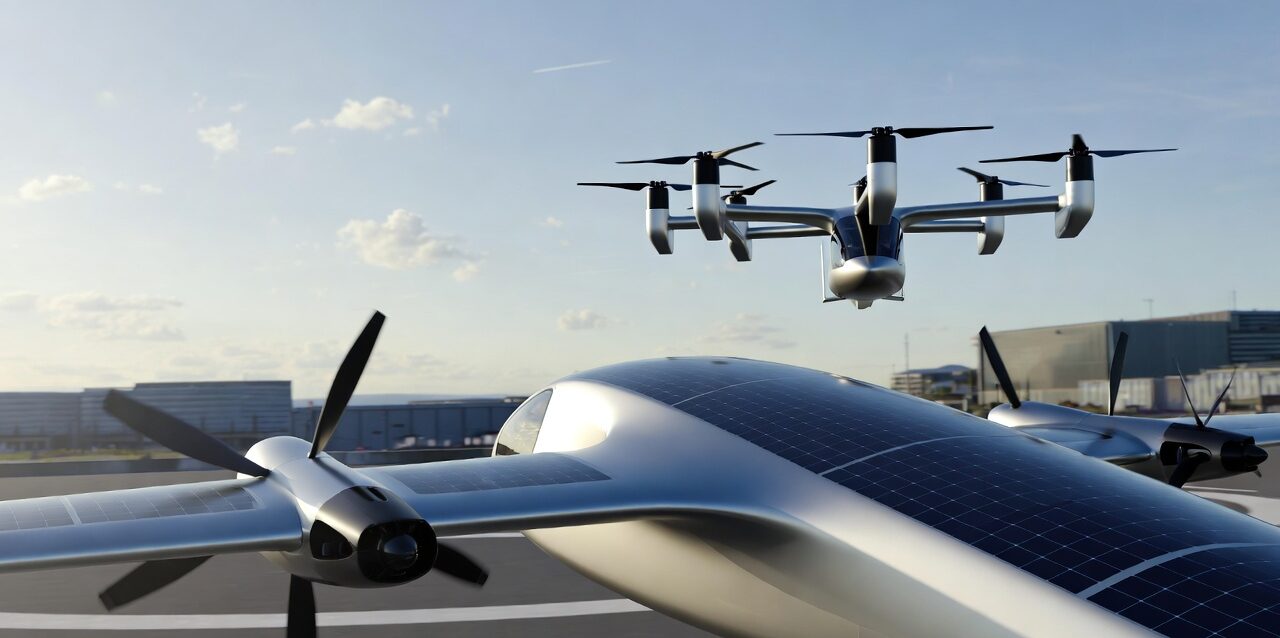
Aircraft of the Future: Decarbonized Wings and Vertical Urban Flight
From Jet Fuel Dominance to Hybrid, Electric, Hydrogen, and Supersonic Revival
As of February 2026, the global commercial aircraft fleet stands at roughly 25,000–26,000 passenger and freighter aircraft, with demand projected to nearly double by 2044 (Airbus Global Market Forecast 2025-2044: ~43,420 new aircraft needed). Passenger traffic continues to rebound and grow (~5–6% annually in many forecasts), but aviation faces intense pressure to decarbonize — responsible for ~2–3% of global CO₂ emissions, with projections showing potential tripling of emissions by 2050 without action. Sustainable Aviation Fuel (SAF) blends, efficiency gains, and emerging propulsion (electric, hydrogen) are key pathways toward net-zero goals (industry targets: net-zero CO₂ by 2050).
This case study synthesizes forecasts from Airbus, Boeing, IATA, FAA, ZeroAvia, Airbus ZEROe concepts, and industry analyses to outline plausible trajectories for aircraft design, propulsion, and operations over the next 15 years.
1. Near-Term (2026–2030): Efficiency Gains & Early Alternative Propulsion
- Sustainable Aviation Fuel (SAF) Scaling
SAF (biofuels, waste-based, synthetic) becomes mandatory in blends — targets like ReFuelEU (2% in 2025, rising to 70% by 2050) and U.S. incentives drive adoption. Production grows from millions to billions of gallons by late 2020s, though still costly and limited (~1–5% of total fuel in optimistic scenarios). - Next-Gen Conventional Aircraft
New efficient models (A321XLR, Boeing 777X successors, narrowbody updates) enter service with 15–25% better fuel burn. Fleet renewal accelerates — younger, more efficient aircraft reduce emissions ~20% per seat-km. - Electric & Hybrid-Electric Entry
Small regional electric aircraft (9–19 seats, 200–400 nm range) begin commercial service ~2028–2030 (e.g., ZeroAvia/Universal Hydrogen retrofits, Heart Aerospace). Battery-electric suits short-haul; early hybrid-electric bridges the gap for larger regional jets.
2. Medium-Term (2030–2035): Hydrogen & Electric Scale-Up
- Hydrogen-Powered Breakthroughs
Hydrogen-electric and combustion aircraft enter service for regional/medium-haul (~2035): Airbus ZEROe concepts target entry mid-2030s (turbofan/turboprop, 100–200 seats). ZeroAvia/others aim for 40–80 pax hydrogen-electric by 2040. Infrastructure (hydrogen storage, airports) begins rollout. - eVTOL & Urban Air Mobility
Electric vertical takeoff and landing (eVTOL) aircraft scale for air taxis/urban transport — commercial operations in select cities by late 2020s–early 2030s, with market potential reaching trillions by 2040 (JPMorgan estimates). Joby, Archer, Lilium, and others certify and deploy fleets. - Supersonic Return
Quiet supersonic jets (Boom Overture, Spike) begin commercial flights ~2030–2035 — Mach 1.7, business-class pricing, transatlantic in ~3.5 hours.
3. Long-Term (2035–2040): Decarbonized & Advanced Propulsion Dominance
- Hydrogen & Hybrid Maturity
Hydrogen aircraft scale for short/medium-haul; larger widebody concepts emerge ~2040. Battery-electric expands for regional; hybrids bridge long-haul. SAF reaches higher blends (50–100% capable aircraft standard). - Advanced Designs
Blended wing bodies, distributed propulsion, and ultra-efficient airframes reduce drag/emissions. Autonomous cargo and regional passenger flights advance. - Urban & Supersonic Integration
eVTOL networks mature in dense cities; supersonic returns for premium long-haul. Fleet doubles (Airbus: ~49,000 aircraft by 2044); emissions mitigated via tech mix.
Key Aircraft Types by 2040 (Illustrative Examples)
- Regional Electric/Hybrid — 19–80 seats, 200–800 nm, zero-emission short-haul.
- Hydrogen Medium-Haul — 100–200 seats, 2,000–4,000 nm, near-zero CO₂.
- Sustainable Jet — Conventional airframe with 50–100% SAF or hybrid propulsion.
- eVTOL Air Taxi — 4–6 pax, urban 50–150 nm hops.
- Supersonic — Mach 1.7–2.2, transoceanic in half the time.
Risks & Societal Shifts
- Infrastructure Lag — Hydrogen airports, charging networks, SAF supply must scale.
- Cost & Equity — Early adoption premium; developing regions lag.
- Safety & Regulation — Certification for hydrogen/eVTOL/supersonic critical.
- Environmental — Full lifecycle emissions (hydrogen production) must be green.
Bottom Line
By 2040, aircraft evolve from fossil-fuel jets to a diverse, decarbonized fleet blending efficiency, SAF, electric/hybrid regional, hydrogen medium-haul, and supersonic returns. The dominant paradigm becomes sustainable, hybrid-propulsion aviation — cutting emissions while meeting growing demand (passenger numbers doubling, fleet expansion). Aviation won’t be fully zero-emission yet, but tech convergence makes net-zero plausible by mid-century. The future isn’t just flying faster or farther — it’s cleaner, smarter, and more integrated with urban mobility and climate goals, provided investment, policy, and innovation align.