
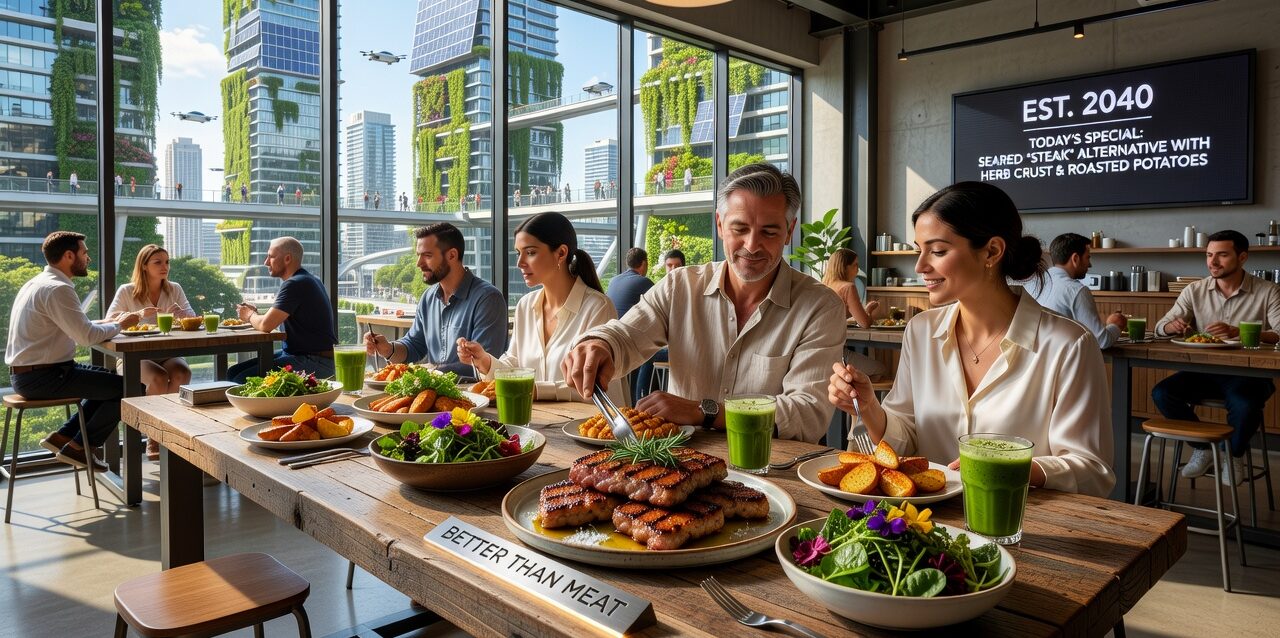
Beyond Animal Meat: The Rise of Tastier, Healthier, Greener Proteins by 2040
The Rise of Superior Plant-Based, Cultivated, and Fermented Proteins
As of February 2026, animal meat (beef, pork, poultry, seafood) still dominates global protein consumption, but alternatives are accelerating. Concerns about climate impact (livestock contributes ~14.5% of anthropogenic greenhouse gases), health (processed/red meat links to disease), ethics (animal welfare), and resource use (land, water, feed inefficiency) drive demand for better options. The alternative protein market (plant-based, cultivated/lab-grown, precision fermentation) is valued at ~$20–36 billion (2024–2025 estimates) and is projected to grow significantly — reaching $36–150+ billion by 2030 in various forecasts, with optimistic scenarios suggesting alternatives could supply 35–60% of global meat consumption by 2040.
This case study focuses on alternatives that go beyond animal meat products — offering comparable or superior nutrition, taste, texture, and sustainability through plant-based innovation, cultivated (cell-based) meat, and precision fermentation.
1. Near-Term (2026–2030): Plant-Based Maturity & Early Cultivated/Fermented Breakthroughs
- Plant-Based Dominance
Next-generation plant-based meats (pea, soy, wheat gluten, fungi/mycoprotein, algae) improve dramatically — better texture (extrusion, 3D printing), flavor (fermentation, Maillard reaction tech), and nutrition (added heme-like compounds, complete amino profiles). Brands like Impossible, Beyond, and new players scale; plant-based captures 5–10%+ of meat market in many regions by 2030. - Precision Fermentation Takes Off
Microbes produce animal-identical proteins (whey, casein, egg albumin, collagen) — dairy/egg alternatives become indistinguishable. Companies like Perfect Day, The Every Company, and Formo expand; fermented dairy/meat ingredients enter mainstream products. - Cultivated Meat Pilots
First commercial sales in select markets (Singapore, US, Israel) — high-cost, premium products (e.g., cultivated chicken, beef). Production scales slowly; costs fall from thousands to hundreds of dollars per kg.
2. Medium-Term (2030–2035): Hybrid & Cost-Competitive Alternatives
- Cultivated Meat Scales
Bioreactors and scaffolding advance; cultivated meat becomes cost-competitive for some cuts. Forecasts suggest 10–35% of meat supply could be cultivated by 2040 in optimistic paths. Hybrid products (cultivated + plant-based) bridge taste and affordability. - Fermentation & Novel Proteins
Precision fermentation dominates dairy/egg replacement; microbial biomass (e.g., fungi, algae) and insect proteins grow in niche markets. Plant-based continues strong growth — better processing makes it indistinguishable from meat in many applications. - Consumer & Market Shift
Alternatives gain mainstream acceptance — better taste, lower prices, and health/environmental benefits drive adoption. Plant-based and fermented products lead; cultivated enters premium segments.
3. Long-Term (2035–2040): Alternative Proteins Dominate
- Market Transformation
Optimistic scenarios (A.T. Kearney, RethinkX) project 60%+ of global meat consumption from alternatives by 2040 — 25–35% plant-based, 25–35% cultivated, with fermentation filling gaps (dairy, eggs, ingredients). Conventional meat declines sharply in share despite overall protein demand growth. - Superior Products
Alternatives outperform animal meat: - Nutrition — Tailored profiles (lower saturated fat, added omega-3s, complete proteins, no antibiotics/hormones).
- Taste/Texture — Precision-engineered for authenticity or improvement.
- Sustainability — 80–95% less land/water, 70–95% lower emissions (cultivated/fermented).
- Ethics — No animal slaughter.
- Global & Systemic Change
Food systems decentralize — vertical farms, bioreactors, and local production reduce transport. Personalized nutrition integrates alternatives into daily diets.
Key Alternatives by 2040 (Illustrative Comparison)
- Plant-Based — Dominant for affordability, texture innovation; ~25–35% of meat market.
- Cultivated (Lab-Grown) — Premium to mainstream; ~25–35% share in optimistic paths; biologically identical to animal meat.
- Precision Fermentation — Revolutionizes dairy/eggs/ingredients; microbial production of proteins.
- Other — Algae, fungi, insects in niches; hybrid products common.
Risks & Societal Shifts
- Inequality — Premium cultivated products initially favor wealthy; access must scale.
- Acceptance — Taste, cost, and cultural barriers persist; regulation and labeling critical.
- Environmental — Energy use in bioreactors; green energy essential.
- Industry Disruption — Traditional livestock farming faces decline; transition support needed.
Bottom Line
By 2040, food moves beyond animal meat — superior alternatives (plant-based, cultivated, fermented) become dominant, offering better nutrition, taste, ethics, and sustainability. The dominant paradigm becomes precision-engineered, scalable, and planet-friendly proteins — cultivated meat provides real animal protein without slaughter, fermentation delivers identical dairy/eggs, and advanced plant-based matches or exceeds conventional products. The future isn’t less meat — it’s better protein: healthier, kinder, and greener, meeting growing demand while healing the planet. The shift is not a replacement — it’s an upgrade, driven by science, consumer choice, and necessity.