
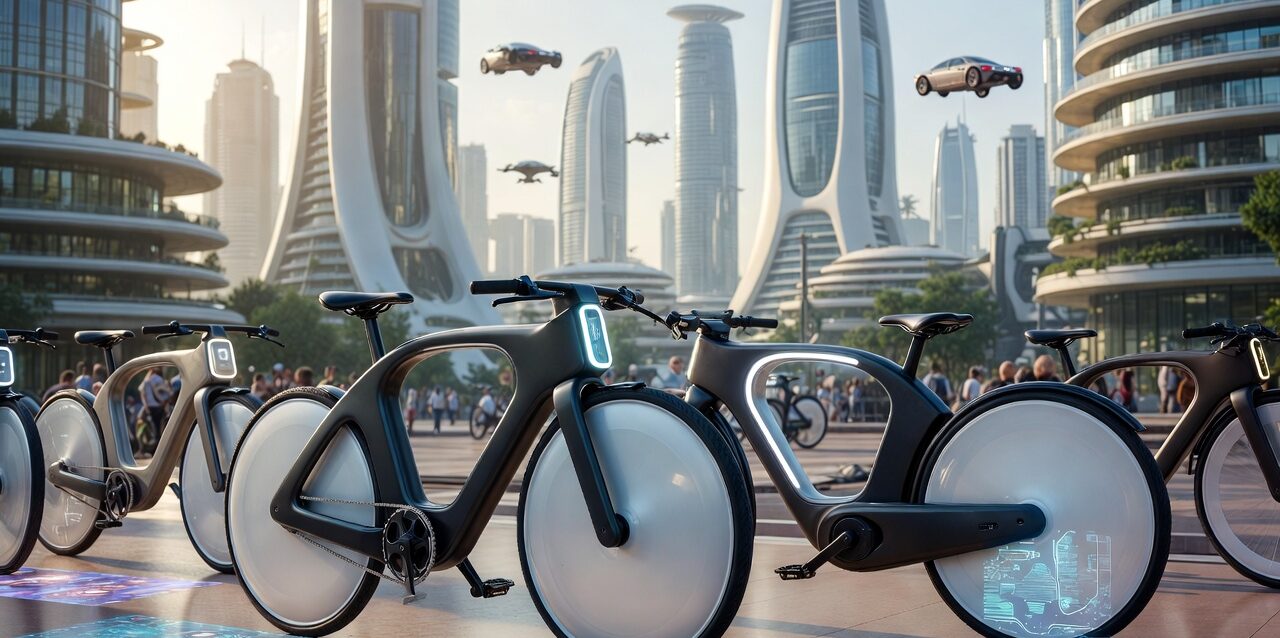
Bicycles: Connected, Electric, and Built for the Future City
From Traditional Pedal Power to Smart, Electric, Connected, and Micromobility Dominance
As of February 2026, bicycles remain a vital part of urban mobility, recreation, and sustainability. The global bicycle market is valued at around $80–100 billion annually, with e-bikes driving much of the growth. Electric bicycles (e-bikes) are surging, with sales projected to reach $113–150 billion by 2030 (CAGR 10–15% in various forecasts). Micromobility (bikes, e-bikes, e-scooters) is valued at ~$180 billion and could double to $440 billion by 2030 (McKinsey). Urbanization, climate goals, traffic congestion, and health trends fuel this rise.
By 2040, bicycles evolve into smart, electric, connected, and essential micromobility tools — integral to sustainable urban transport, last-mile logistics, and personal health. Traditional pedal bikes persist for recreation and niche use, but e-bikes and cargo variants dominate daily commuting, delivery, and family transport.
1. Near-Term (2026–2030): E-Bike Explosion & Infrastructure Growth
- E-Bikes Become Mainstream
E-bike sales grow rapidly — projected to triple or more in many markets by 2030. Prices drop, ranges extend (80–150 km), and batteries improve (lighter, faster charging, longer life). Cargo e-bikes surge for urban delivery and family use — market could reach $3–5 billion by 2030. - Smart & Connected Features
Bikes integrate IoT: GPS tracking, anti-theft alarms, app connectivity (ride data, navigation, maintenance alerts), and basic safety (automatic lights, collision warnings). Bosch and others push “connected biking” — bikes communicate with cities (traffic signals, parking), other vehicles, and infrastructure. - Urban Infrastructure & Policy
Cities expand bike lanes (e.g., Chengdu’s massive network), low-emission zones favor micromobility, and subsidies/incentives boost adoption. Shared bike/e-bike systems scale in cities worldwide.
2. Medium-Term (2030–2035): Advanced Tech & Cargo Dominance
- Smart Bikes Evolve
AR navigation overlays (via glasses or handlebar displays), AI route optimization (avoid hazards, optimize for energy), and adaptive assistance (adjust power based on rider fitness, terrain, or load). Connectivity deepens — bikes “talk” to smart cities for real-time safety. - Cargo & Utility Bikes Surge
Electric cargo bikes become standard for last-mile delivery, family transport, and small business. Forecasts show 20–30% of urban deliveries via e-cargo by 2035 in leading cities. Long-tail designs, modular cargo, and heavy-duty batteries expand use. - Health & Sustainability Focus
Bikes integrate with wellness apps (track fitness, encourage active mobility). Lightweight materials (carbon fiber, advanced alloys) and efficient motors reduce weight and increase range.
3. Long-Term (2035–2040): Ubiquitous Micromobility & Intelligent Systems
- Fully Integrated Urban Mobility
Bicycles (especially e-bikes) become a core pillar of transport — potentially handling 20–40% of short urban trips in progressive cities. Seamless integration with public transit, ride-sharing, and autonomous vehicles. - Next-Gen Innovations
Solar-assisted charging (panels on frames), solid-state batteries (longer range, faster charge), and advanced connectivity (V2X for safety). Autonomous cargo bikes handle deliveries without riders in some scenarios. - Global & Cultural Shift
E-bikes dominate sales in many markets — some predict most bikes sold will be electric by 2030–2040. Cargo bikes reshape logistics; micromobility reduces car dependency, cuts emissions, and improves urban health.
Key Bicycle Trends by 2040 (Illustrative Examples)
- Daily Commuter — Connected e-bike with AI navigation, adaptive power, and real-time safety alerts.
- Cargo/Family Bike — Heavy-duty e-cargo with modular storage, long range, and child seats.
- Smart Urban Bike — Lightweight, solar-assisted, fully app-integrated for seamless city mobility.
- Recreational/Performance — High-end non-electric or hybrid for fitness and enjoyment.
Risks & Societal Shifts
- Infrastructure Lag — Bike lanes and charging/parking must scale.
- Safety & Regulation — Speed limits, helmet rules, and anti-theft measures evolve.
- Inequality — High-end smart e-bikes favor affluent; shared systems help bridge gaps.
- Battery & Recycling — Sustainable sourcing and end-of-life management critical.
Bottom Line
By 2040, bicycles — especially electric and smart variants — become a dominant force in urban mobility. The dominant paradigm shifts to connected, sustainable, and versatile micromobility — e-bikes and cargo bikes handle commuting, delivery, and family transport with greater efficiency, safety, and integration than ever. Bicycles won’t replace cars entirely — but they will claim a much larger share of short trips, reduce emissions, improve health, and reshape cities. The future isn’t just more bikes — it’s smarter, greener, and more connected cycling that makes active, low-impact transport the default for millions. The pedal-powered revolution is electric, intelligent, and unstoppable.