
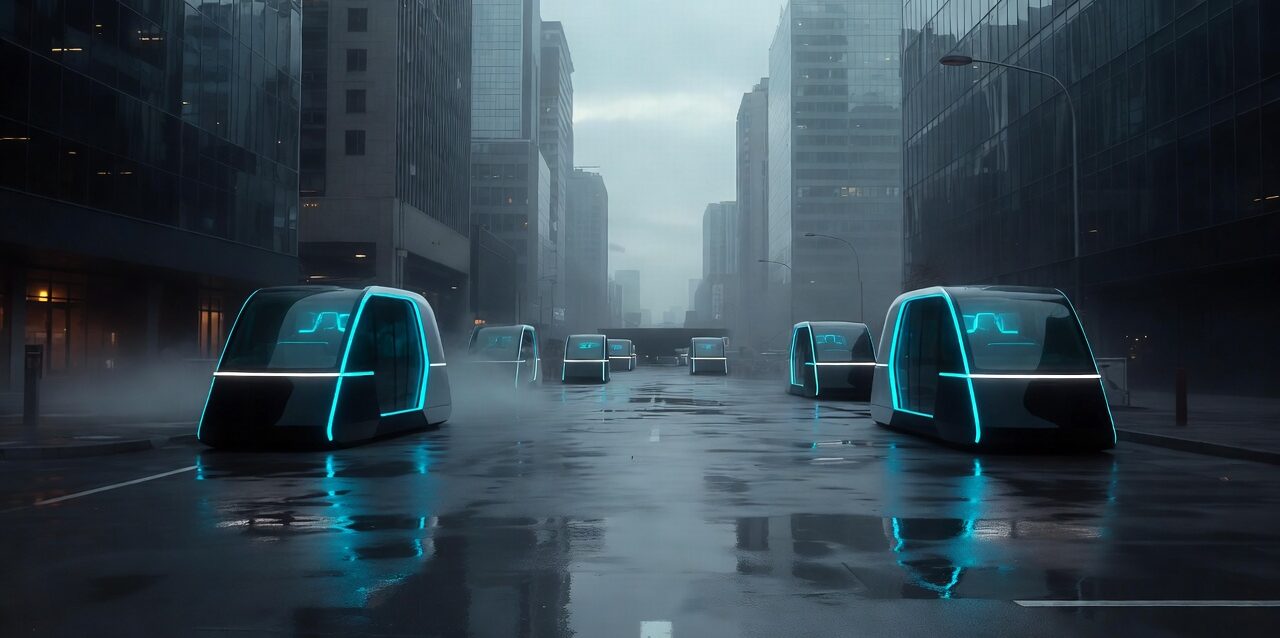
From Human-Driven Cabs to Fully Autonomous, Multi-Modal, and Mobility-as-a-Service Ecosystems
As of February 2026, taxis and ride-hailing services remain predominantly human-driven, with Uber, Lyft, Didi, Bolt, and local operators dominating. Global ride-hailing revenue exceeds $150–200 billion annually, but the industry faces challenges: driver shortages, high operational costs, safety incidents, traffic congestion, and growing pressure to electrify and reduce emissions. Autonomous vehicle pilots (Waymo, Cruise, Baidu Apollo, Pony.ai) operate in limited geo-fenced areas, mostly in the U.S. and China.
By 2040, taxis evolve into fully autonomous, electric, and integrated multi-modal fleets — part of seamless Mobility-as-a-Service (MaaS) platforms. Human drivers largely disappear from urban taxi services, replaced by AI-operated vehicles, pods, and hybrid systems that prioritize safety, efficiency, affordability, and sustainability.
1. Near-Term (2026–2030): Scaling Robotaxis & Electrification
- Robotaxi Expansion
Waymo, Cruise, Baidu, and others scale operations in 10–30 major cities (U.S., China, Middle East).
Level 4 autonomy (no human driver in geo-fenced areas) becomes reliable for urban/suburban routes.
Ride-hailing apps integrate robotaxi options alongside human drivers — users often prefer cheaper/safer autonomous rides. - Mass EV Transition
Electric vehicles reach 50–70% of new ride-hailing fleets.
Fast-charging corridors and hub depots enable high utilization (vehicles operate 18–20 hours/day).
Prices drop 20–40% vs human-driven rides due to no driver cost. - Multi-Modal Integration
MaaS platforms (Uber, Lyft, Didi successors) combine robotaxis, e-bikes, scooters, public transit, and micro-transit (autonomous shuttles) into one app — one payment, optimized routing.
2. Medium-Term (2030–2035): Full Autonomy & Urban Redesign
- Human Drivers Phased Out
In leading cities (San Francisco, Beijing, Dubai, Singapore, Shanghai), 80–95% of taxi rides are autonomous.
Human drivers shift to oversight roles, luxury/premium services, or rural/intercity routes. - Vehicle Design Revolution
Purpose-built robotaxis (no steering wheel, bidirectional seating, large doors, easy cleaning) dominate fleets.
4–6 passenger pods with modular interiors (work mode, family mode, privacy mode) become common. - City Infrastructure Adaptation
Dedicated robotaxi lanes, curbside charging hubs, and automated cleaning stations appear.
Parking demand drops 30–60% in urban cores — space repurposed for green areas, bike lanes, or micro-housing.
3. Long-Term (2035–2040): Seamless, Shared, and Invisible Mobility
- Mobility-as-a-Service Dominance
Personal car ownership falls sharply in cities (20–40% of households).
Users subscribe to MaaS plans — unlimited rides across robotaxis, eVTOL, high-speed pods, and public transit. - Air-Ground Integration
eVTOL air taxis (Joby, Archer, Lilium successors) connect city centers to suburbs/airports — 10–30 minute hops replace 60–90 minute road trips.
Ground robotaxis handle last-mile seamlessly. - Zero-Emission & Regenerative Fleets
All vehicles are electric/hydrogen with high utilization (vehicles operate 20+ hours/day).
Energy harvested from braking, solar panels, and inductive charging roads.
Fleet emissions approach zero; cities reduce transport-related CO₂ by 50–80%.
Illustrative City-to-City & Intra-City Travel Scenarios by 2040
- Morning Commute — App books autonomous pod → picks you up at door → drives to hyperloop station → transfers to 800 km/h vacuum tube → arrives in another city in 30 minutes.
- Airport Transfer — eVTOL air taxi lands on rooftop pad → 15-minute flight → autonomous ground pod takes you to final destination.
- Night Out — Robotaxi arrives silently, interior adjusts to mood (lighting, music), pays automatically, drops you home without driver interaction.
- Shared Ride — MaaS suggests carpool with compatible passengers → price drops 40%, social/productive ride with work or conversation.
Key Numbers & Trends by 2040 (illustrative)
- Autonomous taxi share in major cities: 80–95% of rides
- Personal car ownership in urban centers: down 40–70%
- Average intercity travel time reduction: 40–70% on high-speed corridors
- Ride-hailing cost per km: down 50–70% (no driver cost)
- Urban transport emissions: down 60–90% in leading cities
- eVTOL daily flights in mega-cities: thousands per day
Risks & Societal Shifts
- Inequality — Premium autonomous/eVTOL services favor higher-income users; rural areas lag.
- Job Displacement — Millions of drivers transition to new roles (fleet management, oversight, maintenance).
- Safety & Regulation — Public trust requires near-perfect safety records; cyber vulnerabilities in autonomous fleets are critical risks.
- Urban Redesign — Cities repurpose parking for housing/parks; traffic congestion shifts to air corridors.
Bottom Line
By 2040, taxis disappear as human-driven vehicles — they become autonomous, electric, and integrated parts of seamless Mobility-as-a-Service ecosystems.
The dominant paradigm shifts to frictionless, multi-modal, and low-carbon urban/intercity travel — robotaxis handle ground movement, eVTOL covers short hops, and high-speed tubes connect cities.
Traveling stops being something you plan and endure — it becomes invisible, affordable, and effortless.
The future isn’t better taxis — it’s the end of taxis as we know them, replaced by a fluid, intelligent mobility layer that lets you focus on life instead of transport.
Cities become more livable, air cleaner, and time richer — because getting there is no longer the hard part.