
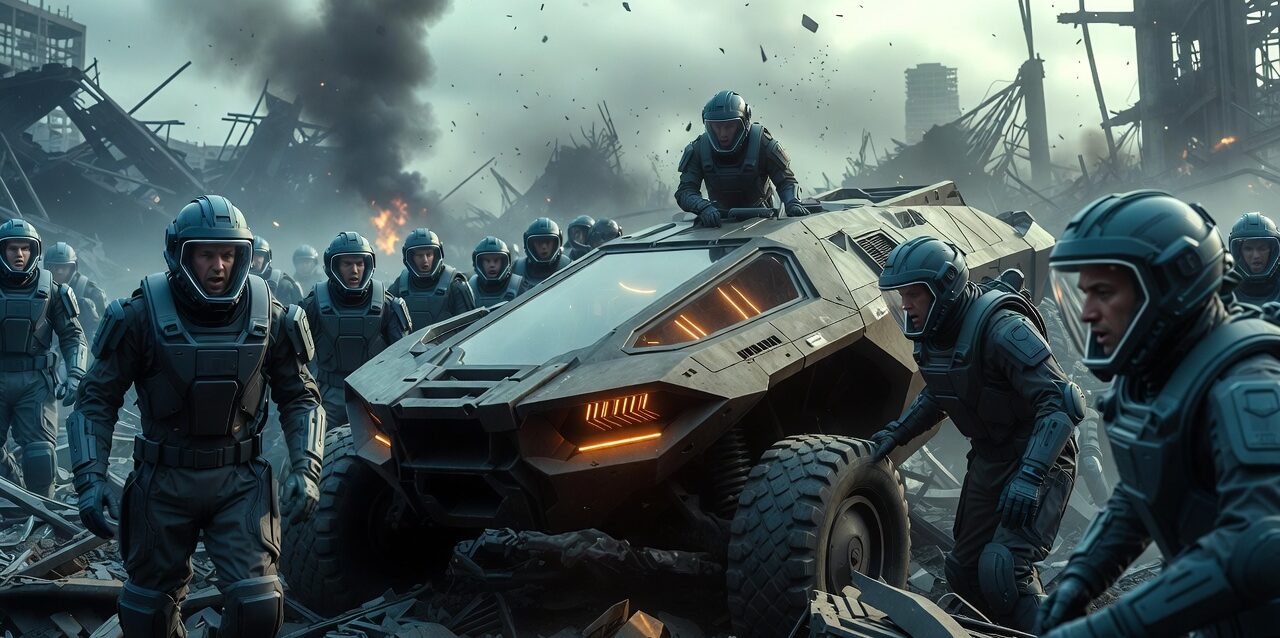
From Human-Led First Responders to AI-Orchestrated, Multi-Domain, and Swarm-Enabled Life-Saving Networks
As of 2026, rescue teams (firefighters, paramedics, search & rescue specialists, urban disaster response units, mountain rescue, maritime SAR) remain predominantly human-operated, with technology playing a supportive role:
- Drones for aerial reconnaissance
- Thermal imaging & CO detectors
- Robotic crawlers for confined-space entry
- Communication via radios & satellite phones
- Response times average 5–15 minutes in urban areas (longer in rural/remote zones)
By 2040 rescue operations have transformed into proactive, predictive, autonomous-heavy, and multi-domain systems — where AI predicts incidents, swarms of robots perform initial response, and humans focus on high-judgment coordination, empathy, and complex rescues.
1. Near-Term (2026–2030): Drone & Robot First Response + Predictive Dispatch
- Drone & Ground Robot Swarms as First Arrivers
Small, rugged drones (thermal, gas, structural integrity sensors) and quadruped/wheeled robots (Boston Dynamics Spot successors, ANYmal, Chinese Sharp Claw) become standard first-response assets.
They reach scenes in 1–4 minutes, provide live 360° video, locate survivors, detect hazards (gas leaks, structural instability, radiation), and relay data to human teams. - Predictive & Pre-Positioning AI
City-wide sensor networks (seismic, weather, building health monitors, traffic cameras) + AI predict incidents (structural collapse, wildfires, flooding) minutes to hours ahead.
Autonomous drones/robots pre-position near high-risk zones (old buildings, wildfire-prone forests, flood plains). - Augmented Human Responders
Firefighters/paramedics wear lightweight AR glasses or helmet displays showing real-time drone feeds, building blueprints, survivor locations, and hazard overlays.
Exoskeletons reduce fatigue and increase lifting capacity by 30–50%.
2. Medium-Term (2030–2035): Autonomous Swarm Rescue & On-Scene AI Triage
- Large-Scale Autonomous Swarms
Swarms of 50–500 small aerial/ground/underwater robots self-coordinate: - search grid patterns
- map survivor locations
- deliver oxygen masks, epi-pens, defibrillators
- clear rubble with coordinated lifting
- establish mesh communication networks when cellular fails
- AI-Driven On-Scene Triage & Decision-Making
Robots use multimodal sensors (thermal, acoustic, CO₂, heartbeat detection) to triage victims in seconds.
AI prioritizes extraction order (“critical internal bleeding – extract first”, “stable but trapped – stabilize on-site”). - Amphibious & Vertical Rescue Robots
Legged robots climb collapsed structures; amphibious drones operate underwater/in floodwaters; snake-like robots enter collapsed buildings through tiny gaps.
3. Long-Term (2035–2040): Preemptive Rescue & Near-Zero Human Risk
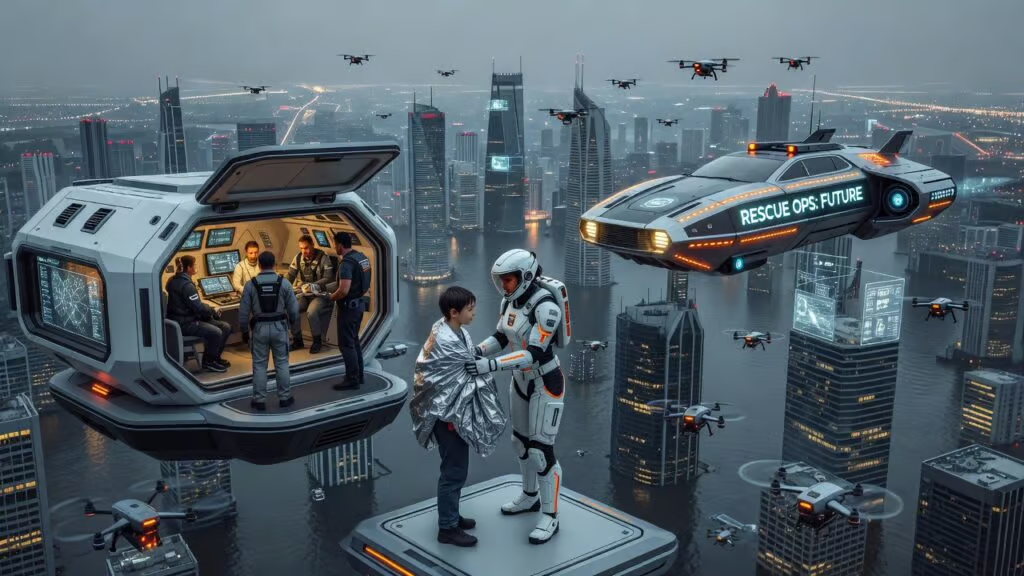
- Predictive Rescue Networks
AI predicts structural failures, wildfires, floods, and medical emergencies days to weeks ahead using satellite, ground sensors, social media signals, and personal wearables.
Pre-positioned robot caches and autonomous response units deploy automatically — often before the 911 call. - Zero-Human-Risk Primary Response
First 30–60 minutes of most rescues are handled entirely by robots/drones — humans arrive only for final confirmation, emotional support, and complex extrications.
Fatality rates in structural collapses drop 60–90%; response times in urban areas fall to 2–5 minutes. - Global & Cross-Domain Integration
Rescue assets operate across domains: aerial drones, ground robots, underwater ROVs, and high-altitude balloons coordinate via satellite mesh networks.
International robot-sharing agreements enable rapid deployment to disaster zones worldwide.
Illustrative Rescue Scenarios by 2040
- Earthquake in Dense City — AI predicts aftershock risk → pre-positions quadruped robots → swarm enters collapsed buildings, locates survivors via heartbeat/thermal, delivers oxygen → human team arrives 45 minutes later for final extraction.
- Wildfire Evacuation — Drone swarm maps fire perimeter in real time → autonomous ground pods evacuate immobile residents → AI triages burn victims on-site.
- Flood Rescue — Amphibious robot swarm navigates flooded streets → delivers life vests and pulls people to safety → eVTOL air ambulances transport critical cases.
- Avalanche on Mountain — Pre-positioned high-altitude drones detect burial → deploy beacon-equipped rescue dogs + robotic excavators → locate and extract victims in under 15 minutes.
Key Numbers & Trends by 2040 (illustrative)
- Average urban rescue response time: 2–5 minutes (down from 7–15)
- Share of initial response handled by autonomous systems: 70–95%
- Fatality rate reduction in structural collapses/floods: 50–85%
- Robot/drones per major city rescue unit: 500–5,000
- Human rescuer exposure to high-risk environments: down 60–90%
Risks & Societal Shifts
- Over-Reliance & Skill Atrophy — Human responders may lose hands-on expertise if robots handle most initial work.
- Cyber & EMP Vulnerability — Swarms could be hacked or disabled in coordinated attacks.
- Ethical & Accountability — Who is liable if an autonomous robot makes a wrong triage decision?
- Inequality — Advanced rescue tech concentrates in wealthy cities/countries.
Bottom Line
By 2040 rescue teams shift from being the first human responders to the strategic coordinators of AI-orchestrated robotic swarms.
The dominant paradigm becomes predictive, autonomous, and near-zero-human-risk emergency response — AI anticipates disasters, robots arrive first, stabilize victims, and clear hazards, while humans handle empathy, complex decisions, and final care.
Rescue stops being about heroic individuals running into danger — it becomes about intelligent systems that prevent or minimize danger in the first place.
The future rescuer isn’t the one who arrives fastest — it’s the one who ensures help is already there before the crisis fully unfolds.
Lives are saved not by bravery alone, but by foresight, coordination, and machines that act faster and safer than any human ever could.
The next generation won’t remember firefighters running into burning buildings — they’ll remember the silent swarm that got everyone out before the flames even reached them.