From Physics-Based Numerical Models to AI-Dominated, Quantum-Enhanced, and Hyper-Predictive Weather & Climate Systems
As of 2026, meteorology relies primarily on numerical weather prediction (NWP) models driven by physics equations, run on massive supercomputers, with AI beginning to supplement traditional methods:
- Global models like NOAA’s GFS, ECMWF’s IFS, and ensembles provide 7–10 day forecasts with decreasing skill beyond 5–7 days
- AI pilots (e.g., GraphCast, FourCastNet, NOAA’s early AIGFS/AIGEFS deployments) show promise for faster, lower-energy forecasts
- Satellite constellations (e.g., MetOp-SG precursors), radar, and ground sensors feed data; quantum computing in early research stages
- Forecast skill for extreme events improving but limited by chaos theory and computational limits; market driven by public safety, agriculture, energy
By 2040 meteorology has evolved into proactive, hyper-accurate, multi-timescale predictive ecosystems — where AI emulates and surpasses physics models, quantum computing enables ensemble simulations at unprecedented scales, and integrated sensor networks deliver personalized, real-time forecasts down to minutes and meters, minimizing disaster impacts and optimizing global systems.
1. Near-Term (2026–2030): AI Operational Dominance + Hybrid Models + Enhanced Observations
- AI-First Global & Regional Forecasting
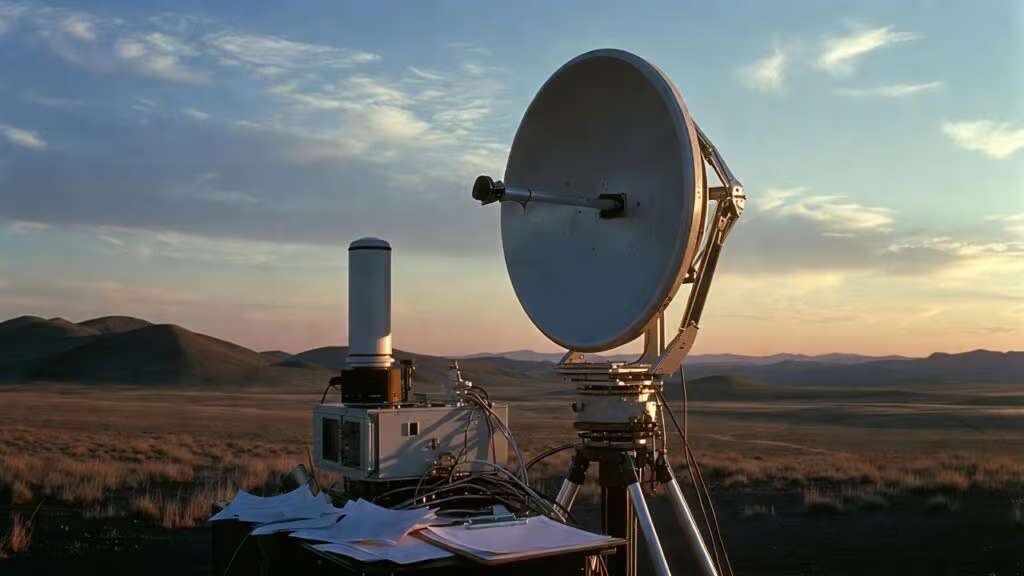
NOAA’s AIGFS/AIGEFS, ECMWF AIFS, NVIDIA Earth-2, and similar systems become operational standards, delivering 10–16 day forecasts 100–1000x faster with 99%+ less compute; skill extends 18–48 hours beyond traditional models for large-scale features and tropical cyclones. - Hybrid Physics-AI Ensembles
Systems like HGEFS blend AI speed with physics-based reliability for uncertainty quantification; AI nowcasting (0–6 hours) achieves kilometer-scale precision for severe storms. - Next-Gen Observing Systems
MetOp-SG satellites, expanded CubeSat constellations, and IoT ground sensors provide denser data; AI assimilates petabytes in real-time, improving initialization and reducing biases.
2. Medium-Term (2030–2035): Quantum-Hybrid Breakthroughs + Subseasonal-to-Seasonal Mastery

- Quantum-Accelerated Simulations
Hybrid quantum-classical systems (ECMWF/IBM pilots scaling) tackle chaotic atmospheric dynamics; quantum machine learning optimizes ensembles, enabling weeks-ahead extreme event prediction with reduced uncertainty. - AI-Driven Impact Forecasting
Models shift to direct prediction of hazards (flood inundation, heat stress, wind gusts) and socio-economic impacts; personalized forecasts via apps integrate user location, vulnerability, and real-time data. - Global High-Resolution Networks
AI emulators run at sub-kilometer resolution globally; open-source platforms democratize access, enabling developing nations to run custom models on modest hardware.
3. Long-Term (2035–2040): Fully Convergent Predictive Ecosystems + Near-Perfect Skill
- Predictive Quantum-AI Platforms
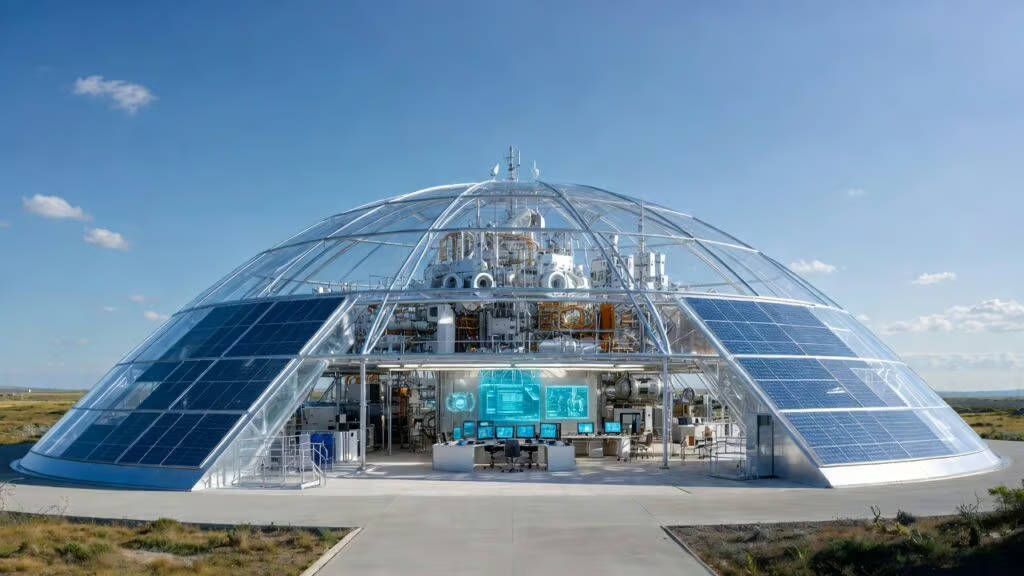
Fault-tolerant quantum systems simulate full Earth-system chaos; forecasts extend reliably to 4–6 weeks for seasonal anomalies and months for climate trends, with AI filling gaps in unobserved regimes. - Autonomous & Proactive Warning Systems
AI anticipates cascading events (e.g., compound heat-flood risks) days ahead; preemptive alerts and automated responses (e.g., infrastructure hardening) become standard. - Integrated Global Infrastructure
Quantum-secure networks link satellites, drones, and citizen sensors; international standards enable seamless data sharing and collaborative forecasting across borders.
Illustrative Meteorology Scenarios by 2040
- Mega-Hurricane Track — AI-quantum ensemble predicts path and intensity weeks ahead → pre-positions evacuation resources → real-time nowcasting refines landfall → fatalities drop 70–90%.
- Urban Heatwave Cascade — Predictive model flags compound risks (heat + poor air quality) days early → AI optimizes city cooling grids and alerts vulnerable populations → health impacts minimized.
- Seasonal Drought Outlook — Subseasonal AI forecasts monsoon failure months ahead → farmers adjust planting via personalized advisories → global food security enhanced.
- Localized Flash Flood — Kilometer-scale nowcasting detects convective cells minutes before formation → autonomous alerts trigger barriers and evacuations → damage averted in real time.
Key Numbers & Trends by 2040 (illustrative)
- Average global forecast skill horizon: 4–6 weeks reliable (up from 7–10 days)
- Extreme event prediction accuracy improvement: 50–85% reduction in false alarms/misses
- Computational efficiency gain: 1000–10,000x over 2026 physics models
- Share of forecasts powered primarily by AI/quantum hybrids: 80–95%
- Reduction in weather-related economic losses: 40–70% via better warnings
Risks & Societal Shifts
- Model Hallucinations & Edge Cases — AI may fail on unprecedented extremes (e.g., tipping points); over-reliance could erode traditional meteorology skills.
- Data & Compute Inequality — Advanced quantum/AI access concentrates in wealthy nations/companies, widening global forecast gaps.
- Ethical & Privacy Concerns — Hyper-personalized forecasts raise data privacy issues; misuse for geoengineering or insurance discrimination.
- Cyber & Quantum Vulnerabilities — Secure networks essential; disruptions could blind entire regions.
Bottom Line
By 2040 meteorology shifts from reactive observation-based forecasting to the strategic orchestration of predictive, AI-quantum ecosystems.
The dominant paradigm becomes proactive, hyper-precise, and impact-focused prediction — AI emulates atmosphere dynamics, quantum cracks chaos, and sensors feed real-time intelligence, turning forecasts into preventive actions.
Weather science stops being about describing chaos — it becomes about mastering it, anticipating threats before they fully form, and enabling societies to adapt seamlessly.
The future meteorologist isn’t interpreting satellite images — it’s the one who ensures warnings arrive before the storm does.
Lives and economies are protected not by supercomputers alone, but by intelligent systems that see the atmosphere’s future clearer than the present.
The next generation won’t remember waiting for the evening news forecast — they’ll remember the quiet intelligence that kept disasters at bay before they could strike.