
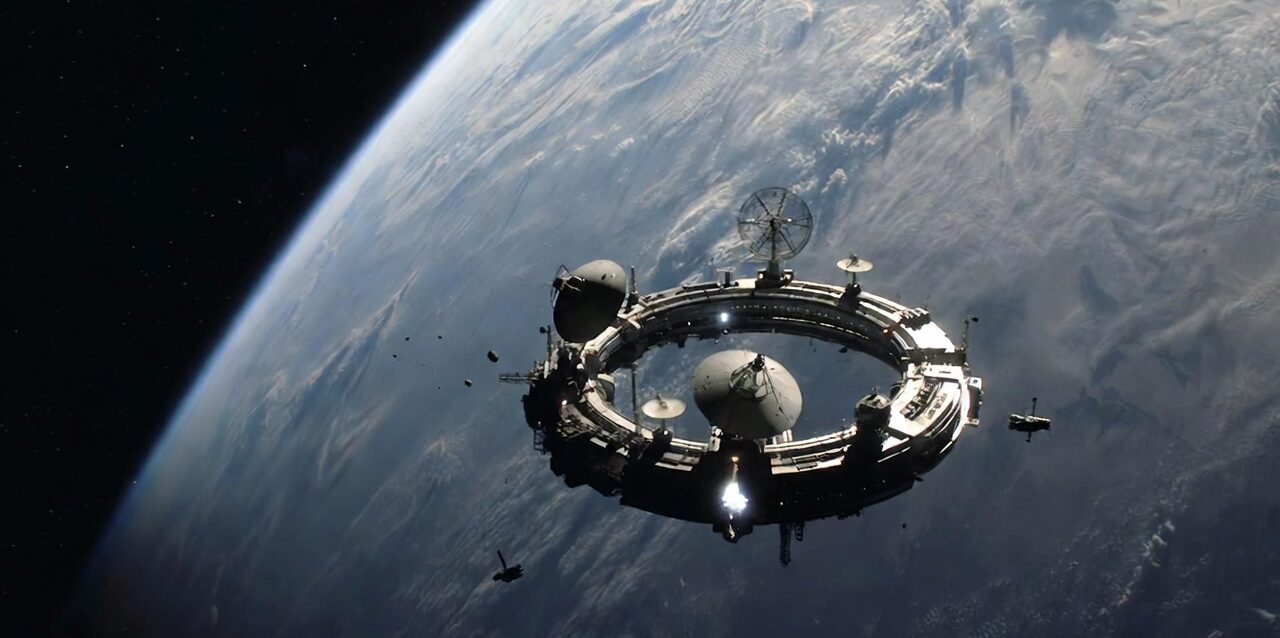
From Satellite Protection to Multi-Layered, AI-Orchestrated, and Offensive Space Dominance
As of 2026, space defense is in an early but rapidly accelerating phase.
- ~10,000+ operational satellites orbit Earth (with ~5,000+ active).
- The U.S. Space Force (est. 2019) is the only dedicated space military branch, with ~$26 billion annual budget (2025–2026).
- China, Russia, and India have growing space warfare capabilities (ASAT tests, co-orbital weapons, ground-based jammers).
- Key threats: anti-satellite (ASAT) missiles, co-orbital killers, directed-energy weapons, cyber attacks on ground stations, and electronic warfare.
By 2040 space defense evolves from passive satellite protection into proactive, offensive-capable, AI-driven, and multi-domain space warfare — where control of orbits determines victory in terrestrial conflicts. Space becomes the ultimate high ground.
1. Near-Term (2026–2030): Defensive Posture & Early Offensive Capabilities
- Satellite Hardening & Resilience
Satellites adopt maneuverability, laser hardening, redundant systems, and rapid reconstitution (launch-on-demand).
U.S. Space Development Agency (SDA) proliferates low-Earth orbit (LEO) proliferated satellite constellations (hundreds of small, cheap satellites) for resilient ISR, missile warning, and comms. - Counter-Space Weapons Deploy
Ground-based ASAT missiles (China, Russia, India) and co-orbital killers mature.
U.S. fields directed-energy systems (lasers) for dazzling/blinding enemy satellites.
Cyber and electronic warfare tools target command & control links. - Space Domain Awareness (SDA)
AI-powered tracking of all orbital objects improves dramatically — reducing collision risk and detecting threats earlier.
2. Medium-Term (2030–2035): Offensive Space Dominance & Swarm Networks
- Orbital Weapons Proliferation
Co-orbital ASATs (robotic killers) become standard — capable of grappling, jamming, or destroying satellites.
Kinetic interceptors and directed-energy weapons (lasers, high-power microwaves) deploy on satellites or high-altitude platforms. - Persistent Space Sensor & Strike Constellations
Proliferated LEO networks (SDA Tranche 0–4+) provide continuous global coverage.
Hypersonic glide vehicles and space-based interceptors counter ballistic and hypersonic threats. - AI-Orchestrated Space Operations
AI manages satellite constellations, predicts adversary moves, and coordinates defensive/offensive actions.
Autonomous satellite repair and refueling (on-orbit servicing) become routine.
3. Long-Term (2035–2040): Space as the Decisive Domain
- Full-Spectrum Space Warfare
Space superiority becomes prerequisite for terrestrial victory.
Offensive operations include: - satellite blinding/killing
- orbital debris creation (targeted)
- jamming of enemy space assets
- cyber takeover of adversary satellites
- Space-Based Directed Energy & Kinetic Weapons
Orbital lasers neutralize missiles, aircraft, and ground targets.
Kinetic orbital strike systems (rods from God) test viability. - AI & Quantum Supremacy
Quantum sensors detect stealth assets; quantum-secure comms protect space networks.
AI achieves near-real-time battle management across all domains.
Illustrative Space Defense Scenarios by 2040
- Satellite Constellation Defense — AI detects co-orbital threat; swarm of defensive micro-satellites intercepts and destroys attacker.
- Missile Defense from Space — Orbital lasers engage hypersonic glide vehicles during boost phase.
- Counter-Space Strike — Autonomous satellite grapples and de-orbits enemy reconnaissance satellite.
- Cyber-Physical Operation — AI hacks ground station → forces adversary satellite to maneuver into debris field.
Key Numbers & Trends by 2040 (illustrative)
- Active satellites: 50,000–100,000+ (mostly small, proliferated LEO)
- Space military spending (U.S. + China + others): $150–300+ billion annually
- Share of missile defense from space: 30–60% for hypersonic threats
- Autonomous space systems: 70–90% of routine operations
- Orbital debris mitigation success: 80–95% via active removal
Risks & Societal Shifts
- Escalation & Space War — Attacks on satellites can blind entire militaries and disrupt global communications.
- Debris Cascade (Kessler Syndrome) — Risk of rendering orbits unusable for generations.
- Weaponization Norms — International treaties struggle; space becomes contested domain.
- Economic Impact — Disruption of GPS, comms, and Earth observation causes trillions in losses.
Bottom Line
By 2040 space defense becomes the decisive domain in great-power conflict.
The paradigm shifts from protecting a few high-value satellites to controlling orbits through AI swarms, directed energy, and offensive counter-space weapons.
Satellites are no longer just assets — they are nodes in a multi-domain kill web.
The nation that dominates space will dominate Earth.
Space warfare is not about destroying planets — it’s about denying the enemy access to the ultimate high ground.
The future of war is not fought in the air or on the sea — it is fought in the silence of orbit, where the first shots are invisible, and the consequences are global.