From Screen-Centric Routines to Ambient Intelligence, Blurred Realities, and Purpose-Driven Living
As of 2026, everyday life is still largely shaped by smartphones, apps, remote/hybrid work, streaming entertainment, and rising cost-of-living pressures. Average daily screen time exceeds 7–8 hours in many countries, sleep duration is declining, mental health challenges are increasing, and people feel busier yet less fulfilled despite technological abundance.
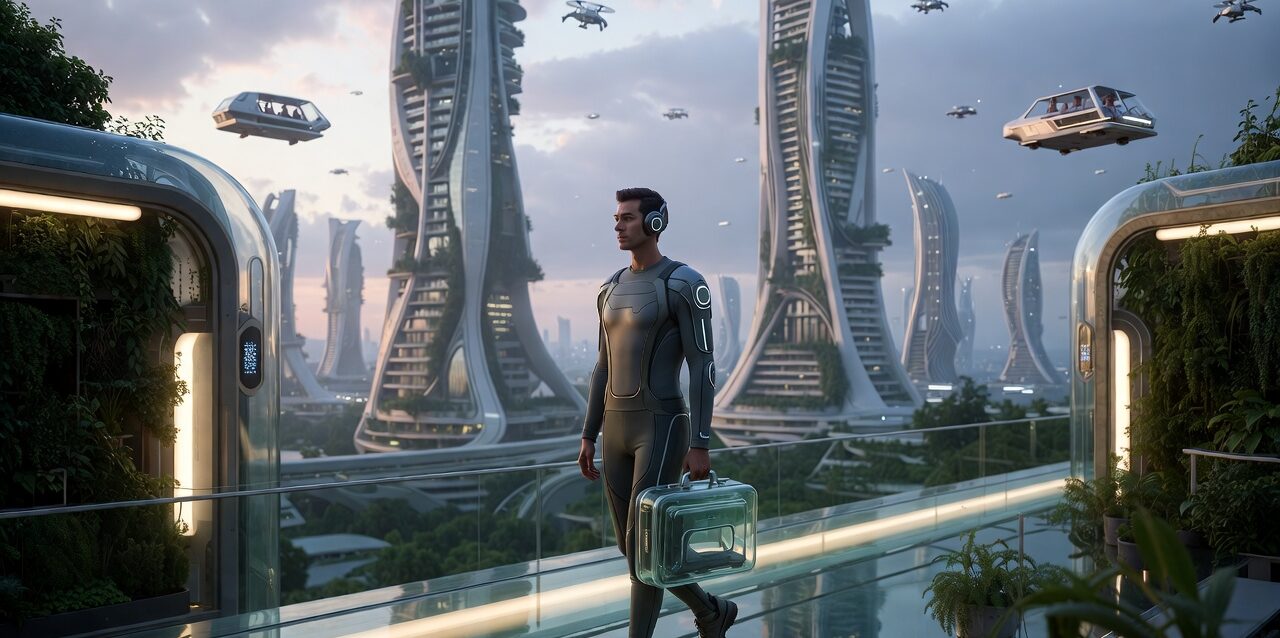
By 2040, everyday life decouples from many current constraints — becoming fluid, ambient, hyper-personalized, and potentially more meaningful. AI agents anticipate needs, physical-digital boundaries blur, and people have more agency over time, attention, and purpose — though not without new trade-offs.
1. Near-Term (2026–2030): AI Agents & Ambient Intelligence Take Root
- Personal AI Agents as Life OS
Everyone has a primary AI companion (evolved from Siri, Grok, Gemini, Claude) that runs 24/7 — learning habits, values, schedule, relationships, health data.
It handles scheduling, reminders, shopping lists, email triage, bill payments, and even emotional check-ins (“You seem stressed — want to talk or should I book a walk?”). - Smart Homes & Wearables as Second Skin
Homes anticipate needs: lights adjust to mood/circadian rhythm, temperature optimizes for sleep/work, coffee brews when you wake, fridge suggests meals based on nutrition goals.
Wearables (rings, watches, patches) track sleep, stress, glucose, heart-rate variability, and predict energy dips — prompting micro-adjustments (short walk, breathing exercise, nap). - Work & Social Life Hybridize
Hybrid work solidifies (2–3 office days max); many shift to fully remote or nomadic patterns.
Social interaction blends physical and virtual — AR glasses overlay friends into your living room for casual hangouts.
2. Medium-Term (2030–2035): Immersive & Decoupled Daily Rhythms
- AR Glasses / Contact Lenses as Primary Interface
Phones become secondary compute bricks.
AR glasses or contacts become the default way to interact with digital information — navigation overlays on real streets, virtual screens floating in space, instant translation of spoken languages, real-time contextual info (“this building is historic — here’s a 3D reconstruction”). - Flexible & Polyphasic Living
Circadian rhythms loosen — many adopt split sleep (biphasic/triphasic) or flexible schedules enabled by smart light therapy, nootropics, and AI-optimized recovery.
“Time tribes” form — groups of people on similar non-24-hour cycles who socialize and work together. - Experiences Replace Possessions
Spending shifts toward immersive events, travel, wellness retreats, and virtual worlds.
Minimalism rises — fewer physical goods, more digital collectibles, experiences, and shared resources.
3. Long-Term (2035–2040): Symbiotic & Post-Scarcity Daily Life
- Ambient & Symbiotic Intelligence
AI becomes truly ambient — no devices needed; intelligence is woven into environments (walls, furniture, clothing, air).
You speak or think → needs are met (temperature adjusts, music shifts, food preps, calendar re-optimizes).
Early non-invasive brain-computer interfaces allow thought-driven interaction with the world. - Healthspan & Longevity Integration
Average healthspan extends 10–20 years — people remain active and sharp into their 90s–100s.
Daily life includes micro-interventions (gene therapies, senolytics, neurofeedback) to slow aging, maintain cognition, and enhance mood/resilience. - Purpose & Meaning Redefined
With routine tasks handled by AI/robots, people focus on creativity, relationships, exploration, learning, and contribution.
Many adopt portfolio lifestyles — part artist, part educator, part volunteer, part explorer — without traditional 9-to-5 structure.
Illustrative Everyday Life in 2040
- Morning — Wake naturally (circadian lighting); AI agent briefs you on the day, prepares breakfast optimized for your biomarkers, suggests optimal outfit/weather-adjusted clothing.
- Work — Enter persistent virtual office via AR glasses; collaborate with global team avatars; AI handles routine tasks while you focus on creative/strategic work.
- Social — Meet friends in shared virtual space that feels physical — share sensory experiences (taste of virtual meal, warmth of hug).
- Leisure — Dive into personalized VR world co-created with friends — explore fantasy landscapes, play new sports, or attend concerts where you influence the music.
- Evening — AI guides wind-down: neurofeedback for better sleep, gentle storytelling from childhood memories.
Key Numbers & Trends by 2040 (illustrative)
- Daily time in XR/virtual environments: 4–10+ hours for heavy users
- Personal AI agent adoption: 80–95% in developed economies
- Average healthspan extension: +10–20 years vs 2025
- Share of people in flexible/non-traditional work: 50–70%
- Physical office space per knowledge worker: down 70–90%
Risks & Societal Shifts
- Inequality — Advanced augmentation and ambient tech favor the wealthy; digital divides persist.
- Isolation & Reality Blur — Risk of preferring virtual over physical relationships; blurred sense of what is “real”.
- Purpose Crisis — When routine tasks vanish, finding meaning becomes the central human challenge.
- Privacy & Control — Constant monitoring and predictive nudging raise surveillance and autonomy concerns.
Bottom Line
By 2040 everyday life becomes fluid, ambient, hyper-personalized, and potentially more meaningful — AI anticipates needs, physical-digital boundaries dissolve, and people gain unprecedented control over time, attention, and experience.
The dominant paradigm shifts to human-AI symbiosis in a post-scarcity attention economy — routine drudgery disappears, healthspan extends, and the focus turns to creativity, connection, exploration, and purpose.
Daily life stops being about survival and productivity — it becomes about flourishing: deeper relationships, richer experiences, and the freedom to become who you truly want to be.
The future isn’t about having more — it’s about being more.
And in that shift, everyday life may finally feel like the adventure it was always meant to be.