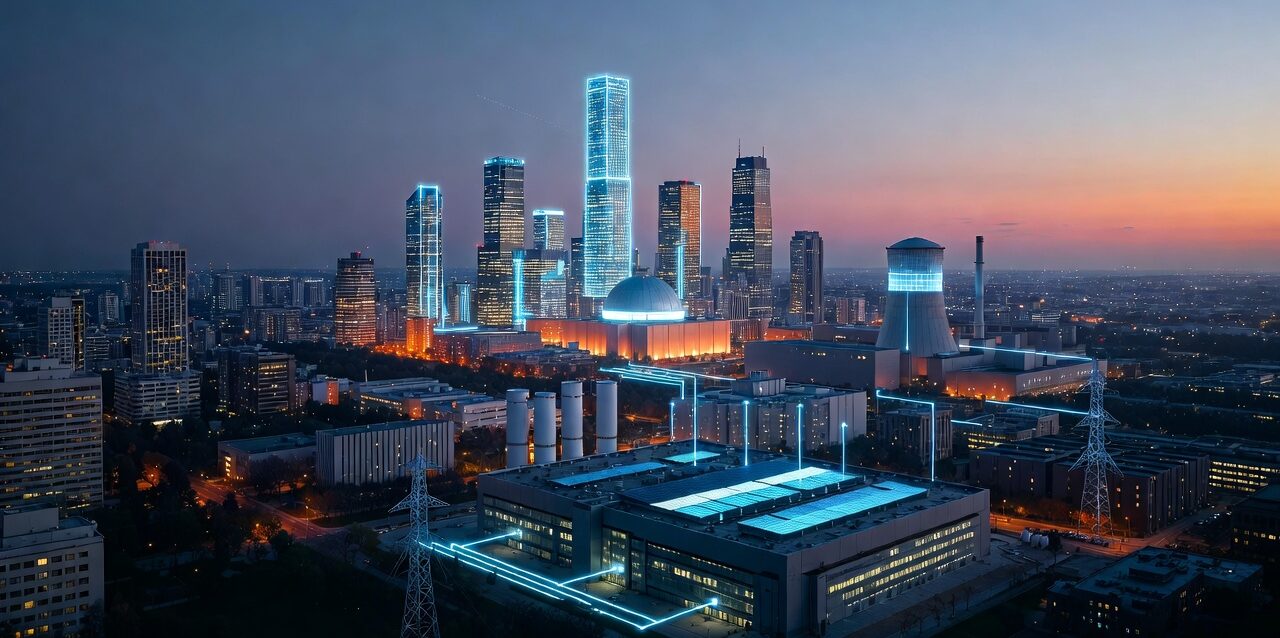
From Surging AI Power Needs and Legacy Nuclear Fleets to Symbiotic, AI-Optimized, and Modular Nuclear-Powered Energy Grids
As of 2026, AI-driven energy demand is exploding due to data centers and training large models, with global AI-related electricity use estimated at 2–3% of total demand (equivalent to the Netherlands’ consumption), while nuclear power experiences a tentative renaissance amid climate goals but faces aging reactors and regulatory hurdles:
- AI data centers consume 100–500 MW each; hyperscalers like Google, Microsoft invest in efficiency but projections show demand doubling every 2–3 years
- Nuclear: ~400 reactors worldwide provide 10% of electricity; new builds (e.g., Vogtle in US, Hinkley Point C in UK) delayed/costly; small modular reactors (SMRs) in early demos (e.g., NuScale)
- Renewables dominate growth, but intermittency challenges AI’s 24/7 needs; carbon emissions from AI tied to grid mixes
- Global energy demand ~30,000 TWh annually; nuclear output stable at ~2,500 TWh
By 2040 AI-driven demand and nuclear renaissance have fused into predictive, resilient, and zero-carbon energy ecosystems — where AI optimizes nuclear output, modular reactors power AI hubs directly, and global grids balance hyperscale computing with sustainable supply, enabling net-zero transitions.
1. Near-Term (2026–2030): AI Efficiency Gains + SMR Pilots + Hybrid Grids
- AI-Optimized Data Center Efficiency
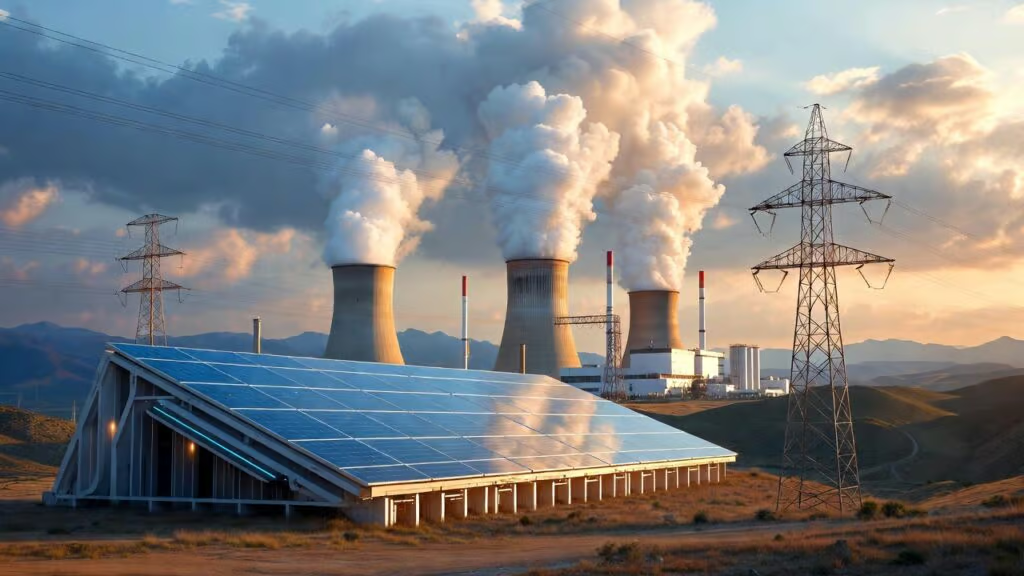
AI algorithms (e.g., Google’s DeepMind for cooling) reduce energy use by 30–40%; edge computing and neuromorphic chips cut demand; but overall AI consumption rises to 4–6% globally. - Nuclear Renaissance Kickoff with SMRs
First commercial SMRs (NuScale in US, GE-Hitachi in Canada) deploy in clusters of 50–300 MW, sited near data centers for direct power; advanced reactors like molten salt prototypes enter testing. - Integrated AI-Nuclear Planning
AI models forecast demand spikes; nuclear plants use AI for predictive maintenance, boosting uptime by 10–15%; policy shifts (e.g., US Inflation Reduction Act extensions) accelerate builds.
2. Medium-Term (2030–2035): Scalable Modular Nuclear + AI Demand Management
- Modular Nuclear Expansion
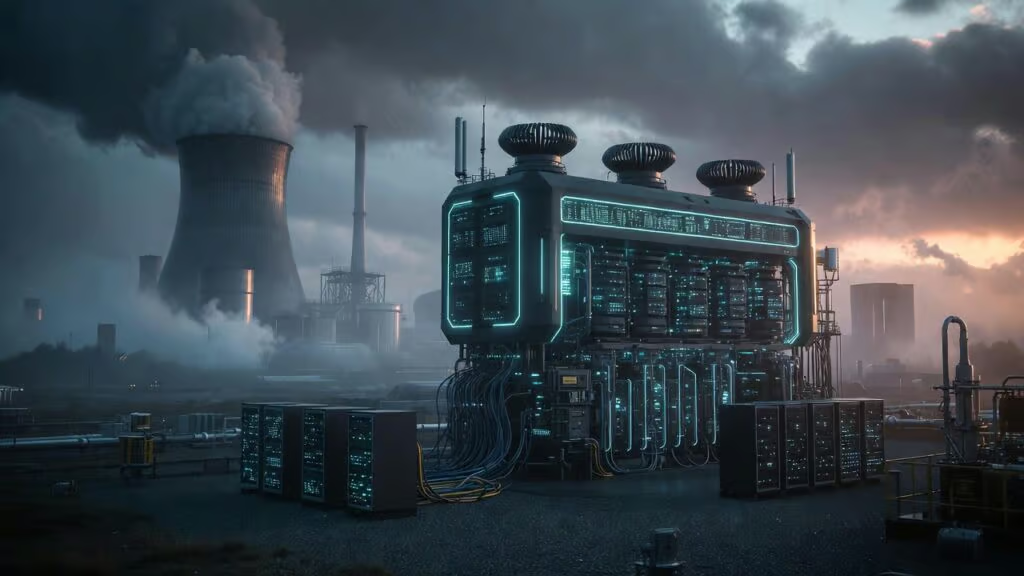
SMR factories produce units en masse (hundreds annually); microreactors (1–10 MW) power remote AI facilities; fusion pilots (e.g., ITER successors) complement fission. - AI-Driven Grid Orchestration
Multi-agent AI systems balance nuclear baseload with renewables; real-time pricing and demand response shave AI peaks by 20–30%; nuclear-AI co-location (e.g., Microsoft deals) minimizes transmission losses. - Advanced Fuel & Waste Tech
AI accelerates thorium and recycled fuel cycles; robotic systems handle waste, reducing long-term storage needs by 50%.
3. Long-Term (2035–2040): Predictive Nuclear-AI Symbiosis + Global Zero-Carbon Networks
- Predictive Energy Ecosystems
Quantum-AI hybrids forecast AI demand and weather months ahead; pre-positioned modular reactors auto-deploy to high-growth zones. - Hyper-Efficient, Fusion-Augmented Nuclear
Commercial fusion (e.g., Commonwealth Fusion Systems) provides unlimited clean power; nuclear covers 20–30% of global electricity, tailored to AI’s exascale needs. - Integrated Global Infrastructure
Cross-border nuclear sharing and AI-optimized supergrids; international pacts ensure equitable access, powering AI for climate modeling and development.
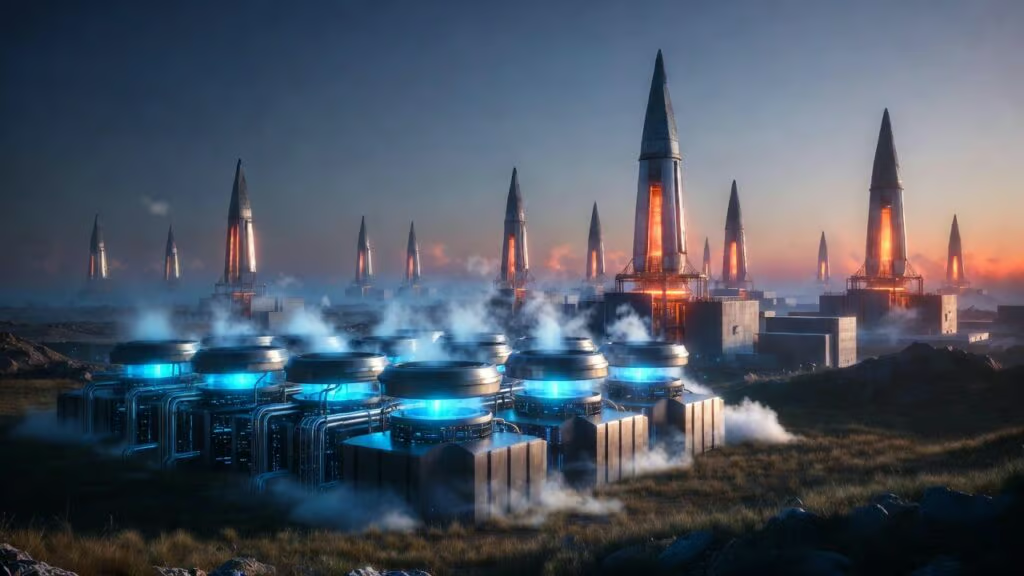
Illustrative Scenarios by 2040
- AI Data Center Surge — AI predicts training run demand → activates nearby SMR cluster → zero-emission power scales dynamically → avoids grid strain during heatwaves.
- Global Blackout Prevention — Predictive models flag renewable dips → AI reroutes nuclear output across continents → maintains AI operations for critical services.
- Remote AI Hub Deployment — Fusion microreactor powers Arctic data center → AI optimizes cooling with local ice → enables hyperscale computing in low-impact zones.
- Waste-to-Energy Cycle — AI designs recycled fuel from legacy waste → modular reactors consume it → extends nuclear lifespan, reducing mining by 70%.
Key Numbers & Trends by 2040 (illustrative)
- AI share of global electricity demand: 8–15% (up from 2–3%)
- Nuclear generation capacity: 1,000–2,000 GW (up from ~400 GW)
- Carbon emissions reduction from AI-nuclear synergy: 40–70% in tech sector
- SMR deployments worldwide: 5,000–10,000 units
- Energy efficiency gains in AI: 50–80% per computation via optimization
Risks & Societal Shifts
- Over-Reliance & Grid Vulnerabilities — AI blackouts could cascade; nuclear proliferation risks in modular tech.
- Resource & Waste Challenges — Uranium supply strains; AI may exacerbate inequality if energy access uneven.
- Ethical & Safety Concerns — AI decisions in nuclear control; liability for fusion mishaps.
- Economic Disparities — Renaissance favors nuclear-capable nations, widening energy divides.
Bottom Line
By 2040 AI-driven energy demand and nuclear renaissance shift from competing pressures to the strategic enablers of sustainable, intelligent power systems.
The dominant paradigm becomes predictive, modular, and fusion-forward energy provision — AI anticipates loads, nuclear delivers clean baseload, and integrations ensure resilience.
Energy stops being a constraint — it becomes an accelerator, fueling AI’s growth while decarbonizing the planet.
The future grid operator isn’t reacting to shortages — it’s the one who builds capacity before demand spikes.
Lives and innovations are powered not by fossil remnants, but by symbiotic systems that make abundance clean and infinite.
The next generation won’t remember energy crises or dirty data — they’ll remember the quiet reactors that lit the AI era without dimming the Earth.