From Therapy to Renewal: The Transformation of Mind Care by 2040
From Reactive Treatment to Proactive, Tech-Augmented, and Lifelong Brain Vitality
As of February 2026, mental health challenges continue to escalate globally — depression and anxiety cost economies trillions annually (projected to reach $6–16 trillion by 2030 in some estimates), with youth and emerging adults showing steady declines in well-being. Traditional approaches (therapy, medication) remain primary, but access gaps, stigma, workforce shortages, and limited effectiveness drive demand for renewal-focused alternatives.
Mental renewal — the proactive restoration and enhancement of cognitive, emotional, and psychological vitality — shifts from crisis intervention to preventive, personalized, and regenerative practices. By 2040, it becomes a mainstream pillar of wellness, powered by AI, VR, psychedelics, neurotech, and brain-health integration.
1. Near-Term (2026–2030): Digital & Preventive Renewal
- AI-Driven Daily Support
AI companions and chatbots evolve into proactive mental health coaches — monitoring mood via wearables/voice, offering real-time CBT-based interventions, mindfulness prompts, and early warning for distress. Teletherapy and digital therapeutics become standard, with adoption surging post-pandemic. - VR & Cyberdelic Experiences
VR programs simulate psychedelic-like states (cyberdelics) — boosting creativity, cognitive flexibility, and emotional processing without drugs. Early research shows short-term benefits for stress reduction and mental reset. - Adaptogens & Nootropics Mainstream
Legal supplements (lion’s mane, rhodiola, ashwagandha, L-theanine) and microdosing protocols (where permitted) grow for daily renewal — focus, resilience, and emotional balance without caffeine crashes.
2. Medium-Term (2030–2035): Psychedelic & Neurotech Integration
- Psychedelic-Assisted Renewal
Psilocybin, MDMA, and ketamine therapies expand (decriminalization/legalization in more regions) — FDA approvals for PTSD/depression accelerate. Precision-designed compounds target specific states (e.g., awe, insight) for renewal without full hallucinogenic trips. - VR + Psychedelic Synergy
VR enhances psychedelic sessions — guiding set/setting, reducing bad trips, and amplifying therapeutic effects. Non-drug VR “cyberdelics” scale as safe, repeatable alternatives for creativity and emotional reset. - Brain-Health Wearables & Early Neurotech
Advanced wearables track brain metrics (EEG, HRV, sleep patterns); AI predicts burnout/depression risk. Non-invasive neuromodulation (tDCS, TMS) becomes home-use for mood regulation and cognitive renewal.
3. Long-Term (2035–2040): Regenerative & Symbiotic Mental Renewal
- Precision & Regenerative Approaches
Gene therapies, senolytics, and epigenetic interventions target brain aging — slowing cognitive decline, enhancing neuroplasticity. Psychedelic/neurotech combos enable deep renewal (ego-dissolution, trauma reprocessing) in controlled settings. - Lifelong & Ambient Renewal
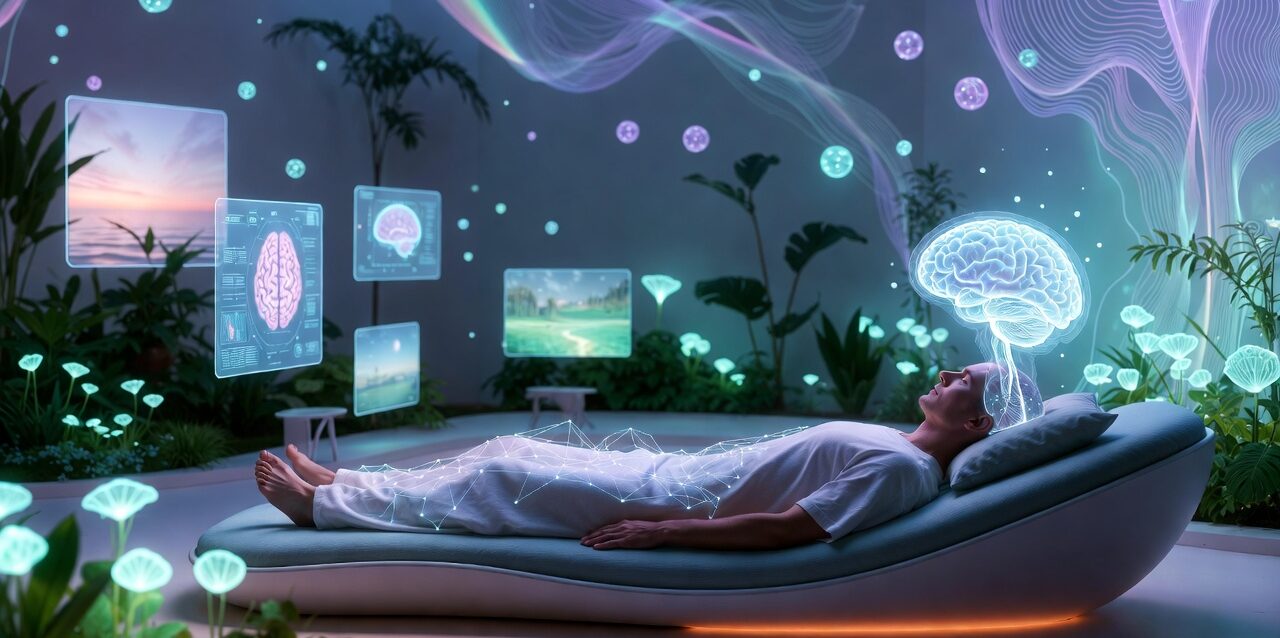
AI guardians orchestrate daily mental health — adapting environments (light, sound, scents) for optimal mood/focus. Brain-computer interfaces (early non-invasive) allow direct mood modulation and shared renewal experiences. - Societal & Cultural Shift
Mental renewal becomes routine — embedded in workplaces, schools, and homes. Stigma fades; proactive brain health rivals physical fitness in priority.
Illustrative Mental Renewal Scenarios by 2040
- Daily Reset — AI companion detects stress, delivers VR-guided mindfulness or adaptogen recommendation.
- Therapeutic Session — Guided psychedelic experience in VR with AI therapist for emotional renewal.
- Cognitive Boost — Neurofeedback + nootropic stack for clarity and creativity.
- Longevity Maintenance — Regenerative protocol slows brain aging, paired with ambient smart-home mood optimization.
Risks & Societal Shifts
- Inequality — Advanced neurotech/psychedelics favor the wealthy; access gaps widen.
- Over-Reliance — Risk of diminished natural resilience; ethical concerns around mood alteration.
- Privacy & Data — Constant brain monitoring raises surveillance fears.
- Regulation — Need for safety standards, equitable access, and responsible use.
Bottom Line
By 2040, mental renewal evolves from reactive treatment to proactive, tech-augmented, and regenerative brain vitality. The dominant paradigm becomes AI-guided, immersive, and personalized renewal — VR cyberdelics, precision psychedelics, neurotech, and daily AI support restore and enhance mental well-being before decline sets in. Mental health won’t be a crisis to manage — it will be a lifelong practice of renewal, making minds sharper, calmer, and more resilient. The future is not endless therapy — it’s smarter, deeper, and more preventive care that keeps the human spirit thriving in an accelerating world.