
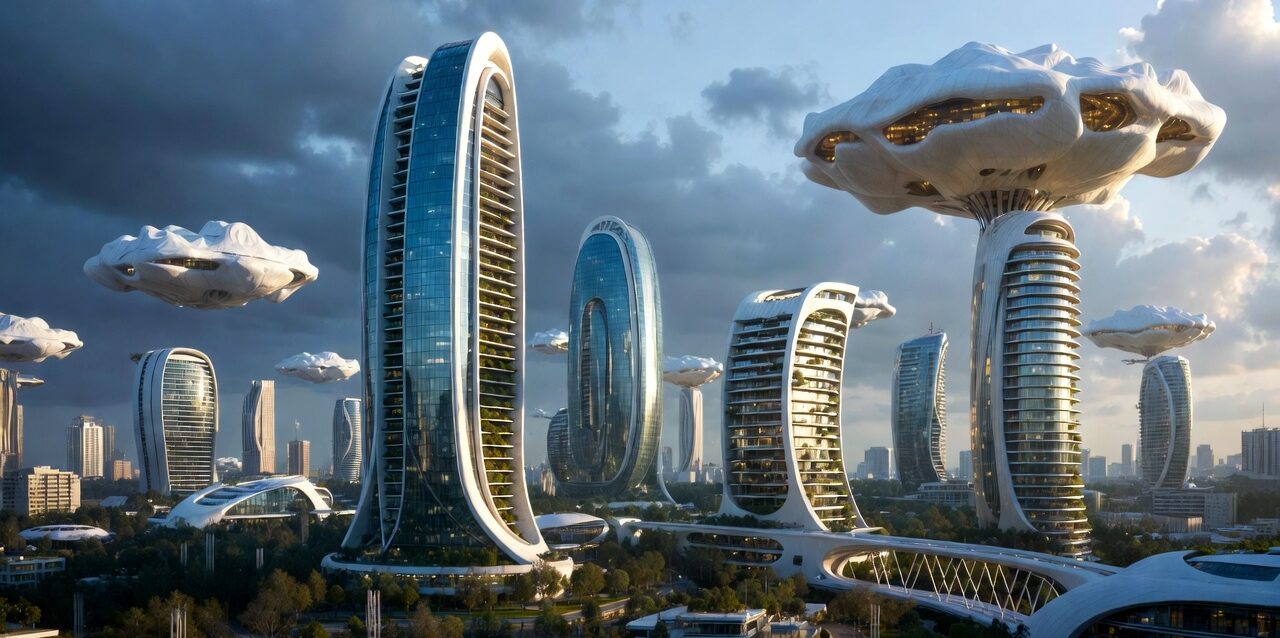
From Traditional Hospitality to AI-Orchestrated, Sustainable, Immersive & Hyper-Personalized Stays
As of February 2026 the global hotel industry is valued at approximately $1.5–1.7 trillion annually (including revenue from rooms, F&B, meetings & events). The sector is still recovering from pandemic shocks, with strong rebound in luxury, boutique, and experiential travel. Key trends include contactless check-in, sustainability demands, and rising interest in wellness & bleisure (business + leisure) stays.
By 2040 hotels evolve from physical buildings into intelligent, adaptive, and experiential ecosystems — blending physical architecture with immersive digital layers, regenerative sustainability, AI personalization, and new ownership/usage models.
1. Near-Term (2026–2030): AI Personalization & Sustainable Operations
- Hyper-Personalized Guest Experience
AI concierges (successors to current chatbots) know returning guests’ preferences instantly — room temperature, lighting, pillow type, scent, minibar stock, wake-up music, workout schedule.
Rooms auto-adjust before arrival; voice/gesture control is seamless. - Sustainability as Standard
Net-zero hotels become mainstream in new builds (passive design, solar, geothermal, rainwater harvesting).
Single-use plastics disappear; food waste drops 70–90% via AI inventory & demand forecasting.
Carbon-neutral certifications (e.g., LEED Platinum, BREEAM) become expected in luxury & midscale. - Contactless & Frictionless Check-In
Biometric entry (face/iris), digital keys, mobile payments, and self-service luggage robots become universal.
Physical front desks shrink or disappear in many properties.
2. Medium-Term (2030–2035): Immersive & Modular Hotels
- AR/VR & Metaverse Integration
AR glasses or contact lenses overlay digital enhancements — virtual art, guided tours, interactive history of the building, or virtual windows showing different scenery.
Metaverse hotels allow remote “staycations” — attend virtual events, meet people in shared digital lobbies, or explore VR versions of the property. - Modular & Adaptive Rooms
Rooms reconfigure via movable walls, furniture, and lighting — transforming from office to bedroom to entertainment space.
Some hotels offer “pay-per-feature” — upgrade lighting, sound, scent, or even bed type for a fee. - Wellness & Longevity Focus
Hotels become health destinations — in-room cryotherapy, red-light therapy, sleep pods, personalized nutrition, and neurofeedback.
Air purification, circadian lighting, and biophilic design are standard.
3. Long-Term (2035–2040): Symbiotic & Regenerative Hospitality
- Regenerative & Net-Positive Hotels
Buildings generate more energy than they use (solar, wind, geothermal, kinetic floors).
They produce food (vertical farms, aquaponics), recycle 95%+ of water/waste, and contribute to local ecosystems (e.g., coral restoration in coastal resorts). - AI-Driven & Emotionally Intelligent Service
Robots and AI avatars provide 24/7 service — empathetic, culturally aware, multilingual.
Hotels anticipate needs before guests ask (e.g., extra pillows, favorite drink, mood lighting). - New Ownership & Experience Models
Fractional ownership, subscription stays, and tokenized hotel assets (blockchain) become common.
Some hotels function as co-living/working spaces for digital nomads; others as branded lifestyle communities.
Illustrative Hotel Experiences by 2040
- Business Traveler — Room auto-configures as office + bedroom; AI assistant joins virtual meetings, summarizes notes, and books next leg.
- Wellness Retreat — In-room biofeedback, personalized spa treatments, circadian lighting, and AI-guided meditation.
- Family Vacation — AR treasure hunt across the hotel; rooms adapt for kids/adults; virtual nanny for downtime.
- Luxury Eco-Resort — Net-positive energy, on-site vertical farm, underwater suites with live coral views, drone-delivered room service.
Risks & Societal Shifts
- Inequality — Hyper-personalized luxury hotels widen gaps; budget options lag in tech.
- Privacy — Constant data collection (mood, biometrics) raises ethical concerns.
- Job Displacement — Service roles decrease; new jobs emerge in AI orchestration and experience design.
- Over-Reliance — Risk of dehumanized service; some guests seek “unplugged” hotels.
Bottom Line
By 2040 hotels cease to be just places to sleep — they become intelligent, regenerative, and emotionally attuned living environments.
The dominant paradigm is AI-orchestrated, immersive, and sustainable hospitality — rooms adapt to your body/mind, buildings sustain themselves, and luxury is measured by how well a stay makes you feel and function.
Hotels won’t disappear — they will become more essential — serving as wellness hubs, work-life integrators, and experiential escapes in an increasingly digital world.
The future hotel isn’t about a bed and a minibar — it’s about a space that knows you, cares for you, and helps you become a better version of yourself.
Hospitality stops being transactional — it becomes transformational.