
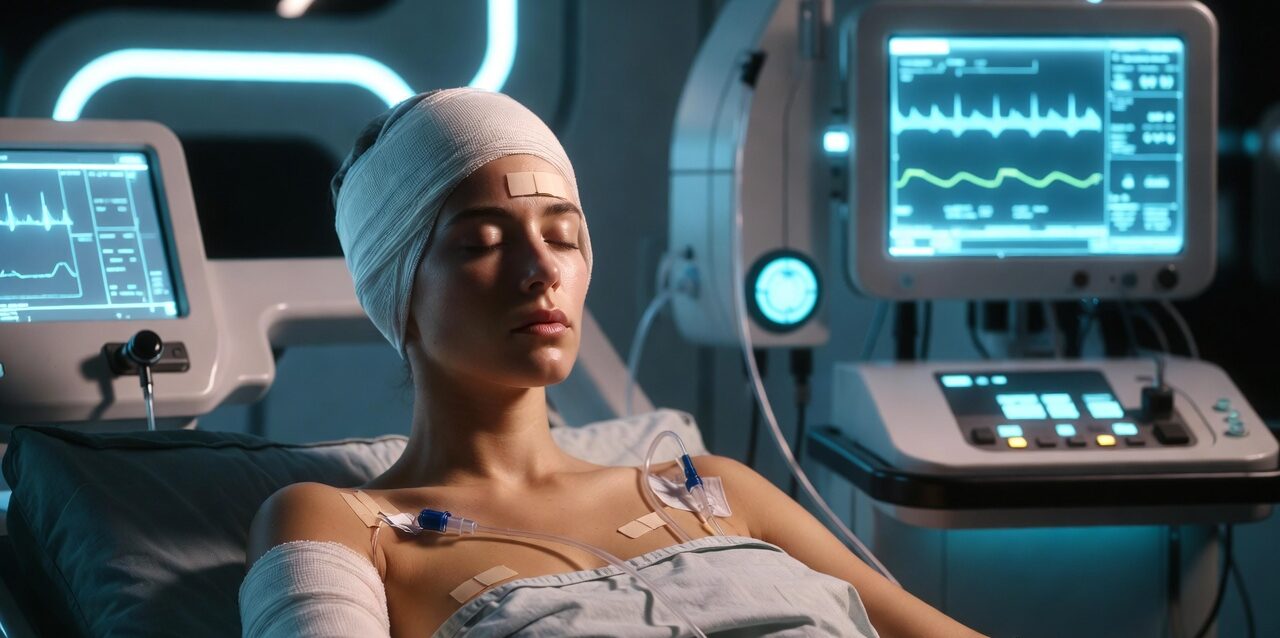
From Weeks/Months of Painful Rehab to Days/Weeks of Accelerated, Regenerative Restoration
As of 2026, recovery from musculoskeletal injuries (ACL tears, rotator cuff damage, fractures, muscle strains, ligament sprains, tendonitis) typically follows a slow, painful, and unpredictable timeline:
- ACL reconstruction: 6–12 months to full return-to-sport
- Rotator cuff repair: 4–6 months
- Stress fractures: 6–12 weeks non-weight-bearing
- Severe muscle tears: 3–6 months
Methods rely on rest, ice, compression, elevation (RICE), physical therapy, anti-inflammatories, PRP/stem cell injections (mixed evidence), and surgery when necessary. Success rates vary widely; many never regain pre-injury performance.
By 2040 injury recovery becomes dramatically faster, less painful, and more complete — often measured in days to a few weeks instead of months. The dominant paradigm shifts from passive healing and gradual rehab to proactive, regenerative, and AI-guided biological & biomechanical restoration.
1. Near-Term (2026–2030): Advanced Biologics & Smart Rehab Devices
- Next-Generation Biologics & Growth Factors
Improved stem cell therapies (mesenchymal, iPSC-derived), exosome injections, and growth factor cocktails (PDGF, IGF-1, BMP-2 variants) accelerate tissue repair by 30–60%.
“Smart” PRP/PRF formulations with timed-release scaffolds deliver sustained healing signals over weeks. - Wearable & Robotic Rehab Augmentation
Soft exosuits and powered orthoses (ankle/knee/shoulder) provide variable resistance/assistance during rehab — reducing joint stress while forcing optimal movement patterns.
AI-controlled devices personalize load progression daily based on real-time gait, strength, and inflammation data. - Non-Invasive Stimulation
Focused ultrasound, pulsed electromagnetic fields (PEMF), and low-intensity vibration therapy become standard adjuncts — speeding bone/tendon healing by 20–50% and reducing scar tissue formation.
2. Medium-Term (2030–2035): Targeted Gene Therapies & 3D-Printed Tissues
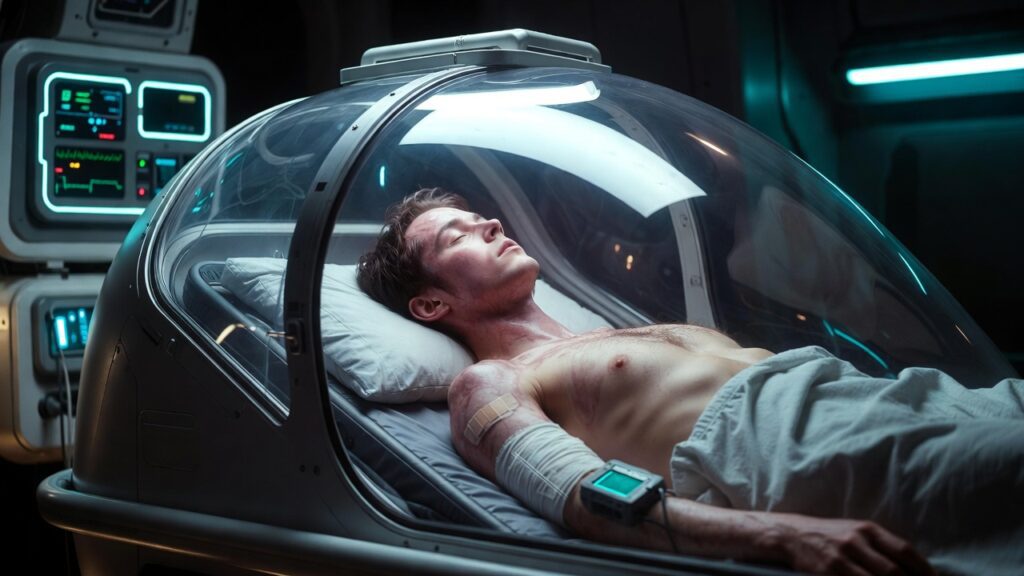
- Localized Gene Editing & Growth Activation
CRISPR-based therapies (delivered via nanoparticles or viral vectors) temporarily activate repair genes (myostatin inhibition, follistatin upregulation, VEGF for angiogenesis) directly at injury sites.
Recovery timelines for tendon/ligament injuries drop to 4–10 weeks; muscle tears heal in 2–4 weeks. - 3D-Printed & Bioengineered Grafts
Custom 3D-bioprinted scaffolds seeded with patient-derived cells replace autografts/autologous transplants.
Vascularized tendon/ligament/cartilage grafts integrate faster and stronger than natural healing — full ACL recovery in 8–12 weeks instead of 9–12 months. - AI-Guided Robotic Rehabilitation
Fully adaptive exoskeleton rehab robots (with force-feedback and real-time gait analysis) become standard in clinics and homes.
They force correct biomechanics, gradually reduce assistance, and prevent compensatory patterns that cause re-injury.
3. Long-Term (2035–2040): Preemptive & Instantaneous Tissue Regeneration
- Systemic & On-Demand Regeneration
Injectable “regeneration cocktails” (senolytics + stem cell mobilizers + growth factor nanoparticles) trigger body-wide repair signaling when injected locally or systemically after injury.
Severe injuries (complete tendon ruptures, major fractures) heal in 2–6 weeks with near-100% return to pre-injury function. - Nanotech & Bioelectric Stimulation
Nanobots target inflammation, clear dead tissue, and stimulate stem cell migration to injury sites — reducing healing time by 70–90%.
Bioelectric fields (externally applied or implanted) guide cell differentiation and tissue patterning for scarless regeneration. - Preemptive & Personalized Resilience
Genetic screening + baseline biomarker profiling allow pre-injury “resilience upgrades” — people with high-risk profiles receive periodic treatments to strengthen tendons, ligaments, cartilage, and bone density.
Illustrative Injury Recovery Scenarios by 2040
- ACL Tear (Athlete)
Day 1: Injectable stem-cell + gene-activation cocktail + smart scaffold patch
Week 2–4: AI-guided exoskeleton rehab 3×/day
Week 6–8: Return to full training with 95–100% strength/function - Rotator Cuff Tear (Middle-Aged Worker)
Day 3: Ultrasound-guided exosome + growth factor injection
Week 1–3: Wearable soft exosuit provides dynamic support during daily tasks
Week 5: Full pain-free range of motion; scarless healing - Stress Fracture (Recreational Runner)
Day 1: Oral + local senolytic to clear inflammation
Week 1–2: Vibration + PEMF device accelerates bone remodeling
Week 3: Back to light running; full return in 4 weeks
Key Numbers & Trends by 2040 (illustrative)
- Average recovery time for major soft-tissue injuries: down 60–85% (weeks vs months)
- Return-to-sport rate at pre-injury performance level: 85–95% (vs 60–75% today)
- Use of regenerative injections (stem cells, exosomes, gene therapy) for common injuries: 70–90% in advanced medical systems
- Reduction in chronic post-injury pain/disability: 60–80%
- Share of rehab handled by home robotic exosystems: 60–85%
Risks & Societal Shifts
- Inequality — Advanced regenerative protocols initially available only to elite athletes and wealthy patients.
- Over-Reliance & Re-Injury — Faster recovery may encourage premature return → higher re-injury rates if not paired with proper strengthening.
- Ethical & Doping — Gene therapies and neural enhancements spark massive debates in professional sports.
- Long-Term Safety — Unknown effects of repeated regenerative treatments over decades.
Bottom Line
By 2040 injury recovery shifts from slow, painful, and uncertain healing to rapid, predictable, and near-complete regeneration.
The dominant paradigm becomes proactive, regenerative, and AI-guided tissue restoration — biologics, gene activation, smart scaffolds, and robotic rehab work together to heal injuries in weeks rather than months, often returning people stronger than before.
Injuries stop being career-enders or life-altering setbacks — they become temporary inconveniences that modern medicine quietly fixes in the background.
The future isn’t about enduring pain and rehab — it’s about bouncing back so fast that people barely notice they were hurt.
Recovery becomes not a process to suffer through — but a brief pause before returning even stronger.
The body of 2040 doesn’t just heal — it upgrades.