
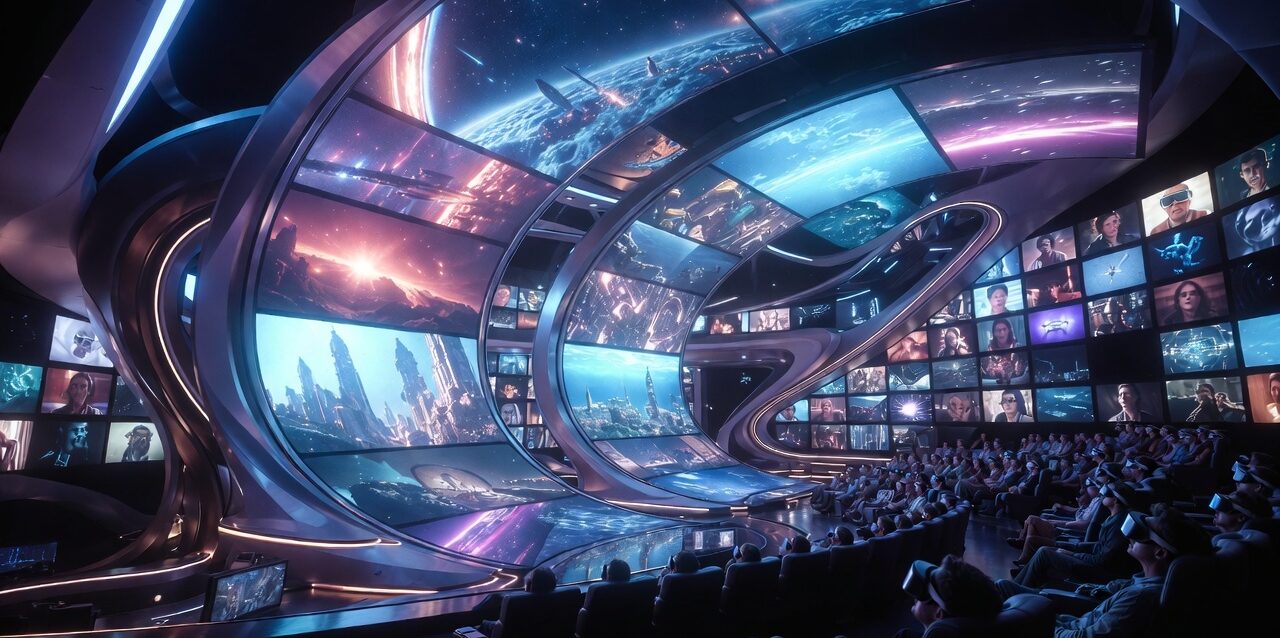
Movies 2040: From Big Screens to Full Immersion and Interactive Worlds
From Big Screens to Immersive, Personalized, and Hybrid Experiences
As of February 2026, the global cinema market is valued at approximately $68–73 billion, recovering from pandemic disruptions but still below pre-2019 peaks (~$42–45B domestic US in 2019 vs. ~$9B projected for 2025). Box office forecasts show gradual growth — $9.3–9.7B domestic in 2025, potentially $10B+ with strong slates — driven by blockbusters, premium large formats (PLF like IMAX), and event films. However, streaming competition persists, with hybrid releases and home viewing reshaping habits. By 2030–2040, the market could reach $99–115B (CAGR ~5%), but theaters must evolve or risk decline.
This case study synthesizes industry forecasts (Statista, Fortune Business Insights, Lucintel, PwC, Gower Street Analytics), expert trends, and emerging tech predictions to outline plausible trajectories for “going to the movies.”
1. Near-Term (2026–2030): Premium Theatrical & Hybrid Coexistence
- Theatrical as Event Destination
Moviegoing becomes more “eventized” — premium experiences (IMAX, Dolby Cinema, 4DX/4D with motion seats, scents, wind) dominate for blockbusters. Theaters invest in luxury upgrades: recliners, gourmet concessions, and enhanced sound/visuals to justify higher tickets vs. streaming convenience. Wide releases (2,000+ screens) rebound, with 110+ films in 2025 setting a post-pandemic benchmark. - Streaming vs. Theaters Hybrid Model
Studios use windowing strategies (theatrical first, then streaming) to maximize revenue. Simultaneous or short-window releases continue for some titles, but big spectacles (e.g., Avatar sequels, superhero films) prioritize exclusive theatrical runs. Home viewing grows, but theaters retain appeal for communal, large-screen experiences. - Tech Enhancements
AI personalization (recommendations, dynamic pricing) and better projection/sound standardize. 3D/PLF adoption rises; early VR/AR pilots appear for niche interactive films.
2. Medium-Term (2030–2035): Immersive & Interactive Cinema Emerges
- VR/AR & Augmented Experiences
Wider adoption of VR/AR cinema — viewers wear lightweight headsets or glasses for fully immersive worlds, interactive narratives (viewer choices influence plot), or augmented overlays in traditional theaters. Metaverse-style platforms enable shared virtual screenings with global audiences. Dynamic stories (AI-adapted endings based on engagement) become possible. - Theaters as Multi-Experience Hubs
Surviving cinemas shrink in number but upgrade to “experiential” venues: hybrid live/virtual events, themed nights, gaming tie-ins, and social spaces. Blockbusters remain big-screen exclusives; indie/art films may shift more to streaming or niche theaters. - Streaming Dominance with Theatrical Niche
Streaming captures routine viewing; theaters focus on spectacle, prestige releases, and community. Some predict fewer screens overall, with chains consolidating into premium or specialized locations.
3. Long-Term (2035–2040): Blended Realities & Personalized Immersion
- Full Immersion & Metaverse Integration
By 2040, many “movies” become fully immersive VR/AR experiences — step into the story, interact with characters, or co-create narratives. Traditional theaters persist for communal events, but home/headset-based “cinema” dominates for personalized viewing. Sensory tech (haptics, scents, full-body feedback) makes experiences indistinguishable from reality. - Theatrical Survival as Premium & Cultural
Physical cinemas evolve into museums, event spaces, or luxury destinations for rare screenings, live performances, or social gatherings. Blockbusters may still open theatrically for cultural impact, but most content is on-demand and adaptive. - Industry Transformation
AI generates custom content; storytelling blends film, gaming, and interactivity. Theaters that adapt (immersive tech, hybrid models) thrive; others consolidate or close.
Illustrative Moviegoing Scenarios by 2040
- Traditional Blockbuster — Massive IMAX screen, 4D effects, communal cheers for tentpoles.
- Immersive VR Experience — Headset at home/theater; enter the film’s world, choose paths, feel sensations.
- Hybrid Event — Theater + metaverse; physical audience joins virtual global viewers in real time.
- Personalized Screening — AI tailors story elements (ending, pacing) based on your preferences/mood.
Risks & Societal Shifts
- Decline in Traditional Theaters — Streaming convenience and cost could shrink attendance; many chains face closures without innovation.
- Inequality — Premium immersive tech favors wealthier audiences; communal cinema risks becoming niche.
- Cultural Loss — Shared theatrical experience (laughs, gasps) may fade; storytelling could become overly personalized/fragmented.
- Adaptation Pressure — Theaters must invest heavily in tech/experiences to compete.
Bottom Line
By 2040, “going to the movies” evolves from passive big-screen viewing to immersive, interactive, and hybrid entertainment. The dominant paradigm becomes premium, event-driven theatrical experiences coexisting with personalized VR/AR immersion — theaters survive as spectacle hubs and cultural venues, while on-demand, adaptive stories dominate everyday consumption. The future isn’t the death of cinema; it’s its transformation — from a shared ritual to a seamless blend of physical wonder and digital personalization, ensuring movies remain a vital part of human imagination and connection in an increasingly virtual world.