
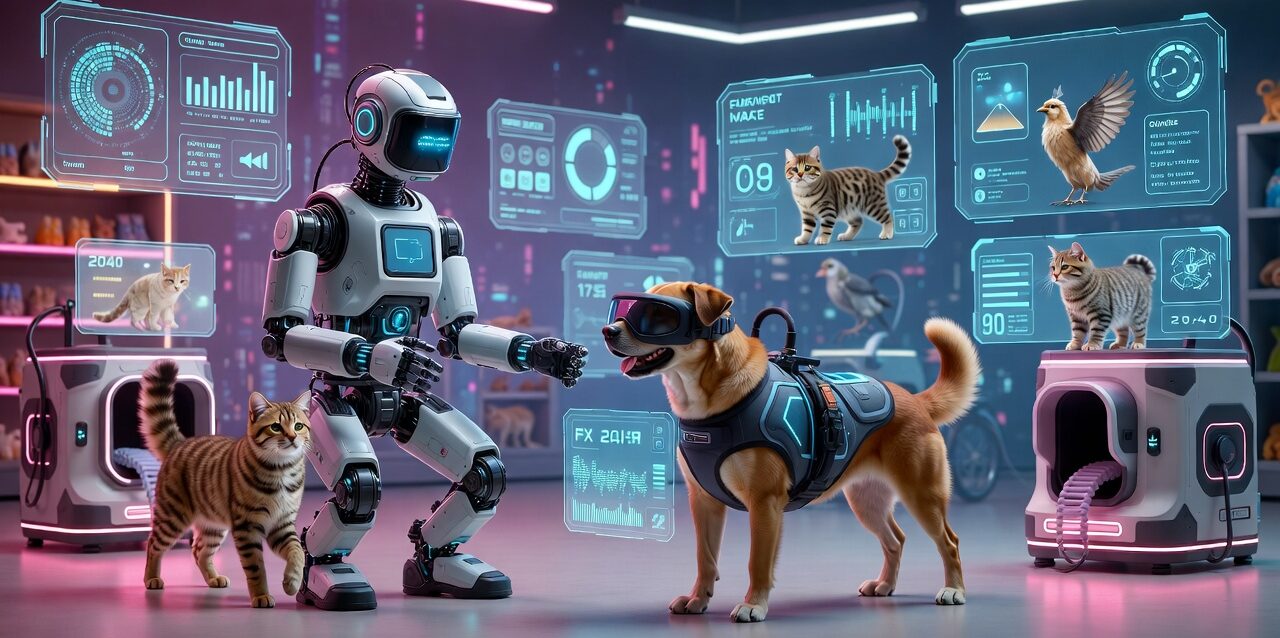
Pets of the Future: AI That Knows Them Better Than We Do
From Furry Companions to Smart, Augmented, and Alternative Bonds
As of February 2026, pet ownership is at record highs — 94 million U.S. households own at least one pet (up from 82 million in 2023), with dogs in 51% and cats in 37% of homes. Gen Z drives multi-pet adoption, and the global pet care market exceeds $300 billion, projected to approach $500 billion by 2030. Humanization trends treat pets as family, fueling demand for premium health, wellness, and tech solutions.
By 2040, pets evolve amid AI convergence, biotech advances, robotics, and sustainability pressures. Traditional animals persist but coexist with hyper-smart companions, robotic alternatives, and enhanced care ecosystems.
1. Near-Term (2026–2030): AI-Powered Monitoring & Connected Care
- Smart Tech Becomes Standard
Wearables (GPS collars, health trackers) and IoT devices explode: automated feeders dispense personalized portions, cameras enable remote interaction, and AI analyzes behavior/vitals for early illness detection. Pet tech market grows from ~$7–10 billion to $17+ billion by 2030 (CAGR 14%+), with emotion-detecting collars and robotic sitters emerging. - Pet Humanization & Wellness Boom
Owners prioritize longevity: predictive wellness platforms use AI for tailored nutrition, exercise, and vet alerts. Multi-pet households rise, especially among younger generations. Home setups integrate with smart ecosystems for seamless care. - Robotic Companions Gain Traction
AI robotic pets (e.g., successors to AIBO, Moflin, Tombot) provide low-maintenance affection for elderly, allergic, or busy owners. Market surges toward $11+ billion by late decade, driven by mental health benefits.
2. Medium-Term (2030–2035): Predictive, Personalized, & Hybrid Companionship
- AI-Driven Predictive Health
Pets receive digital health profiles rivaling humans: AI anticipates issues (e.g., joint problems, behavioral changes), optimizes diets via genetic insights, and integrates with vet telehealth. Robotics advance: autonomous pet sitters monitor, play, and provide companionship. - Blended Living & Robotic Alternatives
Robotic pets become sophisticated — adaptive, responsive to emotions, and therapeutic (e.g., for dementia care). Hybrid models emerge: real pets augmented by AI assistants. Urban constraints boost demand for low-maintenance digital/robotic options. - Sustainability Shifts
Lab-grown or insect-based pet foods gain share; eco-conscious owners choose lower-impact options.
3. Long-Term (2035–2040): Augmented Animals, Biotech Enhancements, & New Forms of Companionship
- Biotech & Genetic Advances
Gene editing (CRISPR) improves traits: healthier, longer-lived pets with reduced disease risk. De-extinction efforts (e.g., dire wolf hybrids) inspire custom traits or revived species as exotic companions, though ethical/environmental debates intensify. - Full Symbiosis & Immersive Bonds
Advanced AI/BCI integration allows deeper connections: thought-linked play or shared experiences. Robotic pets achieve near-indistinguishable emotional depth for some users. - Diverse Companionship Landscape
Traditional pets thrive in eco-friendly, high-tech care; robotic/digital alternatives serve niche needs (allergies, housing, mental health). Global pet population grows, but alternatives reduce pressure on resources.
Illustrative Pet Scenarios by 2040
- Augmented Real Pet — AI collar predicts health issues; automated home systems feed, exercise, and entertain while owner is away.
- Robotic Companion — Lifelike AI pet offers cuddles, conversation, and emotional support — no vet bills or allergies.
- Biotech-Enhanced Animal — Gene-edited dog with superior longevity and temperament, tailored to family needs.
- Virtual/Hybrid Bond — AR/VR pet interactions blend with real ones for immersive play.
Risks & Societal Shifts
- Inequality & Access — Premium tech/biotech favors affluent owners; robotic alternatives may deepen isolation for some.
- Ethics & Welfare — Gene editing raises animal rights concerns; over-reliance on robots risks diminished human-animal bonds.
- Environmental Impact — Biotech and smart devices add e-waste; sustainable pet food mitigates footprint.
- Emotional Trade-Offs — Perfect robotic companions could make real pets seem “messy,” altering societal views on companionship.
Bottom Line
By 2040, “pets” expand beyond traditional animals to a diverse ecosystem of smart, augmented, robotic, and biotech-enhanced companions. The dominant paradigm becomes hyper-connected, personalized, and multi-form companionship — AI/IoT enabling predictive care, robotics offering accessible affection, and biotech extending healthspan. Pets won’t vanish; they’ll evolve into sophisticated partners that enhance human well-being, adapt to modern life, and reflect deeper societal values around empathy, sustainability, and connection. The future of pets is not replacement — it’s augmentation: technology amplifying the timeless bond between humans and animals in an increasingly complex world.