
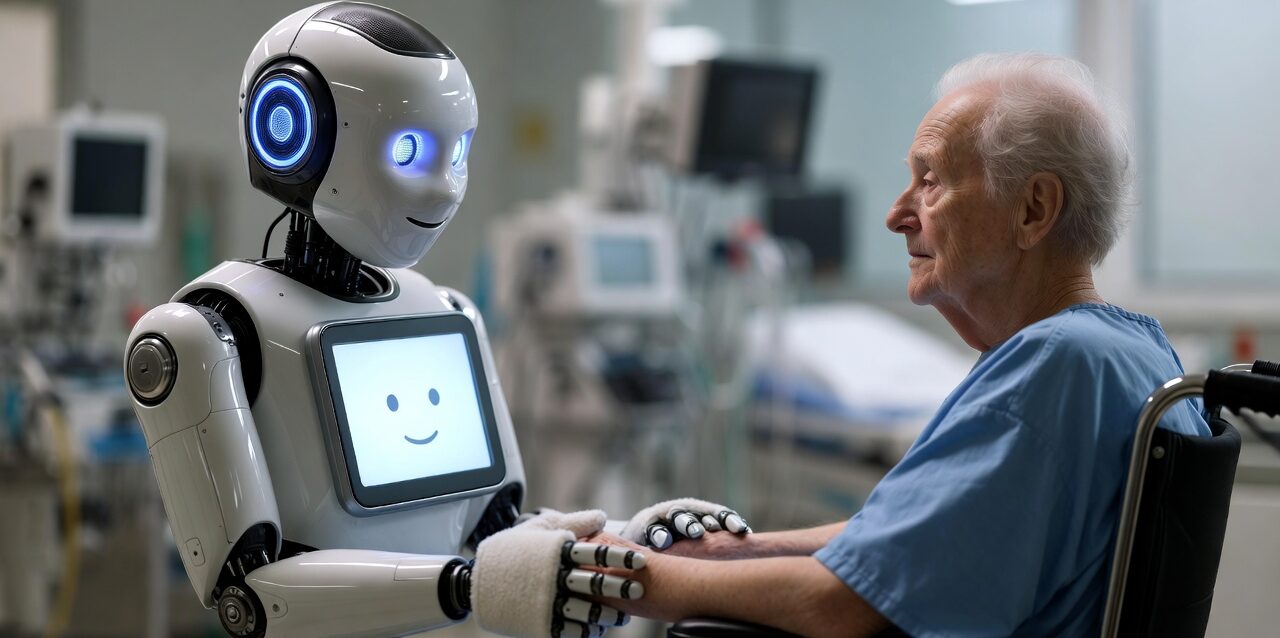
Robotic Care: From Basic Helpers to Empathetic Lifelong Companions
From Basic Assistance Robots to Empathetic, Proactive, and Emotionally Intelligent Companions
As of February 2026, robotic carers are still in early commercial stages.
Examples include:
- SoftBank Pepper and Toyota Human Support Robot (limited emotional interaction)
- Intuition Robotics ElliQ (conversational companion for seniors)
- Mabu (health coaching robot)
- Care-O-bot and other research prototypes
Most deployments are pilot-scale in care homes or private residences. The global care robotics market is estimated at $2–4 billion (2025–2026), with strong growth forecasts (CAGR 15–25%+), driven by aging populations, caregiver shortages, and rising dementia/Alzheimer’s cases.
By 2040, robotic carers evolve into highly empathetic, proactive, and multi-modal companions — capable of physical assistance, emotional support, medical monitoring, and deep personalization — becoming a standard part of eldercare, disability support, and even family life.
1. Near-Term (2026–2030): Multimodal Assistance & Emotional Foundations
- Physical + Conversational Robots
Robots combine mobility (arms, wheels, soft grippers), dexterous manipulation, and natural language.
They help with: - mobility (stand-up assist, walking support)
- daily tasks (fetching items, meal prep support, medication delivery)
- companionship (conversation, memory games, video calls)
- Emotional & Contextual Awareness
Improved emotion recognition (voice tone, facial expression, posture) and context understanding (memory of past conversations, preferences, family members).
Robots use large multimodal models to detect loneliness, agitation, or confusion and respond appropriately (calming music, calling family, gentle reminders). - Health & Safety Monitoring
Continuous tracking of vitals (heart rate, activity, sleep), fall detection, medication adherence, and early warning signs (wandering, irregular patterns). Integration with telehealth and emergency services.
2. Medium-Term (2030–2035): Proactive & Personalized Care Companions
- Proactive & Anticipatory Behavior
Robots learn daily routines and predict needs — preparing tea before the usual time, suggesting a walk when mood is low, reminding about physiotherapy when movement is reduced.
They adapt to personality, cultural background, language, humor, and emotional state. - Physical Care Capabilities
Stronger, safer manipulation (lifting, repositioning in bed, helping with dressing).
Soft robotics and exoskeleton-like support for mobility and strength augmentation.
Some models perform basic nursing tasks (wound care, catheter management) under remote human supervision. - Social & Cognitive Stimulation
Advanced conversational memory, storytelling, music therapy, cognitive games, and simulated social interaction (e.g., “talking” with family avatars when real calls are missed).
Designed to reduce loneliness and slow cognitive decline.
3. Long-Term (2035–2040): Emotionally Intelligent & Symbiotic Carers
- Deep Emotional Understanding
Robots use multimodal empathy models (voice + face + body language + history) to detect subtle emotional states.
They become trusted confidants — remembering life stories, providing comfort, and even helping process grief or life reflection. - Physical & Medical Sophistication
Full-body assistance (lifting, turning, bathing with dignity).
Integrated medical sensors and simple interventions (e.g., insulin administration, seizure detection).
Coordination with human carers via shared care plans and real-time updates. - Societal Integration
Robotic carers become normalized — present in homes, care facilities, hospitals.
Families view them as extended family members rather than machines.
Ethical frameworks and “robot rights” debates mature.
Illustrative Robotic Carer Scenarios by 2040
- Morning Routine — Gently wakes person, helps dress, prepares breakfast based on dietary/medical needs, reminds about medication with calm voice.
- Social Afternoon — Plays music from youth, shares stories, shows photos/videos, calls family when loneliness detected.
- Health Monitoring — Notices irregular heart rhythm, alerts nurse, keeps person calm while help arrives.
- Evening Wind-Down — Guides light exercise, reads favorite book aloud, dims lights, plays soothing sounds for sleep.
Risks & Societal Shifts
- Emotional Dependency — Risk of over-attachment or reduced human contact.
- Privacy & Autonomy — Constant monitoring vs. dignity and control.
- Inequality — High-end empathetic robots vs. basic models or no access.
- Job Displacement — Human carers still needed for complex emotional/physical tasks, but roles evolve.
Bottom Line
By 2040, robotic carers transform from basic helpers into empathetic, proactive, and deeply integrated companions — capable of physical support, emotional understanding, medical monitoring, and genuine companionship.
The dominant paradigm becomes human–robot symbiosis in care — robots handle routine tasks and provide 24/7 presence, while humans focus on irreplaceable emotional depth, complex care, and meaningful connection.
Robotic carers won’t replace human caregivers — they will multiply their impact, reduce loneliness, and allow millions to age in place safely and with dignity.
The future isn’t machines taking over care — it’s machines becoming trusted partners so that no one faces aging alone.