
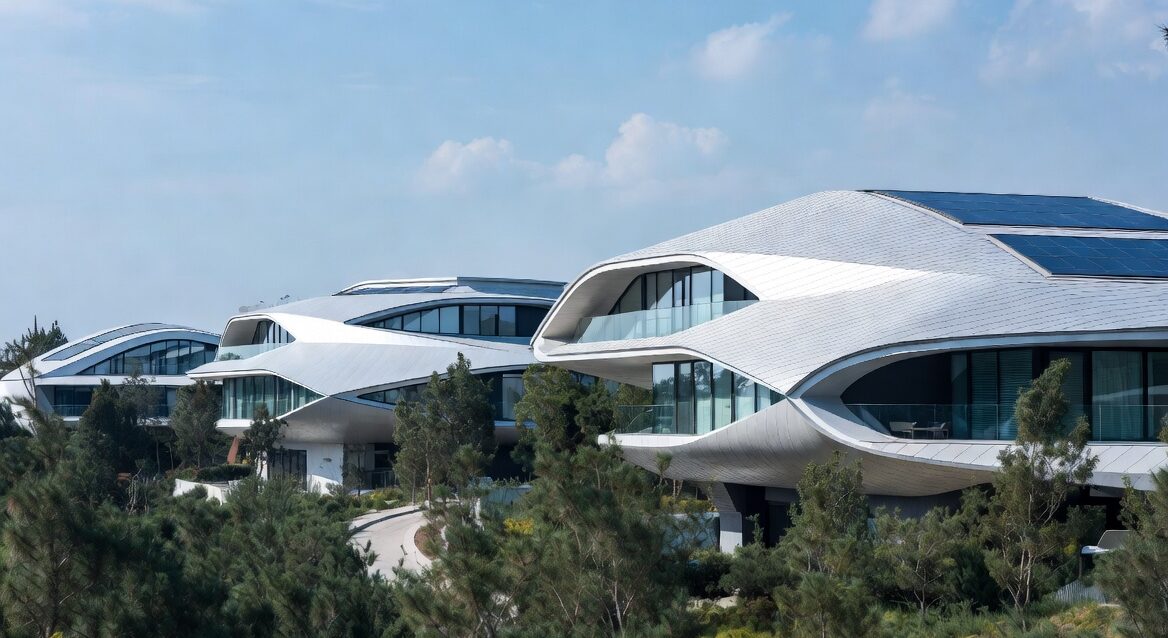
The Future of Houses: Adaptive Spaces, Regenerative Designs, and Robot-Ready Living
From Static Structures to Adaptive, Sustainable, AI-Integrated Living Spaces
As of February 2026, global housing faces mounting pressures: affordability crises, labor shortages, climate risks, rapid urbanization (projected to reach ~68% urban population by 2050), and demographic shifts (aging populations, multigenerational needs). Traditional construction remains slow, wasteful, and carbon-intensive. By 2040, houses evolve into smarter, greener, more flexible environments that prioritize health, efficiency, resilience, and personalization.
This case study synthesizes credible forecasts from futurists (e.g., Thomas Frey), industry reports (Allianz, McKinsey-aligned trends), emerging tech (3D printing, modular builds), and sustainability imperatives to map plausible trajectories.
1. Near-Term (2026–2030): Modular, 3D-Printed, and Affordable Acceleration
- 3D Printing & Prefab Scale-Up
3D-printed homes move from pilots to mainstream. Companies like ICON, Mighty Buildings, and COBOD print entire structures in days using concrete extrusion, slashing build times (e.g., walls in 24 hours) and costs by 20–50%. Waste drops dramatically; homes resist weather, pests, and disasters better. Developments in the U.S. (e.g., Texas, Colorado) sell at market rates but attract first-time buyers with durability and energy efficiency. - Modular & Factory-Built Dominance
Factory-assembled homes (e.g., Fading West-style) reach 90% completion off-site, assembled on-site in weeks. This addresses housing shortages and labor gaps. Accessory dwelling units (ADUs) and smaller footprints rise for affordability and urban infill. - Smart Basics Standardize
IoT integration becomes default: voice/AI controls, energy monitoring, and basic automation. Homes incorporate solar panels, efficient appliances, and passive design for lower bills.
2. Medium-Term (2030–2035): Adaptive, Wellness-Focused, and Regenerative Designs
- Adaptive & Modular Interiors
Homes feature movable walls, convertible spaces, and upgradeable systems to adapt to life changes (e.g., multigenerational living, remote work, aging-in-place). “Vertical villages” and mixed-use buildings blend residential with amenities. - Super-Smart Integration
AI becomes central: homes sense biometrics (heart rate, temperature via wearables) to adjust lighting, HVAC, and ambiance for optimal comfort/health. Predictive maintenance, automated energy management, and wellness features (e.g., air quality, sleep optimization) emerge. Humanoid robots assist with chores. - Sustainability Deepens
Net-zero or carbon-negative standards via advanced materials (mass timber, bio-engineered), circular construction, green roofs, rainwater systems, and regenerative practices. Homes generate more energy than they consume in leading markets.
3. Long-Term (2035–2040): Fully Responsive, Biodigital, and Climate-Resilient Homes
- 3D-Printed & On-Demand Construction
Widespread adoption: homes printed on-site or modularly in factories, customized via AI design tools. Costs fall significantly (potentially 60% less than 2024 equivalents in some forecasts), enabling faster, greener builds worldwide. - Biodigital & Health-Centric Living
Adaptive facades respond to weather; bio-sensors monitor health; homes act as wellness partners (stress detection, mental/physical support). Integration with broader ecosystems (e.g., smart grids, urban networks) blurs home boundaries. - Equity & Resilience Focus
Designs prioritize disaster resistance (floods, fires, extremes) and affordability through policy/tech. In vulnerable regions, floating/elevated or resilient modular homes rise.
Key House Types by 2040 (Illustrative Examples)
- 3D-Printed Smart Single-Family — Printed in days, solar-integrated, AI-managed, durable against extremes.
- Adaptive Modular Home — Convertible rooms, upgradeable tech, multigenerational layout.
- Regenerative Urban Unit — Net-positive energy, vertical farm access, wellness sensors.
- Compact Prefab ADU — Affordable backyard/urban add-on, fully automated.
Risks & Societal Shifts
- Affordability & Inequality — Premium smart/adaptive features may widen gaps; without policy, high-cost regions see $1M+ medians normalized.
- Privacy & Tech Dependence — Constant data collection risks surveillance; cyber vulnerabilities grow.
- Demographic Pressures — Aging boomers release inventory (~25% of homes by 2040), but demand from younger cohorts and urbanization strains supply.
- Environmental Trade-Offs — Rebound effects from convenience could increase energy use if not managed.
Bottom Line
By 2040, houses shift from passive shelters to dynamic, sustainable, AI-orchestrated ecosystems. The dominant paradigm is adaptive, 3D/modular-built, wellness-integrated living spaces — built faster/cheaper with regenerative materials, responsive to inhabitants and climate, and seamlessly connected. Future homes won’t just house people; they’ll enhance health, reduce planetary impact, and flex with life in a rapidly changing world. The transformation is architectural, technological, and human-centered — redefining “home” for an urban, climate-conscious era.