
The Future of Luxury: Experiential, Sustainable, and Deeply Personal
From Status Symbols to Experiential, Sustainable, and Hyper-Personalized Desirability
As of February 2026, the global luxury goods market (personal luxury, fashion, jewelry, watches, etc.) is valued at approximately $410–489 billion (2024–2026 estimates from McKinsey, Bain, Statista, Fortune Business Insights). Growth has slowed recently due to macroeconomic headwinds (especially China), overexposure from price increases, and shifting consumer values, but the sector remains resilient. Bain & Company and McKinsey project modest recovery with 1–3% annual growth through 2027, then 2–6% in subsequent years, potentially reaching $500–600+ billion by 2030 and higher by 2040 in optimistic scenarios.
By 2040, luxury transforms from product-centric exclusivity to experiential, sustainable, hyper-personalized, and digitally immersive desirability — driven by generational shifts (Gen Z/Next Gens dominating 80%+ of UHNW spending), sustainability as a non-negotiable, AI/GenAI acceleration, and the rise of experiences over possessions.
1. Near-Term (2026–2030): Reset, Value Focus, and Digital Acceleration
- Pricing & Value Realignment
After years of rapid price hikes (80%+ of growth 2019–2023 from pricing), brands reset toward “earned value” — disciplined premiumization, quality over volume, and stronger justification for cost. Affluent consumers shift spend to experiences (travel, wellness) and home upgrades; personal luxury goods flatten or grow modestly. - Generational Power Shift
Gen X and Next Gens (Millennials/Gen Z) drive 65–80% of growth. Younger buyers demand sustainability, transparency, inclusivity, and emotional connection — rejecting overconsumption. Secondhand/resale luxury grows twice as fast as primary market (projected $66 billion+ by 2030). - Digital & AI Acceleration
GenAI moves from exploration to core functions — hyper-personalized clienteling, immersive digital experiences (virtual try-ons, AR showrooms), and seamless phygital retail. Online luxury retail expands; brands prioritize data-driven engagement and emotional loyalty.
2. Medium-Term (2030–2035): Sustainability Imperative & Experience Economy
- Sustainability as Core Identity
Sustainability shifts from compliance to innovation driver — circular economy, traceable supply chains, new materials, lifecycle transparency. Digital Product Passports (EU-mandated) make sourcing/environmental impact visible. Luxury brands lead in ethical sourcing, regeneration, and “buy less but better” narratives. - Experiences Over Things
Luxury spend tilts toward travel, wellness, hospitality, and exclusive events — personal luxury goods compete for share. Brands build holistic ecosystems (immersive retail, branded experiences, longevity/wellness tie-ins). Emotional resonance and cultural relevance become key differentiators. - Personalization & Tech Maturity
AI-powered hyper-personalization (clienteling, curated experiences) deepens loyalty. Metaverse/AR/VR matures for virtual luxury (digital fashion, branded worlds), though physical remains primary for high-touch categories.
3. Long-Term (2035–2040): Redefined Desirability & Multi-Dimensional Luxury
- Earned Luxury & Cultural Legitimacy
Luxury becomes about earned value — authenticity, craftsmanship, transparency, and cultural relevance over conspicuous consumption. Brands reconnect with heritage while innovating in materials, traceability, and purpose (wellness, longevity, inclusivity). - Experiential & Digital-Physical Fusion
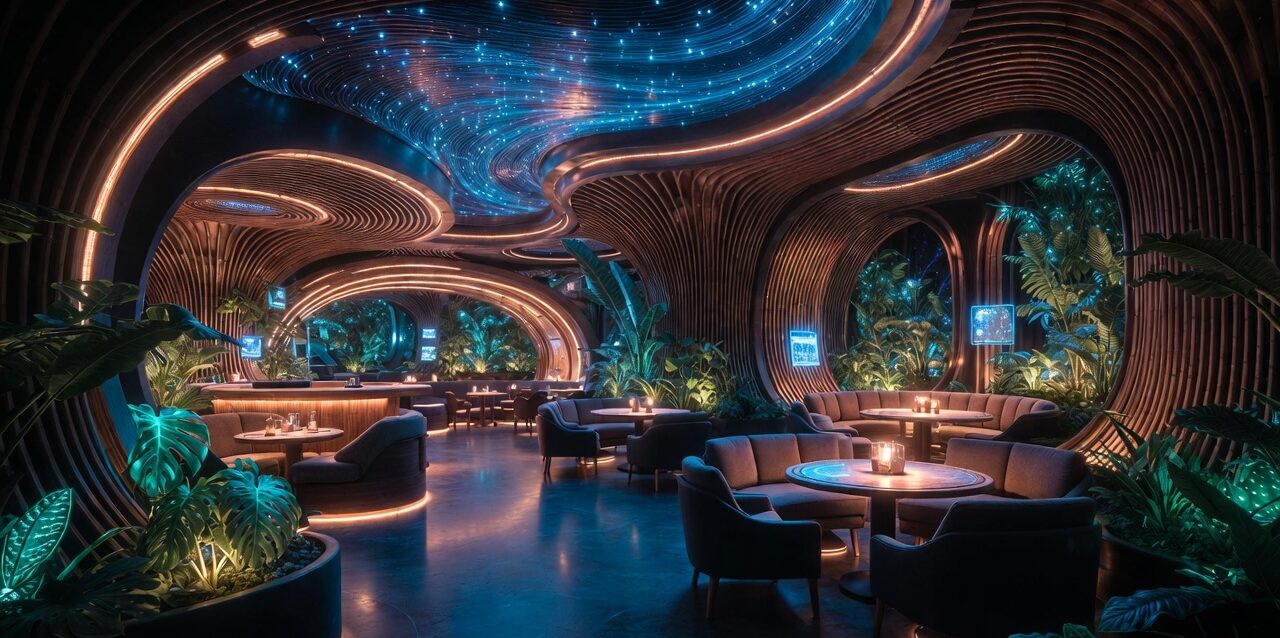
Luxury fully embraces the experience economy — branded travel, wellness retreats, immersive events, and phygital worlds. Metaverse spaces (virtual salons, digital collectibles) complement physical flagships. AI/GenAI embeds in core functions — predictive personalization, immersive storytelling. - Global Rebalancing & New Growth Engines
Emerging markets (India, Southeast Asia, Middle East) and younger demographics fuel growth. Luxury diversifies into wellness, longevity, and lifestyle — redefining desirability around emotional connection, sustainability, and agility.
Illustrative Luxury Scenarios by 2040
- Daily Luxury — AI-curated wardrobe suggestions, digital passports verify sustainability, secondhand/resale platforms dominate.
- Experiential Luxury — Branded wellness retreats, immersive virtual fashion shows, exclusive global events.
- Personalized Possession — Hyper-custom pieces via AI design tools, traceable materials, circular resale.
- Cultural Luxury — Brands as cultural curators — purpose-driven, inclusive, and emotionally resonant.
Risks & Societal Shifts
- Inequality — Luxury remains elite; younger buyers demand accessibility (resale, rental, entry-level lines).
- Overexposure — Risk of diluted exclusivity; brands must balance scale with scarcity.
- Sustainability Pressure — Climate inaction could erode profits (34%+ at risk by 2030 in fashion per some reports).
- Adaptation — Brands must innovate fast — cultural relevance, transparency, and agility decide winners.
Bottom Line
By 2040, luxury evolves from status-driven possessions to experiential, sustainable, and deeply personal desirability — earned through authenticity, innovation, and emotional connection. The dominant paradigm becomes purpose-led, phygital, and regenerative luxury — experiences, wellness, and transparency often outrank goods. Luxury won’t shrink — it will expand into new value pools (longevity, culture, sustainability) while reconnecting with timeless codes of craftsmanship and exclusivity. The future is not more of the same — it’s smarter, kinder, and more meaningful luxury that reflects a world demanding value beyond price. Brands that adapt thrive; those that cling to old models fade.