The Future of Pop Stardom: Holograms, Metaverse Stages, and AI Co-Creators
From Human Icons to AI-Augmented, Virtual, and Holographic Superstars
As of February 2026, pop stardom remains driven by human artists — Taylor Swift, Billie Eilish, Bad Bunny, and K-pop groups like BTS dominate charts, tours, and social media. Streaming, social platforms, and live events fuel massive revenues, but AI tools (Suno, Udio), virtual idols (Hatsune Miku, PLAVE, MAVE:), and holographic performances (ABBA Voyage, Tupac holograms) are already reshaping entertainment. Forecasts suggest AI-generated music and virtual performers will grow significantly, with virtual idols gaining mainstream traction in Asia and beyond, while human artists leverage AI for creation, holograms for tours, and metaverse spaces for fan engagement.
This case study draws from industry trends, expert analyses, and emerging examples (e.g., Timbaland’s AI pop star, Velvet Sundown, PLAVE) to outline plausible trajectories for pop stars over the next 15 years.
1. Near-Term (2026–2030): AI-Augmented Humans & Early Virtual Stars
- AI as Creative Partner
Pop stars increasingly use generative AI for songwriting, production, vocal effects, and remixing. Tools assist in creating hooks, beats, and even virtual backing vocals. Human artists retain authenticity and emotional depth, but AI accelerates output — enabling faster releases and personalized fan content (e.g., AI-generated remixes for superfans). - Virtual Idols Gain Momentum
AI-driven virtual groups (e.g., PLAVE, MAVE:, SUPERKIND hybrids) chart hits and sell albums. Holographic concerts expand globally — Hatsune Miku-style avatars perform sold-out shows, with AI handling vocals and animation. Brands partner heavily for flawless, scandal-free endorsements. - Live & Hybrid Experiences
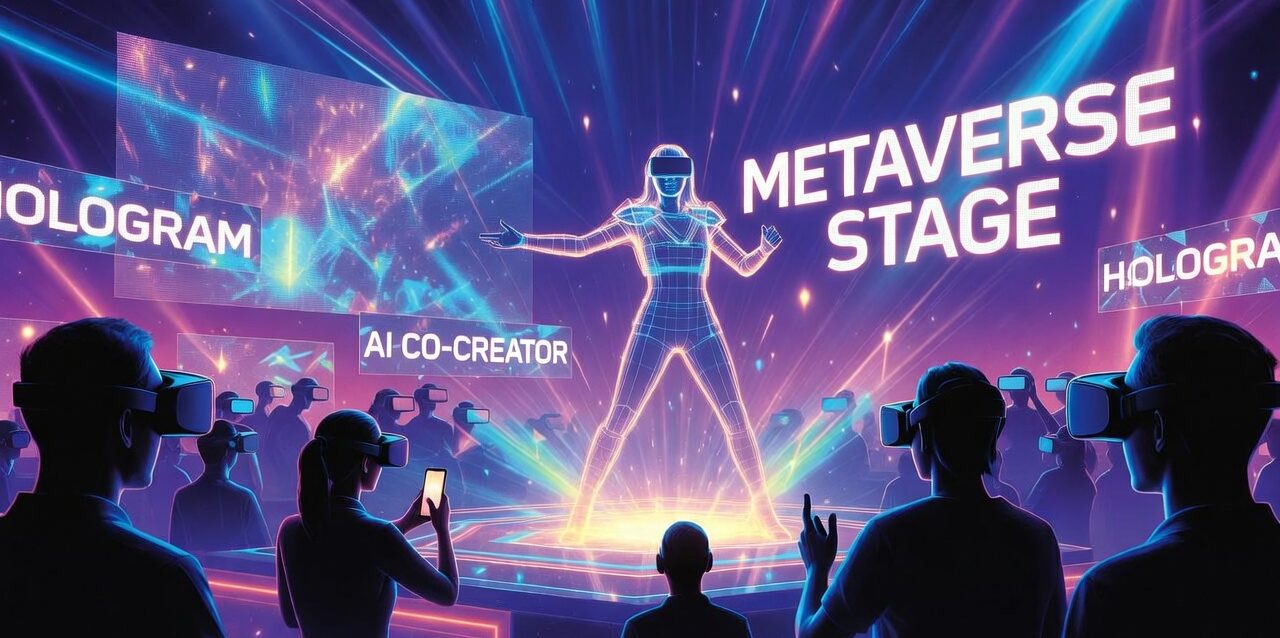
Human stars tour with hologram enhancements (duets with past selves or virtual guests). Metaverse concerts allow global fans to interact in real time. Superstar tours remain massive, but virtual options reduce physical demands.
2. Medium-Term (2030–2035): Blended Human-AI Stars & Metaverse Dominance
- Hybrid Pop Stars Emerge
Major artists release AI-assisted albums; some debut “digital twins” — AI versions that perform 24/7 in metaverse spaces. Virtual pop stars (fully AI-created) top charts in genres like hyperpop or K-pop-inspired styles, offering endless customization (fan-voted setlists, personalized lyrics). - Holographic & Immersive Tours
Holograms become standard for legacy acts and global reach — imagine a 2040 hologram tour of a retired icon with AI-updated vocals. Metaverse platforms host massive virtual festivals; fans attend via AR glasses, interact with avatars, and buy digital merch/NFTs. - Fan Economy & Superfan Power
Direct-to-fan models explode — pop stars offer AI-personalized content, virtual meet-and-greets, and exclusive digital experiences. Scandals decline for virtual stars; human artists focus on authenticity and live connection.
3. Long-Term (2035–2040): Symbiotic & Fully Digital Stardom
- AI-Native Pop Stars
Fully synthetic idols (AI-generated voices, visuals, personalities) rival or surpass humans in popularity — never aging, always available, and infinitely adaptable. Human artists collaborate with AI “co-stars” or maintain digital clones for perpetual presence. - Immersive & Neural Experiences
AR/VR headsets or early BCI let fans “enter” performances — feel the beat, change camera angles, or interact directly. Pop stars host persistent metaverse worlds; music becomes multi-sensory (haptics, scents). - Cultural & Economic Shifts
Stardom fragments into niche digital communities; global superstars persist but share space with countless AI idols. Revenue diversifies — virtual concerts, digital collectibles, personalized AI experiences — while human artists emphasize irreplaceable live energy and emotional depth.
Illustrative Pop Star Scenarios by 2040
- Human Superstar — Tours with AI co-writers, hologram backups, and metaverse after-parties.
- Hybrid Icon — Releases music with AI twin; performs live while digital version tours virtually.
- Fully Virtual Idol — AI-generated group headlines metaverse festivals; fans customize avatars and songs.
- Hologram Legacy Act — Deceased or retired legend performs as lifelike hologram with updated AI vocals.
Risks & Societal Shifts
- Authenticity & Creativity — AI floods raise questions of “real” art; backlash could revive “human-only” movements.
- Inequality — Premium virtual/immersive tech favors wealthy fans and artists.
- Mental & Cultural Impact — Over-reliance on flawless digital stars risks shallower emotional connections.
- Regulation — Need for AI labeling, royalties for synthetic works, and ethics around digital resurrection.
Bottom Line
By 2040, pop stars evolve into a hybrid ecosystem of human icons, AI-augmented performers, and fully virtual idols. The dominant paradigm becomes blended human-AI stardom with immersive, metaverse-driven fan experiences — holograms and virtual concerts expand reach, AI accelerates creation, and personalization deepens engagement. Pop stardom won’t disappear; it will expand — more accessible, interactive, and global than ever. The future isn’t humans vs. machines; it’s symbiosis — technology amplifying charisma, creativity, and connection while preserving the irreplaceable spark of human performance. Pop stars will remain cultural lightning rods, but in a world where anyone (or anything) can become one.