
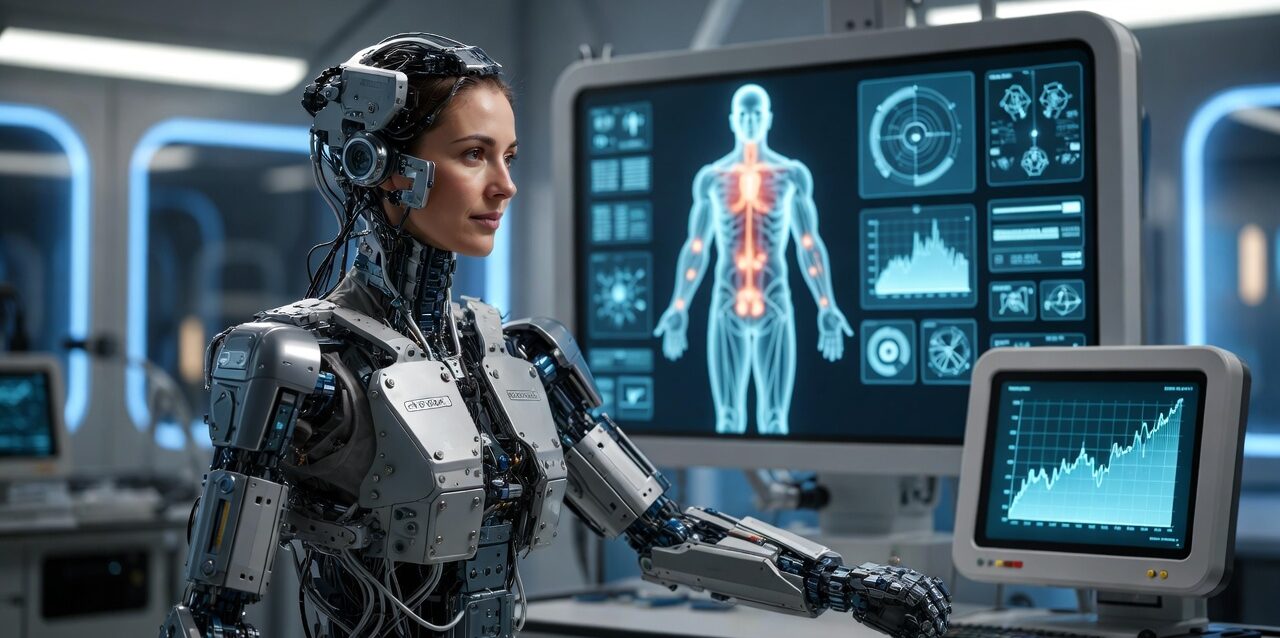
The Next Era of Recovery: Predictive AI, Exoskeletons, and Tissue Rebuilding
Case Study: Physical Recovery in the Future (2026–2040)
From Slow Healing to Accelerated, Regenerative, and AI-Guided Restoration
As of February 2026, physical recovery from injuries, surgeries, or age-related decline relies on traditional physical therapy, surgery, pain management, and gradual rehabilitation. Recovery times for common issues like ACL tears (6–12 months), joint replacements (3–6 months), or muscle strains vary widely, often limited by inflammation, tissue regeneration capacity, and access to care. Global rehabilitation markets (including physical therapy and sports medicine) grow steadily (~6–8% CAGR), driven by aging populations, sports injuries, and chronic conditions.
By 2040, physical recovery transforms through converging advances: regenerative medicine, robotics/exoskeletons, AI personalization, stem cell therapies, and digital therapeutics. Recovery times shrink dramatically, healthspan extends, and rehabilitation becomes proactive and precise.
1. Near-Term (2026–2030): AI-Personalized & Tech-Enhanced Rehab
- Wearables & AI-Driven Therapy
Continuous monitoring via smart wearables, sensors, and apps tracks movement, muscle activation, pain, and recovery metrics in real time. AI algorithms create hyper-personalized rehab programs — adjusting exercises, intensity, and rest based on daily progress, fatigue, or setbacks. Tele-rehab and digital therapeutics improve adherence (15–40% gains reported) and reduce costs (~30–40%). - Regenerative Foundations
Platelet-rich plasma (PRP), stem cell injections, and biologics accelerate soft-tissue healing (tendons, ligaments, cartilage). These become more common in sports medicine and orthopedics, shortening recovery for acute injuries by weeks to months. - Robotics & Exoskeletons Enter Mainstream
Wearable exoskeletons (e.g., Ekso, ReWalk successors) assist gait training post-stroke or injury, reducing therapist burden and enabling earlier mobility. AI integration personalizes assistance and predicts fatigue.
2. Medium-Term (2030–2035): Regenerative Breakthroughs & Robotic Precision
- Stem Cells & Tissue Engineering Scale
Mesenchymal stem cells, induced pluripotent stem cells, and precision therapies regenerate cartilage, tendons, and muscle more effectively. Clinical translation advances for orthopedic/sports injuries — reducing need for invasive surgeries and cutting recovery times significantly (e.g., months instead of years for severe damage). - Advanced Robotics & Exoskeletons
Lighter, AI-adaptive exoskeletons become standard in rehab centers and homes — providing precise, repetitive motion training with real-time feedback. Soft exoskeletons and hybrid systems improve mobility for neuromuscular conditions, cancer recovery, or post-surgery. VR/AR enhances engagement (immersive environments for motivation and skill retraining). - Predictive & Preventive Recovery
AI analyzes biomarkers, genetics, and movement data to forecast complications and intervene early — shifting rehab from reactive to proactive.
3. Long-Term (2035–2040): Symbiotic & Regenerative Recovery Ecosystems
- Full Regeneration & Biological Reversal
Combinatorial therapies (stem cells + gene editing + biomaterials) enable true tissue regeneration — potentially regrowing cartilage, repairing spinal cords, or reversing muscle loss. Recovery from major injuries/surgeries becomes far faster and more complete, with healthspan extension reducing age-related decline. - Neural-Linked & Fully Autonomous Rehab
Early brain-computer interfaces (BCI) and neurotech guide muscle activation and recovery. Exoskeletons evolve into seamless, always-on assistants for mobility and strength rebuilding. Digital twins simulate recovery paths for ultra-precise plans. - Holistic & Accessible Systems
Home-based robotic rehab, telemedicine, and AI guardians make high-quality recovery universal — reducing disparities and costs while maximizing outcomes.
Illustrative Recovery Scenarios by 2040
- ACL Tear — Stem cell injection + AI-guided robotic rehab halves recovery time (3–6 months vs. 9–12).
- Joint Replacement — Regenerative scaffolds + exoskeleton training accelerates mobility; patients walk unaided weeks earlier.
- Stroke/Neuromuscular — BCI-linked exoskeletons restore function faster; adaptive AI personalizes every session.
- Age-Related Decline — Preventive wearables + regenerative therapies maintain strength/mobility into 80s–90s.
Risks & Societal Shifts
- Inequality — Advanced regenerative/robotics initially favor affluent; access gaps must close.
- Over-Reliance — Tech dependence could reduce natural adaptation; ethical concerns around enhancement.
- Regulation & Safety — Long-term effects of stem cells, BCI, and AI need rigorous oversight.
- Cost & Sustainability — Scaling regenerative therapies must balance innovation with affordability.
Bottom Line
By 2040, physical recovery evolves from slow, therapist-dependent processes to accelerated, regenerative, and AI-orchestrated restoration. The dominant paradigm becomes proactive, personalized, and technology-enabled healthspan preservation — stem cells and biologics rebuild tissue, robotics/exoskeletons enhance precision, and AI predicts/optimizes every step. Recovery won’t just heal injuries; it will prevent decline and extend functional years. The future is not endless waiting — it’s rapid, intelligent, and empowering restoration, making physical vitality accessible and enduring in an aging world.