
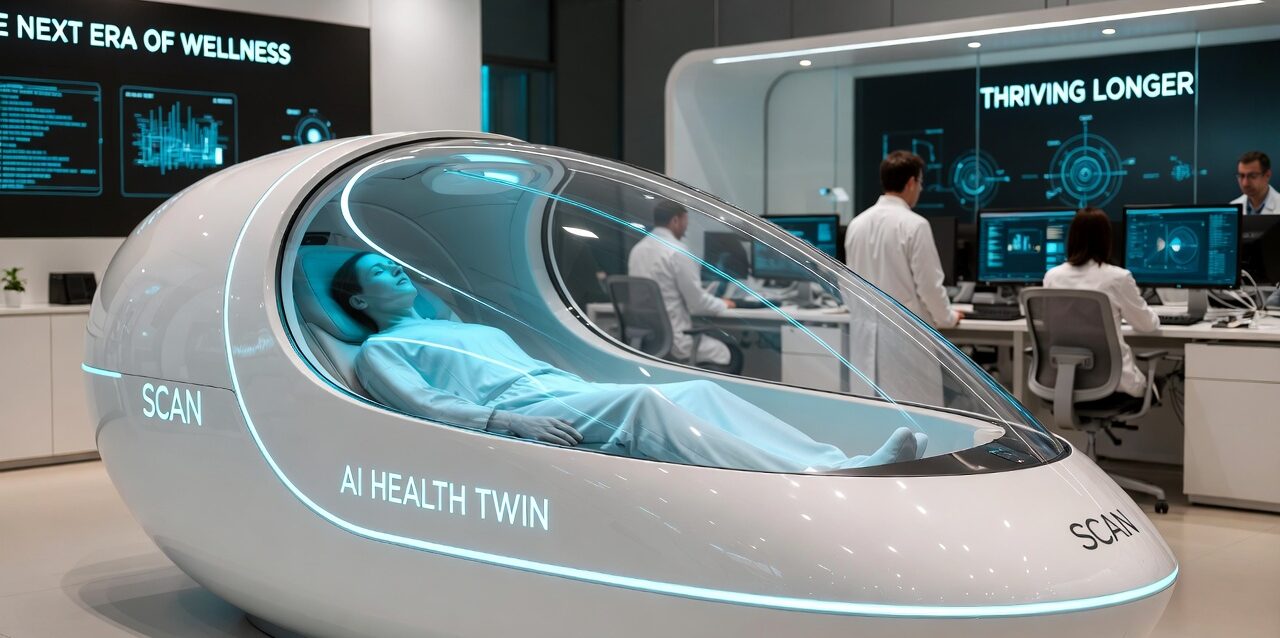
The Next Era of Wellness: AI Health Twins, Regenerative Therapies, and Thriving Longer
From Reactive Care to Proactive, Personalized, and Longevity-Focused Living
As of February 2026, the global wellness economy has reached a record $6.8 trillion (Global Wellness Institute 2025 Monitor), surpassing sectors like pharmaceuticals ($1.8T) and sports ($2.7T). It now represents ~6.1% of global GDP and is forecast to grow at 7.6% annually through 2029, approaching $9.8–10 trillion. Consumer priorities have shifted toward prevention, mental health, longevity, and personalization, driven by aging populations, chronic disease burdens, mental unwellness, and tech advances.
This case study draws from Global Wellness Institute (GWI), McKinsey Future of Wellness reports, Deloitte Future of Health insights, and expert forecasts to outline credible trajectories for wellness over the next 15 years — emphasizing proactive, data-driven, and integrated approaches.
1. Near-Term (2026–2030): AI-Powered Personalization & Preventive Boom
- Hyper-Personalized & Data-Driven Wellness
Wearables, smart rings (e.g., Oura, Apple Watch successors), and at-home biomarker tests become ubiquitous. AI analyzes continuous data (biometrics, sleep, nutrition, genetics) to deliver tailored recommendations for nutrition, exercise, recovery, and stress management. Preventive medicine surges: early detection via AI diagnostics, predictive health nudges, and personalized plans reduce chronic disease risk. - Mental Wellness & Nervous System Focus
Mental health integrates deeply with physical wellness — apps, biofeedback tools, and neurowellness (nervous system regulation) become standard. Corporate wellness expands (market ~$64B by 2030), emphasizing resilience, burnout prevention, and holistic programs. - Longevity & Women’s Health Rise
Longevity gains traction: supplements, biohacking (cryo, infrared, IV therapies), and women’s healthspan (ovarian aging, menopause) attract investment. Closing the women’s health gap could add $1 trillion in global GDP by 2040 (McKinsey/WEF).
2. Medium-Term (2030–2035): Integrated Ecosystems & Augmented Biology
- Precision & Regenerative Wellness
Biotech convergence: gene therapies, senolytics, and regenerative treatments delay aging markers. AI “health twins” simulate interventions; continuous monitoring predicts issues years ahead. Wellness real estate explodes (fastest-growing sector, ~15–16% CAGR): longevity residences embed diagnostics, biohacking, AI tracking, and preventive care into homes/communities. - Holistic & Climate-Adaptive Wellness
Wellness addresses broader threats — mental health, addiction, teen wellness, microplastics, water crises. “Ready Is the New Well” emerges: disaster preparedness (climate resilience) becomes preventive wellness. Thermal springs, social bathhouses, and nature-based therapies grow rapidly. - Market Leaders
Mental wellness (~10% CAGR), traditional/complementary medicine (including longevity/biohacking), and personalized medicine (~9% CAGR) lead growth. Six sectors exceed $1 trillion each.
3. Long-Term (2035–2040): Symbiotic, Superhuman Optimization
- Augmented & Longevity-Driven Wellness
Biotech + AI enables “biological reversibility”: aging reclassified as treatable. Interventions extend healthspan dramatically (healthy years into 90s+). AI guardians manage protocols; BCI/Neuralink-style interfaces optimize brain/body performance. Wellness becomes symbiotic — human-machine fusion for superhuman vitality. - Global & Systemic Integration
Wellness embeds in daily infrastructure: smart homes, cities, workplaces deliver seamless care. Prevention dominates; treatment-based care recedes. Longevity communities and residences make advanced care routine. - Societal Transformation
Healthspan gains add trillions in economic value; societies redefine aging, retirement, and productivity.
Illustrative Wellness Day in 2040
- Morning — AI companion analyzes overnight biomarkers, suggests optimized breakfast/nutrients.
- Day — Wearable nudges movement/recovery; virtual longevity coach adjusts routine.
- Evening — Home diagnostics scan; regenerative therapy (light, sauna) integrated.
- Ongoing — Predictive alerts prevent issues; longevity protocols extend vital years.
Risks & Societal Shifts
- Inequality & Access — Premium tech/biotech favors the affluent; divides widen without policy.
- Over-Optimization & Ethics — Addiction to tracking; privacy erosion; “superhuman” risks.
- Mental/Emotional Balance — Tech-driven wellness must preserve human connection.
- Regulation — Standards needed for AI diagnostics, gene therapies, data ethics.
Bottom Line
By 2040, wellness evolves from a lifestyle choice to proactive, personalized, and regenerative life infrastructure. The dominant paradigm becomes AI-orchestrated, biotech-enhanced longevity optimization — shifting from treating illness to extending healthspan, preventing decline, and integrating wellness into every domain. Wellness won’t just improve quality of life; it will redefine aging, productivity, and society itself — a multi-trillion-dollar force blending prevention, technology, and human-centered care. The future is not about living longer — it’s about thriving longer, with wellness as the foundation of human potential in an accelerating world.