
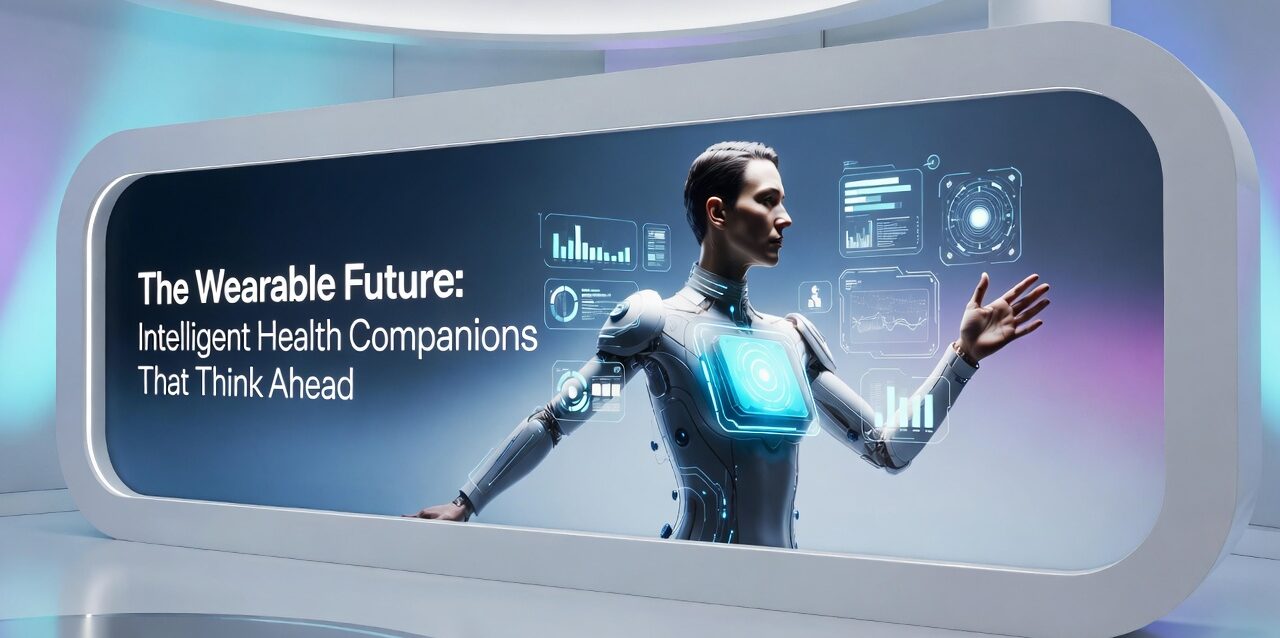
The Wearable Future: Intelligent Health Companions That Think Ahead
From Basic Trackers to Predictive, AI-Powered, and Neural-Integrated Wellness Ecosystems
As of February 2026, the global wearable technology market stands at approximately $80–120 billion (with medical wearables at ~$120B in 2024 and growing rapidly), and digital health (including apps and connected devices) reaches $177–200 billion in revenue. Wearables like smartwatches, rings (Oura, Samsung Galaxy Ring), and fitness trackers dominate consumer adoption, while apps focus on fitness, sleep, nutrition, and basic health monitoring. Forecasts project explosive growth: wearable tech could hit $176–290 billion by 2030 (CAGR 15–16%), and digital health expands at ~5–10% annually, driven by AI integration, chronic disease management, aging populations, and preventive wellness.
This case study synthesizes projections from Deloitte, McKinsey, GlobalData, MarketsandMarkets, and futurist analyses to outline how health apps and gadgets evolve — shifting from passive tracking to proactive, predictive, and deeply personalized health management.
1. Near-Term (2026–2030): AI-Enhanced Tracking & Preventive Insights
- Advanced Wearables & Continuous Monitoring
Devices evolve beyond steps and heart rate: smart rings, patches, and clothing track glucose trends (non-invasive), blood pressure, stress (via HRV/cortisol proxies), sleep stages, and early illness signals. AI analyzes multimodal data (biometrics + environment) for predictive alerts — e.g., “flu risk rising” or “adjust sleep routine.” Market growth to $290B+ by 2030 reflects adoption in chronic care (diabetes, heart disease) and wellness. - Hyper-Personalized Apps
Apps become AI “health coaches”: integrating wearables with electronic records, genetics, and lifestyle data to deliver tailored plans (nutrition, exercise, supplements). Digital twins simulate interventions; apps nudge behavior in real time (e.g., “take a walk now” based on stress/mood). Mental health integration surges — apps use voice/speech patterns for early depression/anxiety detection. - Home & Ecosystem Integration
Gadgets sync with smart homes (e.g., adjust lighting for circadian rhythm) and telehealth platforms. Regulatory approvals accelerate for clinical-grade wearables; consumer trust rises with actionable insights.
2. Medium-Term (2030–2035): Predictive & Regenerative Health Tools
- AI-Driven Predictive Diagnostics
Continuous monitoring enables true proactive care — devices detect patterns years before symptoms (e.g., metabolic shifts, cognitive decline). AI “health avatars” run simulations, forecast risks, and recommend preventive actions. Market penetration in medical wearables reaches $168–543B by 2034 (CAGR 16–25%), with AI wearables at $65B+ by 2030. - Advanced Form Factors & Augmentation
Less invasive implants (e.g., smart pills, subcutaneous sensors) and hybrid wearables emerge. FemTech and AgeTech explode — devices track women’s healthspan (ovarian aging, menopause) and support longevity (senolytics monitoring). AR glasses or contact lenses overlay health data in real time. - Wellness & Longevity Integration
Gadgets shift focus to extending healthspan: tracking biological age, microbiome, and recovery. Apps tie into regenerative protocols (e.g., personalized fasting, light therapy).
3. Long-Term (2035–2040): Symbiotic & Neural-Linked Health Systems
- Brain-Computer Interfaces (BCI) & Neural Monitoring
Non-invasive (later minimally invasive) BCIs enable direct brain state tracking — mood, cognitive load, early neurological signals. Combined with wearables, they predict mental health crises, optimize focus/sleep, and support neurofeedback. BCIs could reach commercial scale by 2030–2040 for health monitoring/rehabilitation. - Fully Symbiotic Ecosystems
Gadgets become invisible/always-on: implantable sensors, digital twins, and AI guardians manage health autonomously. Personalized medicine reaches peak — devices predict disease onset, simulate treatments, and adjust therapies in real time. Care shifts 60%+ toward prevention/well-being (Deloitte projections). - Global & Societal Impact
Continuous data empowers hyper-personalized care; longevity tools add trillions in economic value. Mental/physical integration blurs lines — gadgets optimize brain-body harmony.
Illustrative Health App/Gadget Day in 2040
- Wake-up — Ring/BCI detects sleep quality, suggests optimized routine.
- Morning — AI app analyzes biomarkers, tailors breakfast/supplements.
- Day — Wearable predicts stress spike, nudges breathing or break.
- Ongoing — Digital twin simulates health scenarios, alerts on risks.
- Evening — Neurofeedback session via BCI for recovery.
Risks & Societal Shifts
- Inequality & Access — Premium AI/BCI favors the wealthy; divides widen without policy.
- Privacy & Data Ethics — Constant monitoring risks surveillance; consent and security critical.
- Over-Reliance — Tech dependence could erode self-awareness; mental health impacts from “perfection” pressure.
- Regulation — Standards needed for AI diagnostics, BCI safety, and equitable access.
Bottom Line
By 2040, health apps and gadgets evolve from simple trackers to proactive, AI-orchestrated, and neural-integrated wellness ecosystems. The dominant paradigm becomes predictive, personalized, and preventive health management — continuous monitoring, digital twins, and BCI enable early intervention, extended healthspan, and seamless integration into daily life. These tools won’t replace doctors; they’ll empower individuals and augment care — shifting healthcare from reactive treatment to thriving prevention. The future is not just longer life, but radically healthier, data-empowered living — if we navigate ethics, equity, and access wisely.