
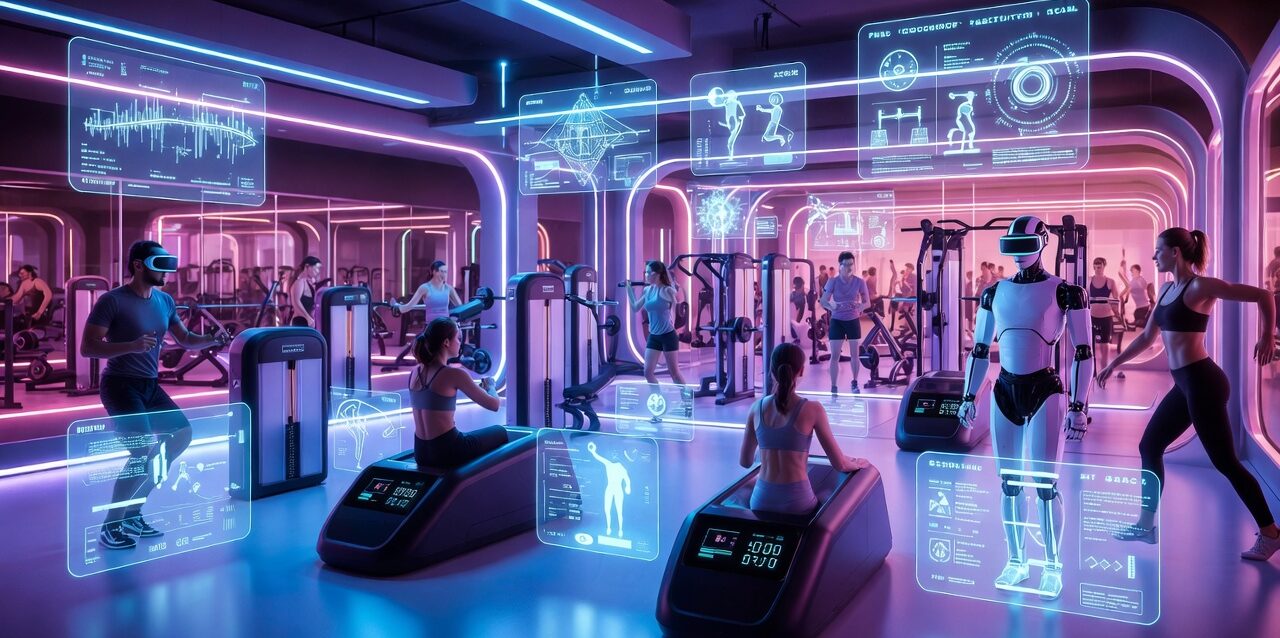
Tomorrow’s Gym: AI-Powered, Hybrid, and Built for Lifelong Vitality
From Traditional Workouts to Immersive, AI-Orchestrated Fitness Experiences
As of February 2026, the global fitness industry is booming, with health and fitness club revenues projected to grow from ~$112 billion in 2023 to over $200 billion by 2030 (CAGR ~8–9%). Wearables lead trends, followed by programs for older adults, weight management, mobile apps, and hybrid models blending in-person and digital. Home fitness equipment surges (U.S. market from ~$5 billion in 2023 to $8.5+ billion by 2030), yet commercial gyms remain vital for community, advanced equipment, and social motivation.
This case study synthesizes forecasts from ACSM trends, McKinsey wellness insights, industry reports (Fortune Business Insights, McKinsey, Forbes), and emerging tech (AI, VR/AR, smart equipment) to map how “going to the gym” evolves over the next 15 years — shifting from physical spaces to hybrid, personalized, and immersive ecosystems.
1. Near-Term (2026–2030): AI-Personalized & Hybrid Gyms Dominate
- AI as Your Constant Coach
Gyms integrate AI-powered apps and wearables for real-time form correction, adaptive workouts, and predictive programming. Smart mirrors, connected machines (e.g., Tonal-style), and AI trainers analyze biometrics to adjust weights, reps, and intensity instantly. Personalized plans factor in sleep, nutrition, recovery, and goals — reducing injury risk and boosting results. - Hybrid In-Person + Digital
Members access seamless experiences: in-gym sessions sync with home workouts via apps. Virtual classes and metaverse-style group workouts grow, but physical gyms emphasize community (group fitness, social events) and premium equipment unavailable at home. Boutique studios and large chains offer “fitness ecosystems” — app-tracked progress across locations, home, and online. - Recovery & Longevity Focus
Gyms add recovery zones (saunas, cryotherapy, compression) and programs for older adults (active aging surges as boomers age). Wearables track everything; AI suggests rest days or low-impact alternatives.
2. Medium-Term (2030–2035): Immersive VR/AR & Smart Environments
- VR/AR Transforms Workouts
Gyms dedicate zones to immersive VR fitness — virtual hikes, boxing in digital arenas, or gamified classes with leaderboards and multiplayer challenges. AR overlays guide form, display stats in real time, or turn treadmills into scenic runs. AI customizes environments based on mood/energy (e.g., calming forest for stress relief). - Fully Connected Smart Gyms
IoT-enabled equipment communicates: machines auto-adjust, predict maintenance, and optimize layouts via data. AI analyzes crowd flow to reduce wait times. Hybrid models mature — home smart gyms (mirrors, connected weights) integrate with commercial spaces for continuity. - Wellness Integration
Gyms become holistic hubs: nutrition scanning, mental health tie-ins, and corporate wellness partnerships. Group fitness evolves with live + virtual hybrid classes.
3. Long-Term (2035–2040): Symbiotic & Regenerative Fitness
- Blended Physical-Digital Realities
Advanced VR/AR + early brain-computer interfaces enable “full-dive” workouts — feeling resistance, wind, or terrain without heavy equipment. AI companions evolve into empathetic coaches that motivate, track emotional state, and adapt in real time. Metaverse gyms allow global group sessions or personal avatars training together. - Home vs. Commercial Balance
High-end home setups handle most routine workouts, but physical gyms thrive as premium social/experiential destinations — advanced robotics, biofeedback chambers, regenerative tech (e.g., light therapy, oxygen optimization). Commercial spaces focus on irreplaceable elements: human trainers for nuance, community energy, and specialized equipment. - Preventive & Longevity-Driven
Gyms shift toward healthspan extension: AI predicts issues (e.g., muscle loss, joint stress) and prescribes proactive routines. Biotech tie-ins (genetic insights) personalize further.
Illustrative Gym Visit in 2040
- Arrival — Biometric check-in; AI suggests optimal session based on weekly data.
- Workout — AR glasses overlay form cues; VR immerses you in a mountain trail while on treadmill.
- Group Class — Hybrid live/virtual HIIT with global participants; AI adjusts difficulty live.
- Recovery — Smart sauna analyzes vitals and recommends next steps.
- Post-Gym — App summarizes progress, syncs nutrition plan.
Risks & Societal Shifts
- Inequality & Access — Premium AI/VR experiences favor affluent users; home setups widen gaps.
- Over-Reliance on Tech — Motivation dips without gamification; privacy concerns from constant data.
- Mental & Social Health — Gyms counter digital isolation via community focus.
- Regulation — Standards for AI coaching accuracy and data ethics emerge.
Bottom Line
By 2040, “going to the gym” evolves from routine visits to immersive, AI-orchestrated, hybrid fitness journeys. The dominant paradigm becomes personalized, connected, and regenerative experiences — blending physical spaces with virtual worlds, smart tech with human connection, and exercise with holistic wellness. Gyms won’t disappear; they’ll transform into dynamic hubs for health, community, and longevity in an era where fitness is no longer optional — it’s essential, intelligent, and deeply engaging. The future isn’t just working out harder; it’s working out smarter, together, and in worlds of our own making.